
REVIEW · ACCRA TOURS
14 Day Ghana Butterfly Tour
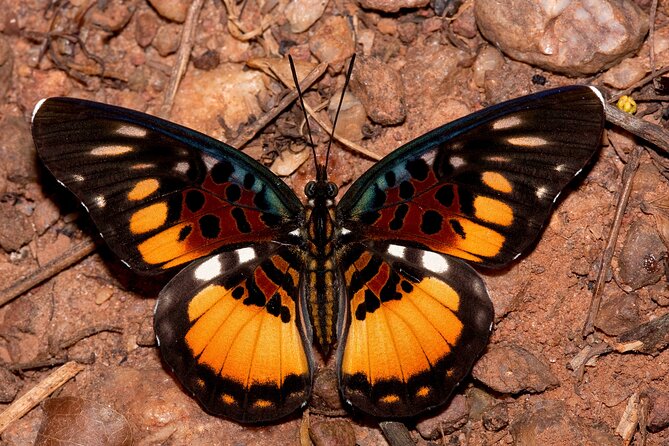
Butterflies are Ghana’s small flying treasures. This 14-day route links six very different forest areas, from the rare upland rainforest of Atewa to the wet forests of Ankasa, with plenty of time for careful watching and photography. I especially like the two full days at Atewa and the three-day stay at Ankasa, where short transfers leave more hours for the forest. I also like the local focus: Ashanti African Tours supports communities along the route rather than treating the countryside as scenery.
The main drawback is the price, $4,950 per person, before international flights, drinks, and a visa. This is not a casual wildlife holiday with a few butterflies on the side. It is a specialist tour with long road transfers, basic accommodation in at least one area, and a schedule built around forest conditions rather than sightseeing convenience.
In This Review
- Six details that shape the experience
- Why Ghana works so well for butterfly watching
- Day 1: A gentle arrival in Accra
- Days 2 and 3: Rare species in the Atewa Range
- Days 4 and 5: Bobiri’s famous butterfly sanctuary
- Days 6 to 8: Three days at Kwabena Sam Forest
- Day 9: Swallowtails and Pashas at Kakum
- Days 10 to 13: Wet forest specialties in Ankasa
- Day 13 near Elmina: A smaller forest with a different mix
- Day 14: Aburi Botanical Gardens before your flight
- What the $4,950 price really covers
- Guiding, comfort, and practical limits
- Who should book this Ghana butterfly tour?
- Should you book it?
- FAQ
- How long is the Ghana Butterfly Tour?
- What is included in the $4,950 price?
- Are international flights included?
- Is this a private tour?
- Which butterfly habitats does the tour visit?
- Can I cancel for a full refund?
Six details that shape the experience
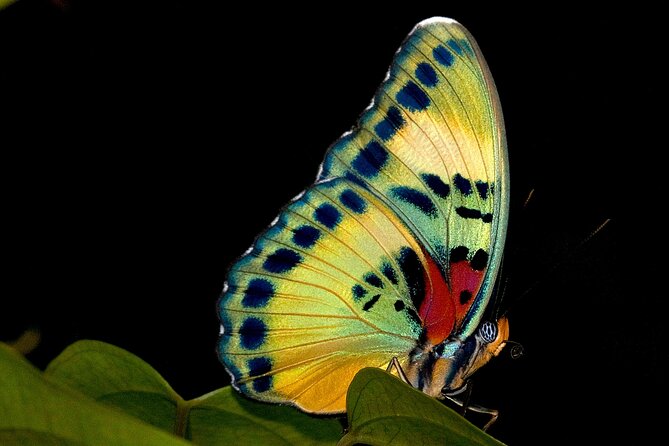
- Over 800 butterfly species: Ghana offers one of West Africa’s best settings for butterfly watching, with more than 100 species possible on a strong day.
- Atewa Range first: Two full days target rare species in one of Ghana’s most important upland rainforests.
- Six forest locations: The route covers Atewa, Bobiri, Kwabena Sam Forest, Kakum, Ankasa, and Kissi Forest, plus Aburi Botanical Gardens.
- Private touring: Only your group takes part, with an expert local guide, driver, air-conditioned vehicle, and airport transfers.
- Strong photography potential: Open forest edges, mud-puddling spots, guesthouse areas, and forest tracks offer varied chances for close views.
- Well-reviewed guiding: Philip Senyo and Andrew are specifically praised for their butterfly spotting, local knowledge, and help in the field.
Why Ghana works so well for butterfly watching
Ghana is a practical choice for a first serious butterfly trip in West Africa. Many important habitats can be reached by road from Accra, and the route combines wet rainforest, semi-deciduous forest, open areas, gardens, and smaller forest remnants. That variety matters because butterfly species are often tied to very particular forest conditions.
The tour also gives you something a short wildlife excursion cannot: time. Two or three days in one place let you return to productive paths, compare morning and afternoon activity, and photograph species without rushing from one stop to the next. The schedule includes lunch breaks, rest periods, and evening time for identifying photographs.
You should still expect road travel. Ghana’s forests are spread across the southern part of the country, so the vehicle is your main base between sites. The air-conditioned vehicle, unlimited mileage, fuel, mineral water, and experienced driver are important parts of the value, not minor extras.
The tour is private, so your pace can suit your group better than a large departure. That matters when one person wants to spend half an hour with a single species or when the guide needs time to identify a difficult forest butterfly. The group discount may also help if you are traveling with friends.
More things to do in Accra:
- The Cape Coast Day Tour
★ 5.0 · 525 reviews - Experience the Beauty, History and the Culture Of Accra in a Day
★ 5.0 · 323 reviews - The Cape Coast Tour
★ 5.0 · 177 reviews
Day 1: A gentle arrival in Accra
Your guide meets you at Kotoka International Airport after customs. Look for the Ashanti African Tours sign outside the main terminal, then transfer by private vehicle to your Accra accommodation.
The first evening is designed to get you settled. Your guide can introduce you to Ghanaian food and help you adjust to the trip before the forest days begin. Since the listed start time is 12:00 am, confirm the exact pickup arrangement with the operator around your flight time.
Airport pickup and a late hotel check-out on the final day make the beginning and end less awkward. You do not need to arrange separate airport transport, and the final evening allows you to freshen up before a late flight.
Days 2 and 3: Rare species in the Atewa Range
Atewa is the scientific heart of the tour. Its upland rainforest is among the most endangered forest types in West Africa, and mining and illegal logging threaten it. For a butterfly enthusiast, the area is especially important because more than 50 species are known only from Atewa within Ghana.
Two full days give this stop the attention it deserves. Possible highlights include the Western Mimic Forester and Moyamba Harlequin, along with many other forest species. You are not simply ticking off a famous reserve. You are spending time in a habitat where the setting itself explains why conservation matters.
The daily pattern is straightforward: field time, a lunch break, then more watching and photography. Evenings at the nearby guesthouse provide space to rest and add photographs to your species list.
Atewa is likely to appeal most to experienced butterfly watchers and photographers who enjoy searching for less familiar species. It may feel demanding if you prefer a holiday with frequent cultural stops or polished resort facilities. The tour description gives no detailed accommodation standard here, so ask about room type and bathroom arrangements before booking.
Days 4 and 5: Bobiri’s famous butterfly sanctuary
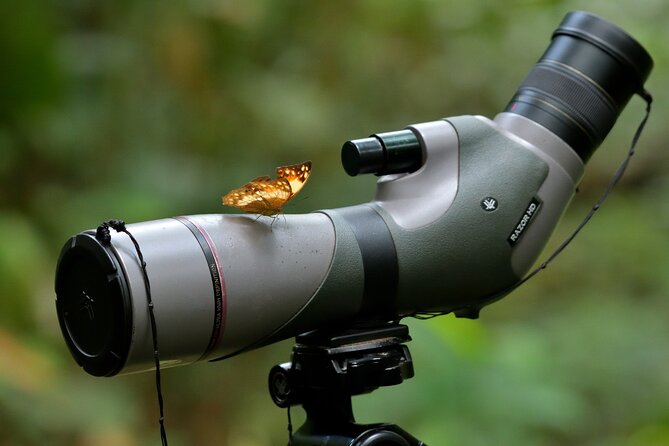
After breakfast, you drive for a little over two hours from Atewa to Bobiri Forest Reserve. The transfer still leaves time for a full afternoon in the forest, which is a sensible use of the route.
Bobiri protects a 5,000-hectare fragment of a much larger semi-deciduous rainforest. This forest type brings together butterflies associated with wetter woodland and species linked to drier Guinea savannah. Studies have recorded more than 630 species here, an impressive figure for an area of this size.
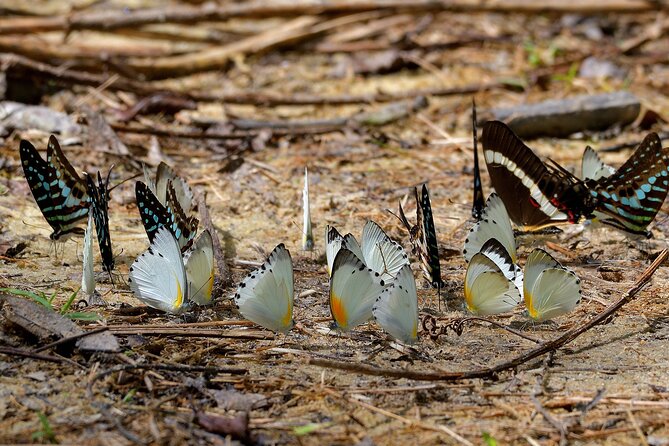
Two days help you explore Bobiri without reducing it to a quick stop. The main track can produce Charaxes, also called Pashas, while areas near the guesthouse are good places to look for Liptena blues. The bamboo spot is known for mud-puddling butterflies, including African Nettle-tree Butterflies and several Grass Yellows.
Clouds of butterflies can sometimes gather around damp ground, creating excellent photo conditions. The rare Giant African Swallowtail has even been recorded here, though rare means exactly that: you should treat it as a bonus, not a promise.
Accommodation in the forest gives Bobiri a useful advantage. You are close to the habitat rather than commuting from a distant town each morning. The tradeoff is that forest lodging may be simpler than a city hotel, so pack with comfort and practical field use in mind.
A completely different kind of day:
- From Accra: Cape Coast, Elmina Castle & Kakum Park Day Tour
★ 4.6 · 144 reviews - Accra Detailed City Tour
★ 4.5 · 118 reviews - Accra Guided City Tour Experience
★ 4.7 · 88 reviews - Accra Guided City Tour Experience
★ 5.0 · 76 reviews
Days 6 to 8: Three days at Kwabena Sam Forest
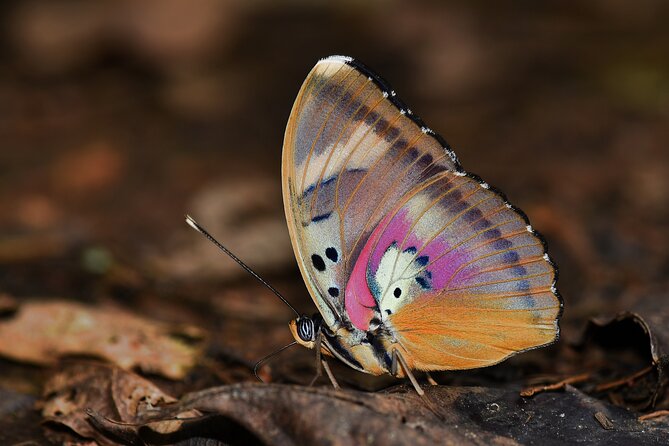
The next section takes you to New Edubiase and Kwabena Sam Forest. The forest is about 45 minutes from the guesthouse, and the tour gives it three days, including a morning on day eight before the afternoon journey to Kakum.
This is a semi-degraded rainforest with many open patches. That may sound less dramatic than untouched rainforest, but open edges can be excellent for butterflies. Sunlit clearings and forest margins often provide different conditions from shaded interior paths, giving you a broader species mix in one area.
The route’s local conservation angle is particularly clear here. Ashanti African Tours is promoting Kwabena Sam as a place worth protecting, and spending several days in the area helps direct tourism attention toward a forest that might otherwise receive little notice.
The species list includes Ashanti Forester, Brilliant Nymph, Grose-Smith’s Nymph, Atossa Nymph, Sophus Forester, Laetitia’s Forester, Hebes Pink Forester, and several Euriphene and Euphaedra species. Many of these names will mean more to specialists than to beginners, but that is where a good field guide earns its keep.
You can expect packed lunches and long periods in the field. This part of the tour is less about a single famous attraction and more about patiently working a productive site. After the morning session on day eight, you travel toward Kakum, arriving in the evening for dinner and photograph identification.
Day 9: Swallowtails and Pashas at Kakum
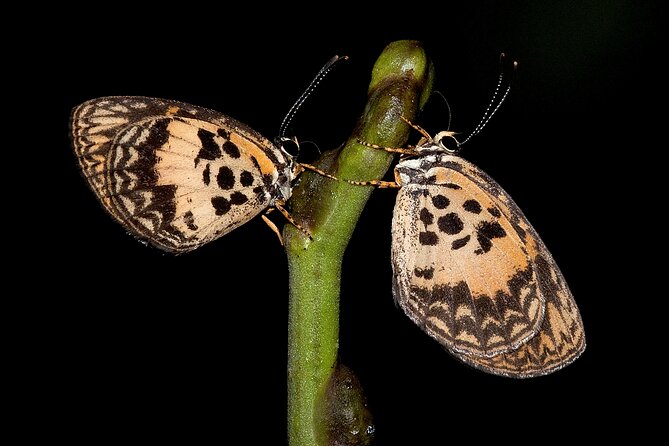
Kakum National Park covers more than 50,000 hectares and provides another major rainforest setting. The day is split into two field sessions, with lunch and a rest period between them.
Nine swallowtail species are expected in Kakum. You may also look for Giant Charaxes and Black-bordered Charaxes, as well as Augerger’s Glider, a rare West African endemic known from Kakum in Ghana and only a few sites in Ivory Coast.
The Giant African Skipper is described as common here, which gives you a better chance of seeing a large, striking species without relying on luck alone. Kakum is a good midpoint in the trip because it offers broad rainforest variety after the more targeted work at Atewa and the open forest of Kwabena Sam.
One caution: the itinerary gives only one full day at Kakum. That is enough for a useful introduction, but not enough to explore every possibility in a forest this large. If Kakum is your main reason for visiting Ghana, ask if extra time can be added.
Days 10 to 13: Wet forest specialties in Ankasa
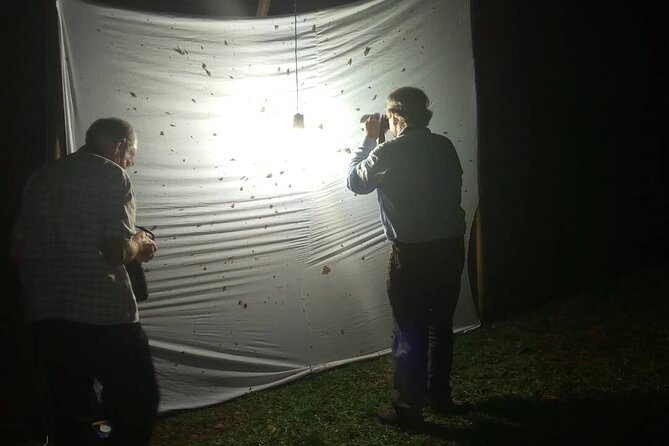
Ankasa receives the longest single stay after Kwabena Sam, with an afternoon on arrival, two full days, and a final morning before the return to Accra. Your accommodation is only about five minutes from the forest, which cuts down on early road travel and makes the schedule more comfortable.
The area is known for wetter rainforest species and butterflies with western distributions. Targets include Veronica Nymph, Crowley’s Forest Sylph, Cinnamon Scarce Spirit, and Hadrian’s White Charaxes.
Ankasa also offers the chance to see a member of the Pseudopontiinae subfamily, one of Africa’s most delicate butterfly groups. The subfamily contains only five species, and the local population belongs to a rare form. This is the sort of detail that makes Ankasa valuable to serious enthusiasts.
The camp team can bring lunch into the forest, or you can return to the accommodation for a break. That flexibility is useful in humid conditions, when a midday rest can make the afternoon session far more productive.
Evenings are not wasted. You can review photographs, watch moths, and observe other night activity around the accommodation while having dinner and refreshments. The basic guesthouse setting may not suit someone seeking luxury, but the location near the forest is a real practical benefit. One past visitor singled out Ankasa Reserve Lodge as the best accommodation on the route.
After a final morning at Ankasa on day 13, you begin the long return toward Accra. A stop near Elmina breaks the journey and adds a different forest type.
Day 13 near Elmina: A smaller forest with a different mix
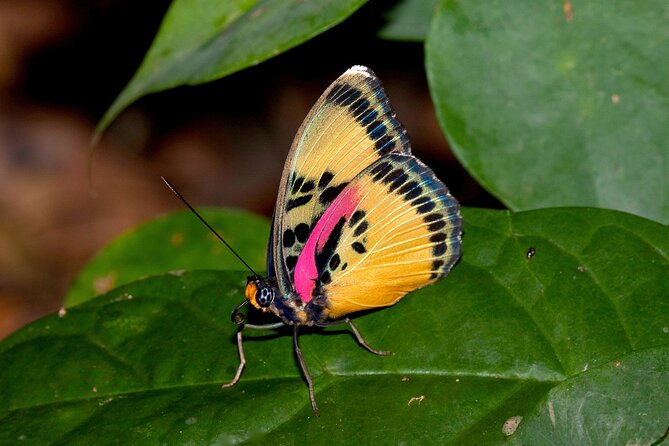
Kissi Forest Reserve is a small remnant of drier forest near Elmina. It has a different species composition from the wetter sites, so even commoner butterflies can add useful variety to your list.
Possible sightings include Mocker Swallowtail, Citrus Swallowtail, Common Forester, and Giant African Skipper. The smaller Western Blue Policeman is also possible, and it has a narrow coastal range from Ghana to Liberia.
Kissi is not presented as a major full-day reserve. Its value comes from contrast. After several days in wet rainforest, a drier forest remnant can produce species you would not expect in Ankasa or Kakum. It also shows how much wildlife value can remain in a smaller patch of habitat.
Day 14: Aburi Botanical Gardens before your flight
The final morning takes you to Aburi Botanical Gardens in Ghana’s Eastern Region. The 64.8-hectare gardens opened in 1890, giving you a more settled setting after days of forest tracks and remote reserves.
The planned list includes Mocker Swallowtail, Narrow-banded Green Swallowtail, Mimetic Swallowtail, Blue Vagrant, several Dotted Borders, and Seven-striped Liptena. Gardens can be productive because planted areas and open ground create different conditions for butterflies, while paths are generally easier to cover than dense forest.
A late hotel check-out is arranged for the evening departure. After the gardens, you return to Accra for a final meal, time to freshen up, and airport transfer. This is a thoughtful end to a demanding trip, especially if your international flight leaves late.
What the $4,950 price really covers
At $4,950 per person, this is a major holiday purchase. The value depends on how seriously you want to pursue Ghanaian butterflies.
The cost includes accommodation, all excursion fees, airport transfers, an air-conditioned vehicle, fuel, unlimited mileage, an experienced driver, an expert local guide, unlimited mineral water, and public liability and professional indemnity insurance. Meals are also substantial: 14 dinners, 13 breakfasts, and 13 lunches are included.
You still pay for international flights, alcoholic and soft drinks, and your visa. The tour is private, so you are paying for a dedicated vehicle and guiding arrangement rather than a seat in a large group. For a specialist photographer or a small group of enthusiasts, that can make sense.
The strongest value comes from time in the field. The schedule does not rush through each site for an hour or two. It gives two days at Atewa and Bobiri, three at Kwabena Sam and Ankasa, and full or partial sessions at Kakum, Kissi, and Aburi.
Guiding, comfort, and practical limits
The two named guides connected with the experience are Philip Senyo and Andrew. Philip is specifically praised for spotting butterflies, helping with identification, and working well as a field guide. That skill matters more than a polished speech when a small butterfly disappears into foliage after two seconds.
The driver is also important because the trip covers substantial distances. Having one vehicle for the entire route keeps the schedule together and avoids arranging separate transfers between forest sites.
Accommodation varies by location. You have guesthouse and lodge stays, including a basic guesthouse near Ankasa, and forest accommodation at Bobiri. You should not book this expecting uniform four-star comfort.
Most people can take part, and the tour is near public transportation, though the actual experience is built around the private vehicle and forest visits. Comfortable walking shoes, light field clothing, sun protection, and camera equipment suited to close subjects will be useful, but the supplied information does not specify a required fitness level.
Weather affects the program. If poor weather cancels the experience, you are offered another date or a full refund. You can cancel for a full refund up to three full days before the local start time. If the minimum number of participants is not met, the operator offers another date or experience, or a refund.
Who should book this Ghana butterfly tour?
I would choose this tour if you want a focused introduction to Ghana’s butterfly fauna, value local guiding, and prefer repeated time at key sites over a long list of unrelated attractions. It also suits photographers who need quiet periods, varied habitats, and a guide who can help locate difficult species.
Birdwatchers may find extra value here. One previous booking combined butterflies and birds across Atewa, Bobiri, Pichacartes, Kakum, and Ankasa, and described the result as superb. Ask the operator before booking if birding can be formally added to your own itinerary, since it is not listed as a standard feature here.
I would hesitate if your priority is luxury lodging, short driving days, or a broad Ghana sightseeing program. The tour includes villages and local communities through its route, but its main purpose is butterflies. You will spend long hours outside, and some forest stops are deliberately simple.
Should you book it?
Book this tour if Ghana’s butterflies are your main reason to visit and you want a private, well-supported route through several important habitats. The combination of Atewa’s rare species, Bobiri’s exceptional list, Kwabena Sam’s conservation value, Kakum’s rainforest specialties, and Ankasa’s wet forest fauna gives you a serious range in 14 days.
Before paying, confirm your exact flight pickup, room standards at each guesthouse, the group discount, and whether your preferred guide, including Philip Senyo if available, can lead the trip. If those details suit you, the price buys more than transport and hotel nights. It buys repeated chances to see Ghana at butterfly speed: slowly, carefully, and with your eyes trained on the leaves.
FAQ
How long is the Ghana Butterfly Tour?
The tour lasts approximately 14 days, beginning with airport pickup in Accra and ending with an evening transfer back to Kotoka International Airport.
What is included in the $4,950 price?
The price includes accommodation, meals listed as 14 dinners, 13 breakfasts, and 13 lunches, airport transfers, an air-conditioned vehicle, fuel, unlimited mileage, mineral water, an experienced driver, an expert local guide, excursion fees, and insurance cover.
Are international flights included?
No. International flights, soft drinks, alcoholic drinks, and the Ghanaian visa are not included.
Is this a private tour?
Yes. Only your group takes part in the activity. Group discounts are offered.
Which butterfly habitats does the tour visit?
The route includes Atewa Range, Bobiri Forest Reserve, Kwabena Sam Forest near New Edubiase, Kakum National Park, Ankasa Conservation Area, Kissi Forest Reserve near Elmina, and Aburi Botanical Gardens.
Can I cancel for a full refund?
Yes. You must cancel at least three full days before the experience start time, based on local time. Poor weather or failure to meet the minimum number of participants may also result in an alternative date or a full refund.
Just added in Accra
- Wli Waterfall And Tafi Monkey Sanctuary ( Volta Region)★ 5.0 · 1 review
- Traditional Beadmaking Workshop★ 5.0 · 1 review
- Private 9-Day Tour in Ghana★ 5.0 · 2 reviews
- Wli Waterfalls, Mount Afadjato & Tafi Atome Monkey Sanctuary★ 5.0 · 2 reviews
- Cape Coast and Elmina castle Day Trip★ 5.0 · 2 reviews
- Culinary for Social Change-Cooking Class★ 5.0 · 2 reviews
- Time with Nature★ 5.0 · 2 reviews
- Historical Day Tour to Cape Coast, Elmina and Kakum★ 5.0 · 3 reviews
Accra Tours, compared.


Experience the Beauty, History and the Culture Of Accra in a Day
Read our review →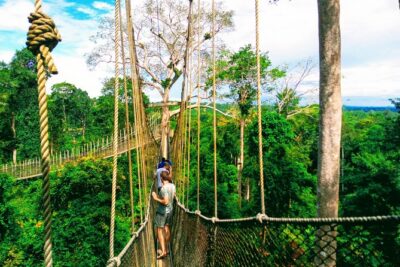

Cape Coast, Elmina Castle & Kakum Park Day Tour
Read our review →

Browse the lists this tour appears in