

REVIEW · CAPE COAST AND ELMINA CASTLE TOURS
3 Days Accra City Tour & Cape Coast Tour
History has a way of stopping you cold. This three-day Ghana tour links Accra’s key civic sights with the sobering slave-trade sites around Cape Coast, giving you a useful first look at the country’s modern identity and difficult past. I like the mix of city landmarks, forest walks, museums, and coastal forts. I also like that the tour is private, so your own group can move at a more personal pace. The main drawback is the early 6:00 am start and the amount of driving packed into three days.
I especially appreciate the visit to Assin Manso Ancestral Slave River Park, which adds an important layer beyond the better-known castles. The personal service also sounds like a strength: Mohammed has customized plans for guests, while guides named Maanan, Mannan, Med, and Richard received particularly warm praise for their care and guidance. Still, you should confirm the exact pickup arrangements and daily timing before booking, since the published details do not spell out the transport plan.
In This Review
- Key points at a glance
- What the three-day route does well
- Day 1: Seeing Accra through national symbols and local culture
- Asomdwe Park and the memorial to J.E.A. Mills
- Independence Square and the Black Star Gate
- Centre for National Culture, Accra
- Day 2: Kakum’s forest bridges and Assin Manso’s sacred river
- Kakum National Park and the canopy walk
- Assin Manso Ancestral Slave River Park
- Day 3: Cape Coast Castle and Elmina’s trading past
- Cape Coast Castle’s museum and dungeons
- Elmina and the first European trading post
- What $490 per person really covers
- Guides, customization, and the private format
- Who should book this Ghana tour?
- Should you book the 3-day Accra and Cape Coast tour?
- FAQ
- How long is the Accra and Cape Coast tour?
- Is this a private tour?
- Is pickup available?
- Which admissions are included?
- Can most people participate?
- What is the cancellation policy?
Key points at a glance
- A private three-day route: Only your group participates, which can make a demanding schedule easier to manage.
- A 6:00 am beginning: The early start helps fit Accra, Kakum, Assin Manso, Cape Coast, and Elmina into a short visit.
- Three important remembrance sites: Assin Manso, Cape Coast Castle, and Elmina Castle each show a different part of the trans-Atlantic slave trade.
- A short forest adventure: Kakum National Park includes a suspension bridge canopy walk about 100 feet above the ground.
- Admission is included at most stops: The listed price is $490 per person, with admission included at Asomdwe Park, Independence Square, the Centre for National Culture, Kakum, Assin Manso, and Cape Coast Castle.
- Helpful private-tour service: Group discounts are offered, free cancellation applies up to 24 hours before departure, and most people can participate.
What the three-day route does well
This tour works because it moves from present-day Accra to Ghana’s colonial and slave-trade sites in the Central Region. You begin with national symbols and cultural displays, then spend the next two days with forests, memorial grounds, castles, and old trading posts.
That progression gives the trip a clear shape. Accra helps you understand Ghana as an independent country. Cape Coast and Elmina then show the forces that shaped the coast before and during colonial rule. The result is not a relaxed beach holiday. It is a concentrated introduction to Ghana, with some emotionally heavy stops.
The private format matters here. A three-day schedule with a 6:00 am start can feel strict in a large group. With only your own party participating, you have a better chance of asking questions, taking a little more time at a meaningful site, or keeping the day moving when everyone is ready.
The experience has a 4.7 rating from three submitted ratings, a small sample that should not be treated as a guarantee. The strongest praise centers on the company’s willingness to customize plans and on personal attention from the staff. That is useful if you are visiting Ghana alone or feeling unsure about arranging a full itinerary. One solo guest specifically appreciated feeling safe and being welcomed by Med and Richard.
More Cape Coast and Elmina castle tours:
- The Cape Coast Day Tour
★ 5.0 · 525 reviews - The Cape Coast Tour
★ 5.0 · 177 reviews - From Accra: Cape Coast, Elmina Castle & Kakum Park Day Tour
★ 4.6 · 144 reviews
Day 1: Seeing Accra through national symbols and local culture
Asomdwe Park and the memorial to J.E.A. Mills
The first stop is Asomdwe Park, a quiet site holding the remains of former Ghanaian President John Evans Fiifi Atta Mills. It offers a calm beginning before the noise and movement of the capital take over.
You have about 30 minutes here, with admission included. The park also functions as a small animal area, with ostriches, fish, and birds. That makes it more than a memorial site, though you should think of the animals as a modest extra rather than a full zoo visit.
I like this stop because it brings national politics into a physical setting. You are not simply looking at an official building or monument. You are visiting a place connected to a recent Ghanaian president, while also getting a quieter pause early in the morning.
The short visit means you probably will not spend long studying the site. If you prefer major museums and long guided talks, this may feel brief. If you like a gentle introduction to a city and its public figures, it is a sensible first stop.
Independence Square and the Black Star Gate
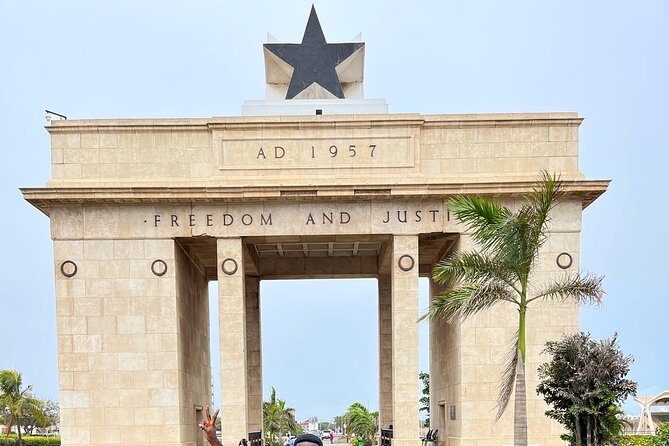
At Independence Square, you see some of the clearest symbols of Ghana’s independence struggle. The area includes the Independence Arch, Black Star Gate, and Liberation Day Monument.
The planned visit lasts about 40 minutes, and admission is included. This is a civic space rather than a traditional museum, so its importance comes from the meaning of the monuments and the role they play in Ghana’s national story.
The Independence Arch and Black Star Gate make this one of the most recognizable stops in Accra. I would use the time to look closely at the design, listen to your guide’s explanation, and consider the contrast between colonial rule and independent Ghana.
The square can also feel formal and open, especially compared with the city’s markets and commercial streets. This tour does not offer a long market visit in the published route, so you should not book it expecting a shopping-focused morning. Its Accra portion is built more around landmarks and culture than street life.
More city tours in Accra:
- Accra Detailed City Tour
★ 4.5 · 118 reviews - Accra Guided City Tour Experience
★ 4.7 · 88 reviews - Accra Guided City Tour Experience
★ 5.0 · 76 reviews - Know Ghana in 4 hrs – Accra City Tour
★ 4.5 · 47 reviews
Centre for National Culture, Accra
The Centre for National Culture adds an indoor cultural stop to the morning. Its museum collection includes Ghanaian historical objects as well as material from nearby West African countries.
You have around 40 minutes here, with admission included. The two-tiered rotunda houses more than a narrow display of local traditions, so this is a useful place to broaden your view of the region. You are likely to see Ghana presented within a wider West African setting rather than as an isolated country.
That regional context is one of the museum’s best features. Ghana’s coastal forts, inland trade routes, languages, and cultural traditions make more sense when you remember that people and goods moved across borders long before modern national boundaries.
The allotted time is enough for an introduction, not a slow museum study. If a particular display catches your attention, you may need to keep moving. Still, paired with Independence Square, the museum gives Day 1 a good balance between public history and cultural objects.
Day 2: Kakum’s forest bridges and Assin Manso’s sacred river
Kakum National Park and the canopy walk
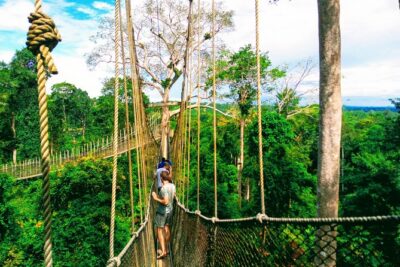
Day 2 takes you to Kakum National Park for a short forest hike and its famous canopy walk. The suspension bridges hang roughly 100 feet above the ground, offering views into the forest from a height most visitors would not reach on an ordinary trail.
Admission is included, and the planned stop lasts about one hour. This is the most active part of the tour. The bridges are wooden and suspended, so you should expect movement underfoot and a different pace from the city visits.
I like the way Kakum changes the mood of the trip. After Accra’s monuments and museum displays, the forest gives you an immediate sense of Ghana’s natural environment. The canopy route also makes the visit memorable without requiring a full-day trek.
The time allowance is short. You may complete the main walk within an hour, but this is not designed as a long hiking day or a detailed study of the park. The itinerary also gives no specific information about walking difficulty, footwear, or weather arrangements, so ask the provider if those details matter to you.
Do not treat this as a substitute for a full national park expedition. It is a focused stop built around the elevated bridges. For many people, that will be enough, especially when the same day includes a serious historical site.
Assin Manso Ancestral Slave River Park
Assin Manso is one of the most important stops on the route, and I would not rush through it. The site was the final link in the slave route from northern Ghana and served as a major market supplying people to forts and castles along the coast.
The Slave River, called Nnonko Nsuo, was where enslaved people were washed and sorted before sale to merchants. The grounds also include a cemetery where Samuel Carson of the United States and Crystal of Jamaica were re-interred in 1998.
The planned visit lasts about one hour, with admission included. That may sound short for such a serious place, but the stop adds essential context to the castles. At Cape Coast and Elmina, you see the coastal buildings where people were imprisoned. At Assin Manso, you learn about the inland route and the forced movement toward the coast.
This is a sacred place of remembrance, not simply another sightseeing stop. I would approach it quietly and give your guide room to explain the site. The emotional weight may be greater than you expect, particularly because the river and cemetery connect large historical events with specific physical places.
The tour description gives only about an hour here. If you want a long memorial visit or more time for reflection, ask whether the schedule can be adjusted. The private format may make that conversation easier, but no change is guaranteed.
Day 3: Cape Coast Castle and Elmina’s trading past
Cape Coast Castle’s museum and dungeons
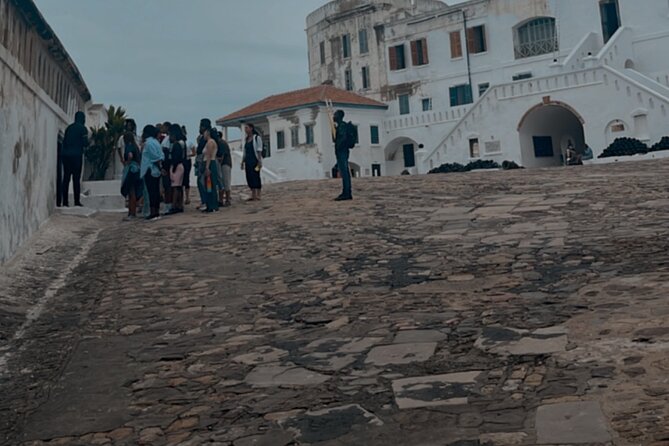
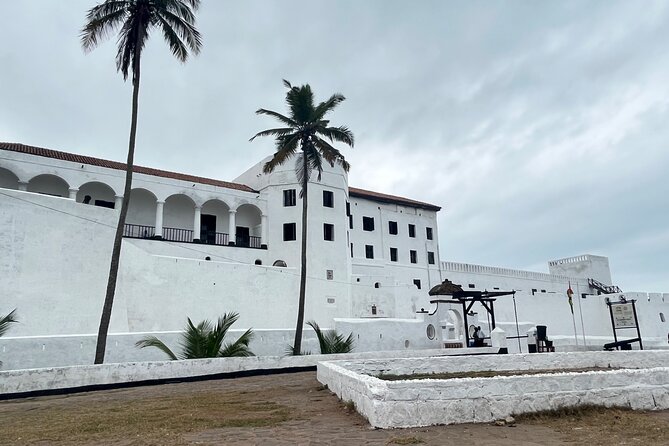
Cape Coast Castle is the central historical stop on the final day. Built as one of the slave castles on Ghana’s coast, it later served as an administrative center for British rule in West Africa.
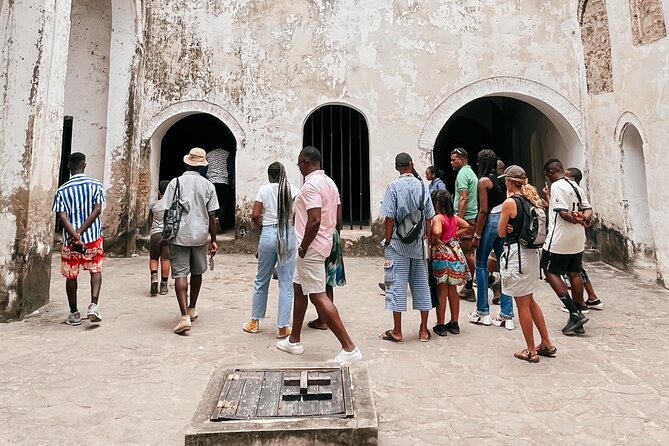
The visit includes the museum and the dungeons where enslaved people were held before being shipped to the New World. Admission is included, and the planned stop is about 45 minutes.
You should expect this to be an intense visit. The castle’s white walls and coastal setting can look orderly from the outside, but the dungeons explain the violence and confinement that took place inside. The point is not just to admire old architecture. It is to understand how a fortified trading site became part of the trans-Atlantic slave trade.
Forty-five minutes is enough for a guided introduction, though it leaves little space for lingering. Listen carefully to the guide and keep your questions ready. The value of this stop depends heavily on the explanation, since the rooms themselves cannot tell the full story.
Cape Coast Castle also helps you see how commercial and political power changed over time. The building was connected first to coastal trade and later to British administration. That layered use gives it importance beyond one period alone.
Elmina and the first European trading post
Elmina was founded by Portugal in 1482 and is described as the first European trading post built on the Gulf of Guinea. It is also regarded as the oldest European building south of the Sahara.
The settlement and castle later passed to the Dutch in the 17th century and to Britain in the late 19th century. Elmina Castle and other forts along the Gold Coast protected ports used in the European-African gold and ivory trade. These places later became centers of the trans-Atlantic slave trade.
The stop lasts about 45 minutes. Admission is listed as free, while admission fees at several other stops are included in the tour price. Elmina Castle is part of a UNESCO World Heritage grouping that includes 17 other fortified trading posts in Ghana’s Volta, Greater Accra, Central, and Western regions.
This visit pairs naturally with Cape Coast Castle, but the two should not blur together. Cape Coast emphasizes imprisonment, administration, and the slave castle experience. Elmina gives you a clearer sense of the earlier European trading presence and the long commercial history of the coast.
Again, 45 minutes is an introduction rather than a complete study. You will gain more if you pay attention to the changing ownership and the way trade shaped the buildings. If you want to photograph every corner or read every display, the schedule may feel hurried.
What $490 per person really covers
The price is $490 per person. That is a serious amount for three days, so value depends on what is included beyond the listed visits.
You are paying for a private activity, a planned route, and access to several important sites. Admission is included at Asomdwe Park, Independence Square, the Centre for National Culture, Kakum National Park, Assin Manso, and Cape Coast Castle. Elmina Castle is listed with free admission.
The schedule also gathers locations that would take planning to arrange independently. Accra, Kakum, Assin Manso, Cape Coast, and Elmina cover a broad area, and the early start helps fit them together. For a first visit to Ghana, that convenience can be worth a lot, especially if you do not want to coordinate several separate day trips.
Still, the provided information does not state whether meals, accommodation, fuel, or every transport cost is included. Do not assume they are covered. Ask what the $490 includes from pickup through the return to the meeting point.
Group discounts may improve the price if you are traveling with friends or family. Solo visitors pay the listed per-person rate, but the private setup may offer more comfort and direct attention than a large shared excursion.
Guides, customization, and the private format
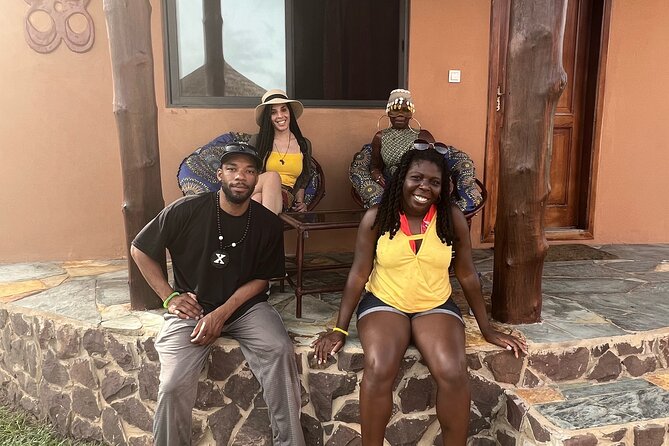
The strongest service detail is the company’s willingness to customize. Mohammed has been praised for adjusting plans, including accommodating a last-minute addition. That matters because a three-day trip can benefit from small changes, especially if one historical site matters more to you than another.
Maanan, also spelled Mannan in the supplied information, is praised for patience, kindness, and strong subject knowledge. Med and Richard were also singled out for helping a solo visitor feel at home and safe while following a full itinerary.
I would contact the provider before departure and confirm which guide will lead your group. Names matter because the quality of a history-focused tour depends on how clearly the guide explains difficult subjects. The company received a 4.7 rating from three ratings, and the personal service is the clearest pattern in that small sample.
Because this is a private tour, you avoid the social compromises of a large group. You also carry more responsibility for speaking up. If you need more time at Assin Manso, a slower walk at Kakum, or extra explanation at a castle, ask early rather than waiting until the day is nearly over.
Who should book this Ghana tour?

I would recommend it to a first-time visitor who wants a compact introduction to Accra and the Cape Coast area. It suits people who care about history, national identity, and cultural context more than a purely scenic holiday.
It also fits solo visitors who want an organized plan and direct support. The positive comments about feeling safe and welcomed make the provider worth considering for someone who is nervous about navigating a new country alone.
Families and small groups may benefit from the private format and group discounts. The route includes a small animal area, a forest canopy walk, and major monuments, so it offers variety. The historical sites are serious, however, and parents should decide if the subject matter suits younger children.
I would not choose this tour if you want long, unhurried museum visits, a dedicated beach day, or a slow coastal break. Beaches are mentioned in the broad tour description, but the detailed schedule does not name a beach stop. The actual route is centered on Accra landmarks, Kakum, Assin Manso, Cape Coast Castle, and Elmina.
Should you book the 3-day Accra and Cape Coast tour?
Book it if you want a tightly planned first look at Ghana, especially if you value private guiding and want the major Cape Coast historical sites in one trip. The combination of Assin Manso, Cape Coast Castle, and Elmina gives you a fuller picture than visiting one castle alone.
Think twice if $490 per person is beyond your budget or if you dislike early starts and long travel days. Before paying, confirm what transportation, meals, accommodation, and pickup arrangements are included. Free cancellation is available when you cancel at least 24 hours before the 6:00 am start, but changes or cancellations inside that window are not refundable.
For the right visitor, this is a useful and serious introduction to Ghana. It does not try to make the past comfortable. It gives you places, names, and physical settings that make the country’s story harder to forget.
FAQ
How long is the Accra and Cape Coast tour?
The tour lasts approximately three days and begins at 6:00 am. It ends back at the meeting point.
Is this a private tour?
Yes. Only your group participates in the activity.
Is pickup available?
Yes. Pickup is offered, though the supplied details do not specify the exact pickup locations or transport arrangements.
Which admissions are included?
Admission is included at Asomdwe Park, Independence Square, the Centre for National Culture, Kakum National Park, Assin Manso Ancestral Slave River Park, and Cape Coast Castle. Elmina is listed with free admission.
Can most people participate?
Yes. The additional information states that most people can participate.
What is the cancellation policy?
You can cancel at least 24 hours before the experience start time for a full refund. Cancellations or changes made less than 24 hours before the start are not accepted for a refund.
Just added in Accra
- Wli Waterfall And Tafi Monkey Sanctuary ( Volta Region)★ 5.0 · 1 review
- Traditional Beadmaking Workshop★ 5.0 · 1 review
- Private 9-Day Tour in Ghana★ 5.0 · 2 reviews
- Wli Waterfalls, Mount Afadjato & Tafi Atome Monkey Sanctuary★ 5.0 · 2 reviews
- Cape Coast and Elmina castle Day Trip★ 5.0 · 2 reviews
- Culinary for Social Change-Cooking Class★ 5.0 · 2 reviews
- Time with Nature★ 5.0 · 2 reviews
- Historical Day Tour to Cape Coast, Elmina and Kakum★ 5.0 · 3 reviews
Cape Coast and Elmina Castle Tours, compared.


Cape Coast, Elmina Castle & Kakum Park Day Tour
Read our review →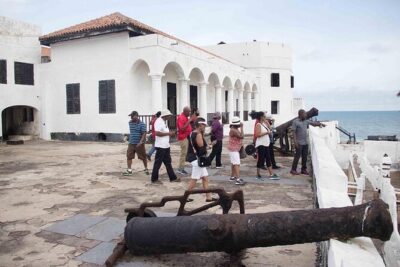
Cape Coast ,Elmina Castle and Kakum Full-Day Tour
Read our review →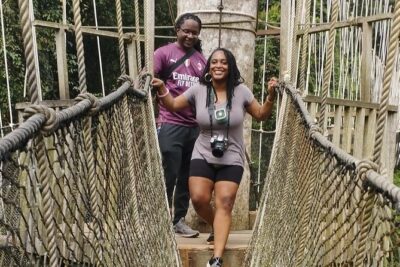
10 Days Trip to Cape Coast and Elmina Castles from Accra
Read our review →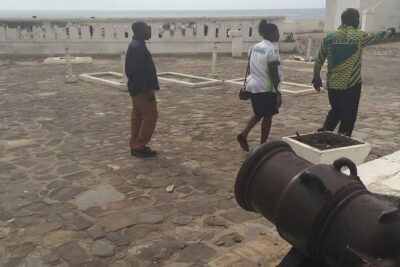
The Homecoming Experience To Cape-coast And Elmina.
Read our review →Browse the lists this tour appears in