
REVIEW · ACCRA TOURS
A 4 Days Cultural, Historic And Nature Tour Of Ghana’s Southern Side.
Ghana’s past and present meet on the road. This four-day private tour links Cape Coast and Elmina’s castles with Kakum National Park, Ashanti culture, craft villages, a monkey sanctuary, and major Accra sights. I like the way it combines serious historic places with hands-on cultural stops, rather than keeping you inside museums all day. I also like that a private, air-conditioned vehicle, entrance fees, a guide, and unlimited bottled water are included.
The main consideration is the pace. Each day is planned for about eight hours, and Day 4 begins with an early trip from Kumasi to Accra before an airport transfer. You get a lot for your time and money, but this is not a slow holiday. I especially value the help at Makola Market, where the guide can assist with purchases such as black soap and shea butter and help you find your way through the busy trading area.
In This Review
- Five things to know before booking
- Why this four-day route works
- Cape Coast Castle, Kakum, and Elmina in one demanding day
- Cape Coast Castle
- Kakum National Park
- Elmina Castle
- Manhyia Palace and the Ashanti royal story
- Kumasi Cultural Centre
- Adanwomase and Ntonso, where craft becomes the main event
- Adanwomase kente weaving village
- Ntonso Adinkra cloth village
- Boabeng-Fiema Monkey Sanctuary and a different kind of heritage
- Returning to Accra for Makola Market
- Kwame Nkrumah Mausoleum and Ghana’s independence story
- British James Town, the lighthouse, and Usher Fort
- What the $1,800 price really covers
- Who should book this tour?
- Should you book the Ghana southern tour?
- FAQ
- Where does the tour start?
- How long does the tour last?
- Is this a private tour?
- What is included in the tour price?
- Are the castle admission fees included?
- Does the tour include airport transportation?
- Are visa fees and personal purchases included?
- Can I cancel for a full refund?
Five things to know before booking
- Three UNESCO World Heritage stops in one day: Cape Coast Castle and Elmina Castle provide the historical core of Day 1, with Kakum National Park between them.
- A private tour for your own group: You do not share the activity with other groups, which makes the long schedule easier to manage.
- Ashanti culture beyond a museum visit: Manhyia Palace Museum, Kumasi Cultural Centre, Adanwomase, and Ntonso show royal, artistic, and working traditions.
- A rare human and monkey connection: Boabeng-Fiema Monkey Sanctuary is an ancient village where people and monkeys have lived alongside one another across generations.
- A practical airport finish: The final day includes Makola Market, the Kwame Nkrumah Mausoleum, British James Town, and departure for the airport two hours before check-in.
Why this four-day route works
At $1,800 per person, this tour is a serious purchase. Its value comes from how much is bundled into the price. You receive landing and facility fees, an air-conditioned vehicle, entrance fees, a tour guide, and unlimited bottled water. Because the tour is private, the price also covers a more personal arrangement for your own group rather than a seat on a large shared coach.
The route covers Accra, Ghana’s coast, Cape Coast, Elmina, Kakum, Kumasi, Ashanti craft villages, and the Boabeng-Fiema area. That is a broad sweep of southern Ghana in four days. If you have only a short stay and want a first look at the country’s culture, history, and nature, the route is efficient.
The tradeoff is road time and early starts. You should expect full days rather than a gentle schedule with long free periods. The advertised start time is 7:00 a.m., and Day 4 begins very early for the return to Accra. I would choose this tour when seeing many major places matters more than spending several hours at each one.
More history tours in Accra:
- Experience the Beauty, History and the Culture Of Accra in a Day
★ 5.0 · 323 reviews - Ghana Heritage Tours – Beyond The Return
★ 5.0 · 36 reviews - 10 Days Ghana Cultural and Heritage Trip
★ 5.0 · 31 reviews
Cape Coast Castle, Kakum, and Elmina in one demanding day
Day 1 brings together three of Ghana’s best-known attractions. The order begins with Cape Coast Castle, continues to Kakum National Park, and finishes at Elmina Castle. Admission is included, so you do not need to budget separately for each listed stop.
Cape Coast Castle
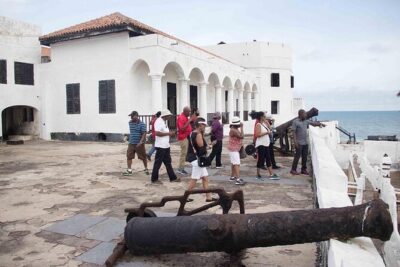
Cape Coast Castle is a UNESCO World Heritage Site and one of the tour’s most important visits. The building connects Ghana’s coastal history with the Atlantic slave trade, colonial power, and the movement of people across continents. You should give this stop your full attention. It is not simply an old fort with attractive sea views.
A guide matters here because the value lies in understanding what happened inside and around the structure. The experience is likely to feel serious and emotionally heavy, so the schedule works best if you leave time to listen rather than rushing from room to room.
Kakum National Park
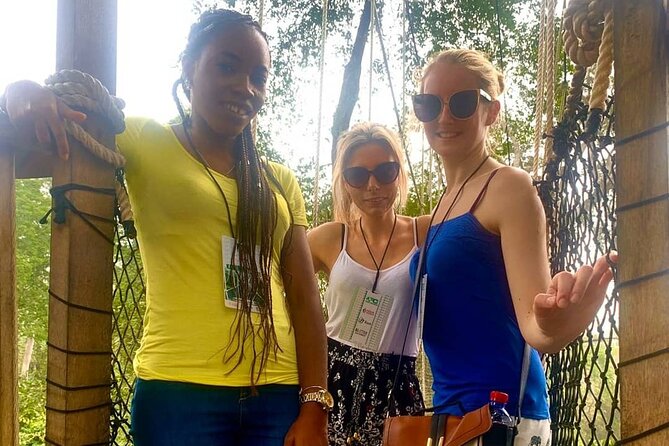
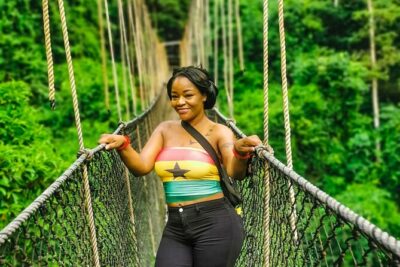
Kakum changes the mood. The park has more than one hundred tree species and is known for its canopy walkway. This is the nature portion of the day, giving you a chance to look up, walk among the trees, and experience a very different side of Ghana.
The canopy walkway is the headline attraction, but the park’s wider plant life also matters. If you prefer historic buildings to outdoor activity, this may be the least predictable part of the day. Still, it keeps the tour from becoming a sequence of forts and museums.
More things to do in Accra:
- The Cape Coast Day Tour
★ 5.0 · 525 reviews - The Cape Coast Tour
★ 5.0 · 177 reviews - From Accra: Cape Coast, Elmina Castle & Kakum Park Day Tour
★ 4.6 · 144 reviews - Accra Detailed City Tour
★ 4.5 · 118 reviews
Elmina Castle
Elmina Castle is also a UNESCO World Heritage Site and is described as the first colonial building in sub-Saharan Africa. Its age and role make it an essential companion to Cape Coast Castle, not a repeat visit.
Seeing both castles in one day lets you compare their settings and stories. The drawback is that the historical material can feel concentrated. I would take notes, ask questions, and avoid treating the two sites as quick photo stops. Day 1 is powerful, but it may be the most emotionally intense part of the route.
Manhyia Palace and the Ashanti royal story
Day 2 moves inland to Kumasi and the Ashanti cultural world. The first stop is Manhyia Palace Museum, the home of the Asantehene, the king of the Ashanti Kingdom.
This visit gives the tour a political and royal focus. Rather than concentrating only on colonial history, you get a chance to learn about one of Africa’s powerful traditional kings and the Ashanti Kingdom. I like this shift because it places Ghanaian authority and identity at the center of the day.
The palace museum is also a good reminder that Ghana’s story cannot be told only through European forts. You should pay attention to the objects, images, and setting that help explain the importance of the Asantehene. Specific guiding details are not provided in advance, so it is worth asking your guide for context during the visit.
Kumasi Cultural Centre
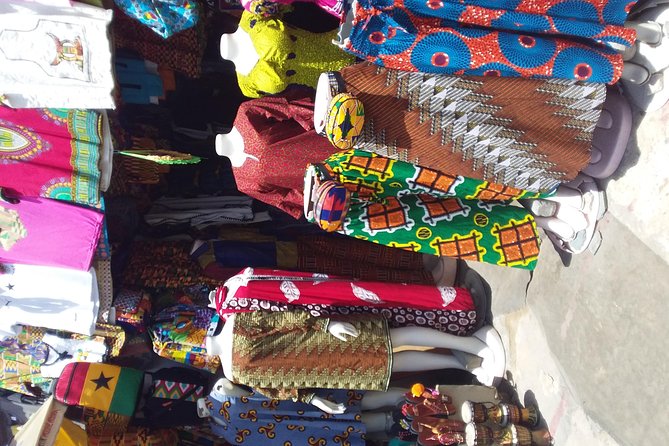
The Kumasi Cultural Centre brings you closer to working artists and sellers. Its stalls offer traditional carvings, clothing, and artworks from Ghana and other African countries.
This stop is more active than a formal museum. You can browse, compare pieces, and look for gifts without leaving the tour route. Prices are not listed, so you should ask clearly before buying and keep personal spending separate from the tour price.
For me, this is one of the places where the private format helps. You can take more or less time at the stalls according to your interests, within the day’s schedule. If you enjoy crafts, plan to pay attention to the difference between locally made pieces and items presented more broadly as African art. The tour description does not promise a specific shopping session or workshop, so think of this as a cultural market visit rather than a guaranteed lesson.
Adanwomase and Ntonso, where craft becomes the main event
Day 3 focuses on two villages connected to Ghanaian textile traditions, followed by Boabeng-Fiema Monkey Sanctuary. This is perhaps the most hands-on cultural day, even though the exact demonstrations included at each village are not specified.
Adanwomase kente weaving village
Adanwomase is known for kente weaving. Kente is one of Ghana’s best-known textiles, recognized for its woven patterns and strong cultural meaning.
A village visit gives you a better chance to connect the finished cloth with the people and work behind it. You might see how the craft is made and learn more about the cloth’s role in Ghanaian culture, but the supplied details do not guarantee a particular demonstration or purchase. Ask your guide what is happening on the day before you decide how much time to spend shopping.
Ntonso Adinkra cloth village
Ntonso is associated with Adinkra cloth making. Adinkra is distinct from kente, so this pairing helps you understand that Ghanaian textile traditions are not all the same.
I like the way the two villages are placed together. You can compare woven kente with Adinkra cloth and see two different forms of design and production. If you are choosing souvenirs, these stops may be more meaningful than buying a generic item in a city shop because you have seen the cultural setting connected with the craft.
Still, you should keep your expectations practical. The tour information does not state that materials, workshops, or purchases are included. Bring room in your budget for personal items if you want to buy cloth.
Boabeng-Fiema Monkey Sanctuary and a different kind of heritage
The Boabeng-Fiema Monkey Sanctuary lies in the Nkoranza North District. It is described as an ancient village where monkeys and people have lived harmoniously across generations.
This stop adds nature, but it is also a cultural visit. The point is not simply to see monkeys in a forest. The village’s long relationship with the animals gives the sanctuary a local meaning that differs from a standard wildlife park.
You should listen carefully to your guide here. The most interesting part is likely to be the connection between village customs, local beliefs, and the protection of the monkeys. The information does not promise a particular species, feeding activity, or guaranteed animal sighting, so keep your expectations open.
Day 3 has a lot packed into it. After two craft villages, the sanctuary gives you an outdoor change of pace. It may be your favorite day if you enjoy local traditions and smaller communities more than major monuments.
Returning to Accra for Makola Market
Day 4 starts early with the journey from Kumasi back to Accra. The timing matters. You are not spending a relaxed final morning at the hotel. Instead, you are using the day to fit in several important Accra stops before heading to the airport.
Makola Market is one of the busiest open-air markets in West Africa. It is a practical, noisy, crowded place where you can see everyday commerce rather than a polished attraction.
This is where the guide’s role seems especially useful. The tour guide can escort you through the market, help with purchases, and assist you in finding deals on black soap and shea butter. That kind of support can make a large market less confusing, especially if you are unsure how to compare prices or move through the stalls.
You still need to watch your belongings and keep your shopping decisions clear. The tour includes bottled water and admission fees, but personal purchases are not included. If you want souvenirs, allow extra money and do not assume every item is covered by the tour price.
Kwame Nkrumah Mausoleum and Ghana’s independence story
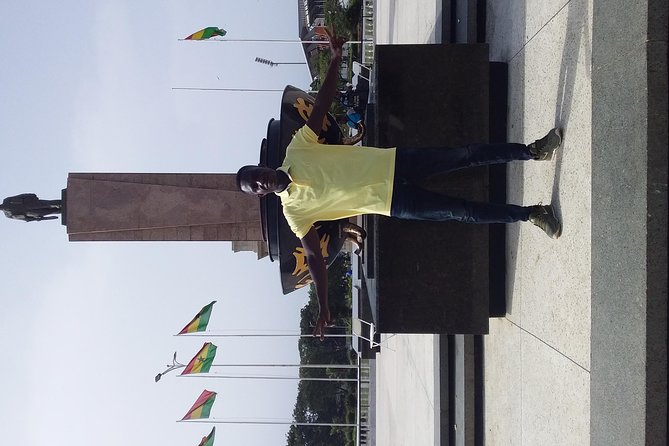
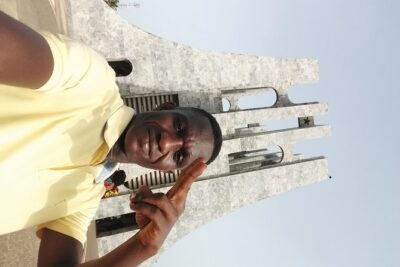
The Kwame Nkrumah Mausoleum is the final resting place of Dr. Kwame Nkrumah, Ghana’s independence leader and first president. This stop gives Day 4 a national political focus after the market’s everyday energy.
The mausoleum helps connect modern Ghana with the struggle for independence. It is a useful complement to the castles and palace because it brings the story into the twentieth century and focuses on the country’s own political direction.
The tour places this visit after Makola Market, which creates a strong contrast. You move from trade and daily life to a formal place of national memory. If you are interested in Ghana’s independence, this should be one of the stops where you ask your guide for extra explanation.
British James Town, the lighthouse, and Usher Fort
British James Town was the first British settlement in Accra. The area is also home to the famous lighthouse and Usher Fort.
This final sightseeing stop gives you a look at Accra’s coastal and colonial roots before departure. It is especially useful for visitors who want to understand the city beyond its modern commercial side.
The description does not specify how long you will spend inside each site, so do not expect a long, unhurried exploration of every building. Day 4 already includes the trip from Kumasi, Makola Market, the Kwame Nkrumah Mausoleum, and the airport transfer. I would treat James Town as an important orientation to Accra rather than a full standalone walking tour.
The airport departure is planned for two hours before check-in time. Keep your flight details ready and tell the operator your schedule accurately. Since the day contains several stops and road travel, this is not the time to build in a very tight flight connection.
What the $1,800 price really covers
The $1,800 per person price is best judged as the cost of a private, multi-day package rather than four separate admission visits. Included are:
- An air-conditioned vehicle
- Entrance fees
- A tour guide
- Unlimited bottled water
- Landing and facility fees
The private setup can be valuable for a family or small group that wants to stay together and avoid a large coach. It also gives you one guide across a route that includes history, nature, crafts, markets, and airport timing.
The price does not include a visa fee, personal items, or gratuities for the guide and driver. Those extra costs should be added to your budget before booking. Shopping at Makola, the Cultural Centre, Adanwomase, or Ntonso would also be personal spending.
The strongest value comes if you would otherwise need to arrange several transfers, guides, and entrance tickets yourself. If you are already comfortable organizing Ghana’s long-distance transport and local visits, the price may feel high. If you want one private arrangement with the main fees and transport handled, it is easier to justify.
Who should book this tour?
I would recommend this tour to a first-time Ghana visitor with four days available and a strong interest in culture and history. It suits families and private groups that want their own vehicle, a guide, and a planned route.
It is also a good fit if you want variety. One day brings castles and forest, another brings a palace and crafts, and the final day combines a market, a mausoleum, a historic settlement, and the airport.
I would hesitate if you want slow mornings, long stays at each site, or several unplanned hours. The eight-hour daily schedule and early final departure make this a focused sightseeing trip. You should also be comfortable with a full road-based itinerary.
The two strongest practical benefits are the guide support and the included transport. The guide’s help at Makola Market, including assistance with black soap and shea butter purchases, is a useful detail for anyone nervous about shopping in a large open-air market. The overall service has also been praised for being humble and informative, though specific guide names are not provided.
Free cancellation is available if you cancel at least 24 hours before the experience start time. Changes or cancellations made less than 24 hours before the start are not accepted for a refund.
Should you book the Ghana southern tour?
Book it if your priority is seeing a wide range of Ghanaian places in a short period, with private transport and entrance fees arranged for you. The best parts are the strong mix of castles, Ashanti culture, craft villages, nature, Accra history, and practical market assistance.
Skip it if you prefer a relaxed schedule or want to explore one region in depth. Four days is enough for a broad introduction, not enough for every stop to receive a leisurely visit. At $1,800 per person, the tour makes the most sense for a private group that values convenience, guidance, and a packed cultural route.
FAQ
Where does the tour start?
The tour is based in Accra, Ghana, and pickup is offered. The listed start time is 7:00 a.m.
How long does the tour last?
The experience lasts approximately four days. Each itinerary day is planned for about eight hours.
Is this a private tour?
Yes. Only your group participates in the private tour or activity.
What is included in the tour price?
The price includes landing and facility fees, an air-conditioned vehicle, entrance fees, a tour guide, and unlimited bottled water.
Are the castle admission fees included?
Yes. Entrance fees for the listed attractions are included in the tour price.
Does the tour include airport transportation?
Yes. On Day 4, the group leaves for the airport two hours before the stated check-in time.
Are visa fees and personal purchases included?
No. Visa fees, personal-use items, and gratuities for the tour guide and driver are not included.
Can I cancel for a full refund?
Yes, if you cancel at least 24 hours before the experience start time. Cancellations or changes made less than 24 hours before the start are not accepted for a refund.
Just added in Accra
- Wli Waterfall And Tafi Monkey Sanctuary ( Volta Region)★ 5.0 · 1 review
- Traditional Beadmaking Workshop★ 5.0 · 1 review
- Private 9-Day Tour in Ghana★ 5.0 · 2 reviews
- Wli Waterfalls, Mount Afadjato & Tafi Atome Monkey Sanctuary★ 5.0 · 2 reviews
- Cape Coast and Elmina castle Day Trip★ 5.0 · 2 reviews
- Culinary for Social Change-Cooking Class★ 5.0 · 2 reviews
- Time with Nature★ 5.0 · 2 reviews
- Historical Day Tour to Cape Coast, Elmina and Kakum★ 5.0 · 3 reviews
Accra Tours, compared.
Experience the Beauty, History and the Culture Of Accra in a Day
Read our review →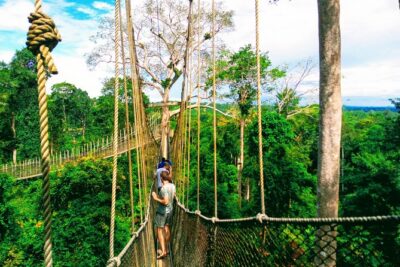

Cape Coast, Elmina Castle & Kakum Park Day Tour
Read our review →
Browse the lists this tour appears in