
REVIEW · ACCRA TOURS
A Taste of West Africa – Ghana Togo & Benin
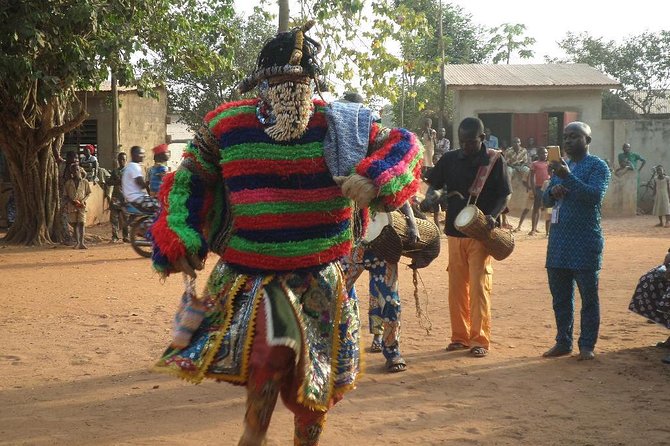
Three countries, eight days, one busy journey. This private West African trip links Ghana’s slave-trade castles, Togo’s sacred sites, and Benin’s lake villages and Afro-Brazilian heritage in a way that would be difficult to arrange alone. I especially like the private guide, which allows the pace and attention to suit your group, and the chance to see both major landmarks and living traditions, from fantasy coffin makers to a Gelede masked dance and Zangbeto Ceremony when scheduled. The main consideration is the demanding schedule: border crossings, long road days, early starts, and many stops leave little time for slowing down.
The tour costs $2,861.54 per person and runs for about eight days from Accra. That price includes accommodation and some meals, along with many listed admission fees, but not every expense is covered. I would read the final inclusions carefully, especially for the Akodessewa Fetish Market, where admission is not included, and confirm the exact hotel plan before paying.
In This Review
- Five things to know before you book
- Accra begins with James Town and a private welcome
- Kakum and Cape Coast: rainforest above, painful history below
- Elmina Castle and Fort St Jago reveal two sides of the coast
- Accra’s coffins, art, and independence story
- Lomé brings markets, voodoo traditions, and Lake Togo
- Porto-Novo connects West Africa with Brazil
- Ganvie on Lake Nokoue is the visual high point
- The final morning leaves room for Osu shopping
- What the $2,861.54 price really covers
- Who will enjoy this route most?
- Should you book A Taste of West Africa?
- FAQ
- Where does the tour start and finish?
- How long does the experience last?
- Is this a private tour?
- Are accommodation and meals included?
- Is admission included at every stop?
- What level of fitness do I need?
- Can I cancel for a full refund?
Five things to know before you book
- You cross three countries in eight days: Ghana, Togo, and Benin are connected by road, so the trip gives you broad coverage but not much free time.
- The private format matters: Only your group participates, and guides can give more personal attention than a large coach tour.
- History comes with difficult subjects: Cape Coast, Elmina, Ouidah, and Porto-Novo all connect to slavery, colonial rule, religion, and cultural change.
- The most unusual stops are local and personal: Fantasy coffins, a fetish market, sacred pythons, and Ganvie offer a look beyond standard sightseeing.
- Solo visitors receive extra reassurance: The company has been praised for quick communication, reliability, and flexible arrangements.
- Plan for moderate activity: Forest trails, a canopy walkway, market visits, boat rides, and full sightseeing days require reasonable fitness.
Accra begins with James Town and a private welcome
Your trip starts in Accra at 8:00 a.m., although the first day depends on your arrival time. A Blastours representative meets your group for the hotel transfer, then you may have time for a walking tour through James Town, one of old Accra’s historic districts.
That flexible first afternoon is useful. After a flight, you may prefer a short walk and an early night rather than a full program. If you arrive with energy, James Town gives you an immediate sense of the capital’s older streets and coastal setting.
The private arrangement is especially helpful on arrival day. Your guide can explain the schedule, answer practical questions, and help you get oriented without forcing you into the rhythm of a large group. For solo visitors, this personal contact can make the first hours in West Africa feel less daunting.
The company has received especially strong praise for communication and care with solo clients. One solo visitor described the service as reliable and flexible, while another singled out guide Patrick for his driving and personal attention. Patrick is not necessarily assigned to every booking, but his role shows the kind of guide support this company aims to provide.
More things to do in Accra:
- The Cape Coast Day Tour
★ 5.0 · 525 reviews - Experience the Beauty, History and the Culture Of Accra in a Day
★ 5.0 · 323 reviews - The Cape Coast Tour
★ 5.0 · 177 reviews
Kakum and Cape Coast: rainforest above, painful history below
Day two heads west toward Kakum National Park. The main choice here is between a one-hour forest walk and the canopy walkway, described as the longest and highest in West Africa. The entire stop is planned for about two hours, with admission included.
The canopy route is the memorable option for many people. You cross suspended walkways above undisturbed rainforest, giving you a different view from a normal trail. It is not simply a photo stop, though the setting is certainly camera-friendly. Heights may be a concern, and the tour’s moderate fitness recommendation is worth taking seriously if you choose the forest walk as well.
The day also includes brief stops at an oil palm plantation and a local factory. These visits add working life to a day otherwise focused on nature and history. The description does not specify how long you spend at either stop, so treat them as short roadside introductions rather than full workshops.
Cape Coast Castle follows. Built by the Swedes in 1653, later taken by the Danes, and eventually controlled by the British, the fortress tells the story of changing European power on the Ghanaian coast. The guided visit lasts about an hour and is included.
This is difficult sightseeing, and it should be. Cape Coast is tied to the Atlantic slave trade, and the fort’s rooms and passages carry a human weight that no quick photograph can explain. I appreciate that the tour gives the castle a proper stop instead of reducing it to a drive-by landmark. Still, an hour can feel short for a place with this much to absorb.
Elmina Castle and Fort St Jago reveal two sides of the coast
The next day centers on Elmina. The castle, built by the Portuguese and later associated with the slave trade, is described as well preserved. You spend about an hour inside, learning how the fort functioned and how enslaved people were held before shipment across the Atlantic.
Elmina Castle is not an easy attraction, but it is one of the most important parts of the trip. I would arrive ready to listen rather than simply collect photographs. The visit also gains meaning from the previous day at Cape Coast, since the two castles show how European powers built commercial and military systems along the coast.
Fort St Jago adds another layer to the Elmina city tour. From its position near the castle, the fort connects the colonial past with present-day Fanti life. The planned hour here gives your guide room to discuss both the architecture and the city around it.
The strength of these two days is their balance. Kakum brings forest and open air, while Cape Coast and Elmina ask you to face the region’s painful past. The drawback is emotional as much as physical. Two castle visits in close succession may feel heavy, particularly if you prefer a slower treatment of difficult history.
Accra’s coffins, art, and independence story
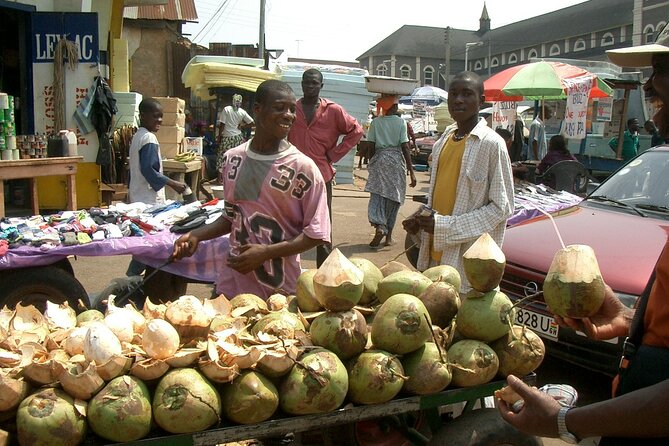
Day four returns to Accra and shifts from coastal forts to modern Ghanaian culture. At Nungua Local Market, you visit fantasy coffin makers. These artisans create coffins shaped around a person’s work, interests, or affiliation, turning a practical object into a highly personal piece of design.
This is one of the tour’s most distinctive stops because it connects art with everyday beliefs and family identity. You meet the person behind the trade rather than seeing only finished objects in a gallery. The visit lasts about an hour, giving you time to understand the craft.
Artists Alliance Gallery follows. Its collection includes paintings and sculpture by established and emerging Ghanaian artists. If you want to bring home something more meaningful than a rushed market purchase, this stop gives you a chance to see contemporary work in a calmer setting.
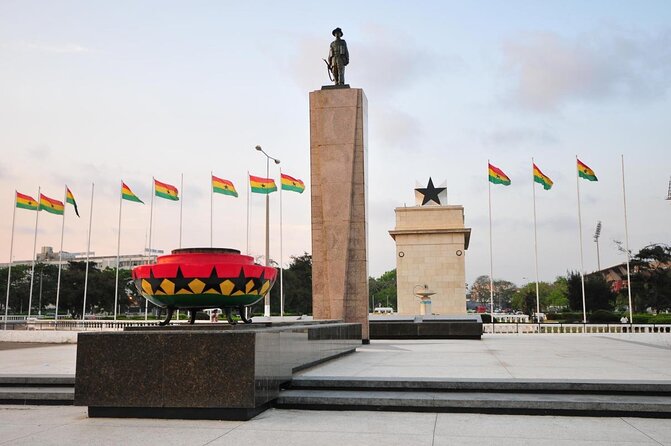
Next comes Independence Square, also called Black Star Square. Ghana declared independence from colonial rule here in 1957. The planned visit is only 30 minutes, so expect a focused stop for the national story and the public space rather than a long historical tour.
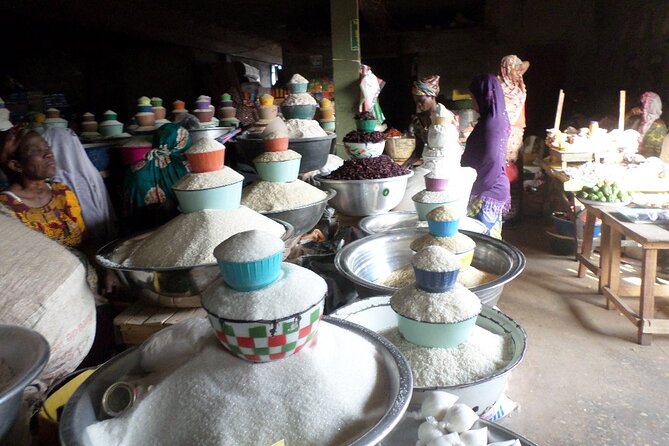
The Center for National Culture completes the day. This is Ghana’s largest craft market, with African arts, crafts, and traditional clothing. I would save some shopping energy for this stop, but keep your budget and luggage space in mind. Markets are part of the experience, yet you should feel free to browse without buying.
A completely different kind of day:
- From Accra: Cape Coast, Elmina Castle & Kakum Park Day Tour
★ 4.6 · 144 reviews - Accra Detailed City Tour
★ 4.5 · 118 reviews - Accra Guided City Tour Experience
★ 4.7 · 88 reviews - Accra Guided City Tour Experience
★ 5.0 · 76 reviews
Lomé brings markets, voodoo traditions, and Lake Togo
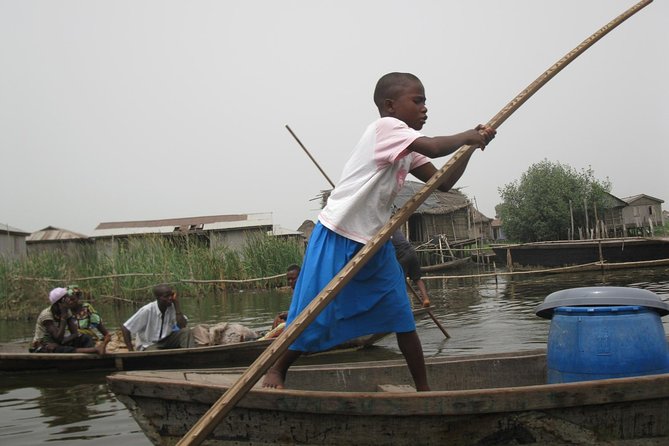
Day five crosses into Togo and begins at Grand Marché in Lomé. The open-air market is linked with the famous Nana Benz, the women traders known for their role in Togo’s textile commerce. The hour here gives you a short introduction to market life and local trade.
The next stop, Akodessewa Fetish Market, is more confronting. It is described as a voodoo market where local sorcerers obtain charms and remedies. Admission is not included, so confirm the extra cost before you go.
You may find this visit fascinating, uncomfortable, or both. The best approach is to listen carefully to your guide and treat religious objects with respect. This is not a staged theme park attraction. It presents a living belief system, and the subject deserves more care than a quick joke or casual photograph.
At Lake Togo, a boat carries you to Togoville. The roughly two-hour visit includes shrines, an old German cathedral, and the traditional museum of the King of Togoville. The water journey also breaks up the road travel and gives the day a calmer rhythm.
This stop links religious practice, colonial history, and royal tradition. The itinerary refers to a Zangbeto Ceremony among the cultural experiences associated with the wider trip, along with a Gelede masked dance. Exact performance dates and arrangements are not provided, so ask Blastours if these are guaranteed for your travel dates or offered only when available.
Porto-Novo connects West Africa with Brazil
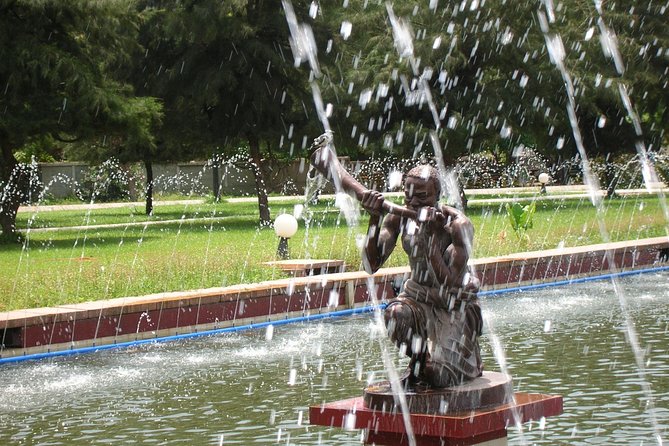
Day six takes you into Benin and the city of Porto-Novo. The Great Mosque is one of the visual highlights. It was formerly a church designed in Brazilian style, reflecting the influence of Afro-Brazilians who returned to West Africa after emancipation in Brazil.
The two-hour city visit also includes the market, Ethnographic Museum, Da Silva Museum, and the 300-year-old Palace of King Toffa. Taken together, these sites show that Porto-Novo’s story is not confined to one country. African, Brazilian, European, royal, and religious influences meet here.
I like this day because it broadens the usual West African travel story. You are not only looking backward to colonial forts or the slave trade. You are also seeing how people who returned from the Americas helped shape architecture, family life, and urban culture.
The schedule is full, though. A market, several museums, a mosque, and a palace in two hours means some visits may be brief. If one place especially interests you, tell your guide early. A private tour gives you a better chance of adjusting emphasis, though the overall route still has to keep moving.
Ganvie on Lake Nokoue is the visual high point
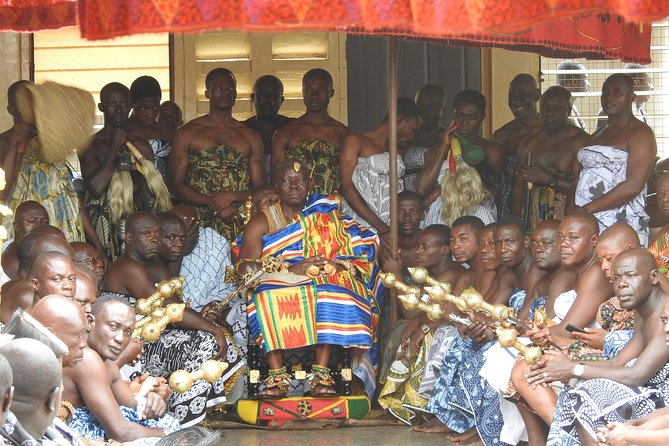
Day seven begins with a boat ride on Lake Nokoue to Ganvie, a 500-year-old village built on the water. It is often called the Venice of the continent, but the comparison only goes so far. Ganvie grew as a refuge from attacks by Fon and Dahomey warriors, who were traditionally forbidden to fight on water.
The two-hour visit is one of the trip’s most memorable settings. You see how a community developed around the lake rather than treating water as an obstacle. The boat ride also gives you a welcome change from vehicle travel.
After Ganvie, you visit the Sacred Forest and Temple of Pythons. Sacred snakes are central to the site, so this is another stop where an open mind and respectful behavior matter. The visit lasts about an hour and admission is included.
The Ouidah Museum of History occupies a former Portuguese fort. Its exhibits focus on the slave trade and Benin’s cultural links with Brazil and the Caribbean. The planned 30 minutes is short, but the museum adds context to the Afro-Brazilian architecture seen in Porto-Novo.
These visits work best as a group. Ganvie offers a striking living community, while the temple and museum explain religious and historical connections. The day may be tiring, especially after several long sightseeing days, but it is also the point where the three-country route feels most distinctive.
The final morning leaves room for Osu shopping
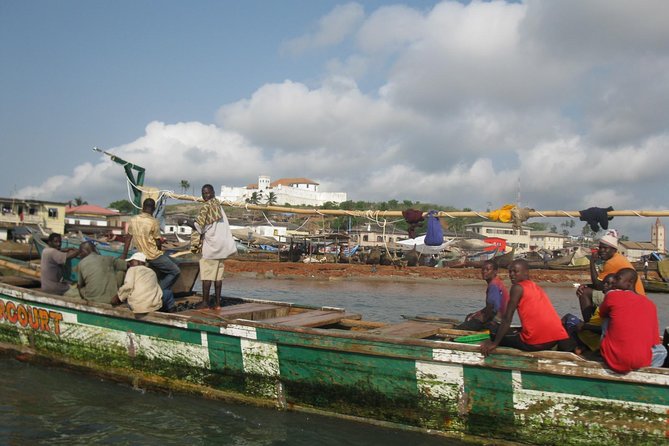
Day eight returns to Accra for a free shopping period on Osu Oxford Street before departure. The listed time is two hours, and the activity ends back at the original meeting point.
This is a practical ending. You can look for gifts, clothing, or crafts after seeing the markets earlier in the trip, and you do not have to carry purchases through the entire itinerary. Since the departure timing is not specified, confirm how much time you actually have before your onward journey.
The final morning will feel different depending on your flight. If you have a late departure, two hours may be enough for a relaxed last walk and a few purchases. If your flight is earlier, do not assume the full shopping period will fit.
What the $2,861.54 price really covers
At $2,861.54 per person, this is not a budget road trip. Its value comes from the private structure, cross-border planning, guiding, transport, accommodation, some meals, and many included admissions.
Arranging Ghana, Togo, and Benin independently would require separate research into routes, hotels, border procedures, guides, and timing. The private format also matters if you are traveling alone or with a small family group. You are paying for coordination and support, not only entry tickets.
Still, the price does not mean every expense disappears. The Akodessewa Fetish Market admission is specifically excluded, and the details of meals and hotels are not fully provided. Ask for a written breakdown covering accommodation standards, included meals, transport, border-related costs, guide arrangements, and any ceremony fees.
The trip is usually booked around 115 days ahead. That suggests planning early is sensible, especially if you need time to arrange flights, passports, visas, vaccinations, or other personal requirements. The tour information does not explain visa rules, so contact the operator and the relevant consulates before booking.
Who will enjoy this route most?
I would recommend this tour to you if you want a concentrated introduction to West Africa and prefer having a private guide manage the practical side. It suits people who care about history, religion, art, architecture, local trade, and cultural connections across the Atlantic.
It is also a strong choice for solo visitors who want company and help without joining a large group. The company has been praised for quick replies, flexibility, and personal care. Mimi handled itinerary customization for one traveler, while Patrick was praised for his driving and attention, though guide assignments can vary.
I would think twice if you dislike long road journeys, border crossings, markets, uneven walking, heights, or tightly packed days. The itinerary includes many one-hour stops, several boat rides, and only limited free time. You should have moderate physical fitness, follow the smart-casual dress code, and tell the company about dietary needs when booking.
Free cancellation is available up to 24 hours before the start time for a full refund. Changes made within 24 hours are not accepted, so keep that deadline in mind.
Should you book A Taste of West Africa?
Book this tour if your priority is range. In eight days, you see Ghanaian independence sites, rainforest, slave-trade castles, Togolese religious traditions, Brazilian-influenced Benin, Ganvie’s water village, and Ouidah’s historical links to the Americas.
Do not book it expecting a restful holiday or a slow, single-country study. This is a packed introduction, best for curious and adaptable people who value access and guidance over free time.
For the best experience, ask Blastours three things before paying: which hotels and meals are included, what border and visa assistance is offered, and whether the Gelede and Zangbeto cultural events will occur on your dates. If the answers suit your needs, the private format makes this ambitious route far more practical than trying to piece it together alone.
FAQ
Where does the tour start and finish?
The tour starts in Accra, in the Greater Accra region, and ends back at the meeting point in Accra.
How long does the experience last?
The tour lasts approximately eight days. The stated start time is 8:00 a.m.
Is this a private tour?
Yes. Only your group participates in the private activity.
Are accommodation and meals included?
Accommodation and some meals are included. The available information does not specify the hotels or the exact number of included meals, so confirm those details before booking.
Is admission included at every stop?
Many admissions are included, including Kakum National Park, Cape Coast Castle, Elmina Castle, Fort St Jago, Lake Togo, the Great Mosque of Porto-Novo, Lake Nokoue, the Temple des Pythons, and the Ouidah Museum of History. Admission to Akodessewa Fetish Market is not included.
What level of fitness do I need?
You should have a moderate level of physical fitness. The trip includes forest walking, a canopy walkway, market visits, boat rides, and several full sightseeing days.
Can I cancel for a full refund?
You can cancel at least 24 hours before the experience start time for a full refund. Cancellations or changes made less than 24 hours before the start time are not accepted for a refund.
Just added in Accra
- Wli Waterfall And Tafi Monkey Sanctuary ( Volta Region)★ 5.0 · 1 review
- Traditional Beadmaking Workshop★ 5.0 · 1 review
- Private 9-Day Tour in Ghana★ 5.0 · 2 reviews
- Wli Waterfalls, Mount Afadjato & Tafi Atome Monkey Sanctuary★ 5.0 · 2 reviews
- Cape Coast and Elmina castle Day Trip★ 5.0 · 2 reviews
- Culinary for Social Change-Cooking Class★ 5.0 · 2 reviews
- Time with Nature★ 5.0 · 2 reviews
- Historical Day Tour to Cape Coast, Elmina and Kakum★ 5.0 · 3 reviews
Accra Tours, compared.


Experience the Beauty, History and the Culture Of Accra in a Day
Read our review →

Cape Coast, Elmina Castle & Kakum Park Day Tour
Read our review →

Browse the lists this tour appears in