
REVIEW · CAPE COAST AND ELMINA CASTLE TOURS
Accra and Cape Coast Escape
History comes alive on Ghana’s coast. I like that this two-day experience pairs the sobering castles of Elmina and Cape Coast with the green canopy of Kakum National Park. I also like that the second day gives you a useful introduction to Accra, from the W.E.B. DuBois Center to Independence Square and the Arts Center. The main drawback is the long first day, especially the roughly four-hour drive to Kakum Park noted by one participant.
This is a serious amount of sightseeing for $250 per person, but the price includes local transport, entrance fees, fuel charges, taxes, guide support, and hotel pickup and drop-off within Accra. You should still plan for meals, accommodation, and possible itinerary changes, since one account described poor communication when the schedule was altered.
In This Review
- Key points to know before booking
- Why this two-day Ghana tour is worth considering
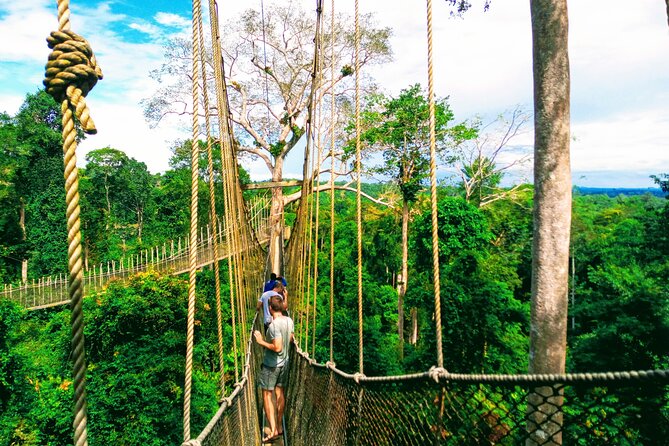
- Day one begins with Kakum’s 30-meter canopy walkway
- Elmina Castle reveals the changing purpose of the coast
- Cape Coast Castle adds another layer of painful history
- Accra’s W.E.B. DuBois Center connects Ghana with Pan-African thought
- The Kwame Nkrumah Memorial Park explains Ghana’s independence
- Independence Square is grand, open, and brief
- The Arts Center is the place to shop for Ghanaian crafts
- Transport, meals, and timing affect the value
- The guide can shape the entire experience
- Who should book the Accra and Cape Coast Escape?
- Should you book this Ghana tour?
- FAQ
- How long is the Accra and Cape Coast Escape?
- What is the price per person?
- What does the price include?
- Are meals included?
- Is accommodation included?
- Where does the tour start?
- Where does the tour end?
- How large can the group be?
- What sites are visited on day one?
- What sites are visited on day two?
- Can I cancel for a refund?
- Can the tour be canceled because of weather?
Key points to know before booking
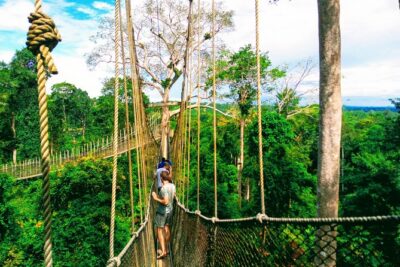
- Kakum’s canopy walkway rises 30 meters above the forest floor, giving you a treetop view and a chance to look for birds and monkeys.
- Elmina Castle and Cape Coast Castle cover different chapters of Ghana’s past, but visiting both on one day can feel emotionally heavy.
- The drive from Accra to Kakum can take about four hours, so prepare for a long day in the vehicle.
- Accra’s second day is museum and monument focused, with stops connected to Pan-Africanism, independence, and Ghanaian national identity.
- The Center for National Culture is the shopping stop, with Kente cloth, wood carvings, jewelry, and other Ghanaian crafts.
- The group may be as large as 40 people, although pickup within Accra and group discounts add practical value.
Why this two-day Ghana tour is worth considering
The Accra and Cape Coast Escape is best understood as two very different days. The first takes you west along Ghana’s coast toward Kakum National Park and two former European forts. The second stays in Accra and focuses on politics, independence, Pan-African thought, and local handicrafts.
That contrast is the tour’s strength. You are not spending two days looking at similar monuments. One day places you in tropical forest and coastal history. The next gives you a basic framework for understanding modern Ghana.
I particularly like the way the experience includes both famous sites and a shopping stop. The castles are the emotional center, but the Arts Center gives you time to handle local crafts and bring home something more meaningful than a generic souvenir.
The tour is sold at $250 per person. That is not a small amount, but it covers most of the major costs that can make a private or guided day trip expensive: transport, admissions, fuel, taxes, and guide support. Since meals and lodging are not included, you need to compare the price with your own plans in Accra.
The group limit is 40 people. That can work well if you want an organized outing without arranging transport yourself, but it may feel less personal than a small-group trip. Ask how many people are expected on your date if having a quieter experience matters to you.
More Cape Coast and Elmina castle tours:
- The Cape Coast Day Tour
★ 5.0 · 525 reviews - The Cape Coast Tour
★ 5.0 · 177 reviews - From Accra: Cape Coast, Elmina Castle & Kakum Park Day Tour
★ 4.6 · 144 reviews
Day one begins with Kakum’s 30-meter canopy walkway
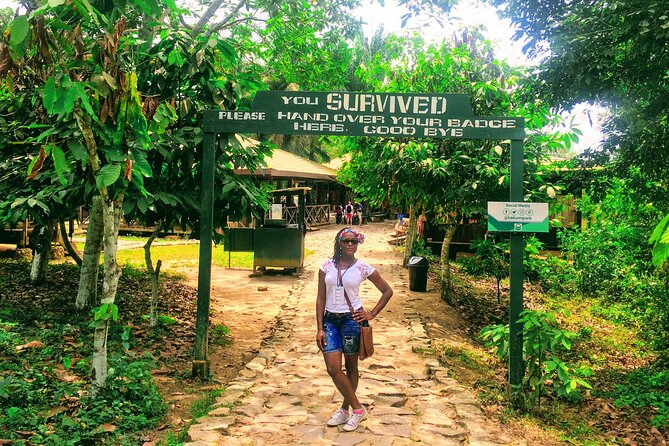
Kakum National Park is the first major stop on day one. The park was established in 1932 and protects mostly undisturbed tropical rainforest. Its trails offer the chance to look for more than 200 bird species, including parrots, bee-eaters, blue plantain-eaters, hornbills, and kingfishers.
You might also see monkeys, and the forest provides cover for species such as the forest elephant and bongo. The tour does not promise wildlife sightings, so think of this as a forest visit rather than a safari. The plants, high trees, bird calls, and canopy structure are the main draw.
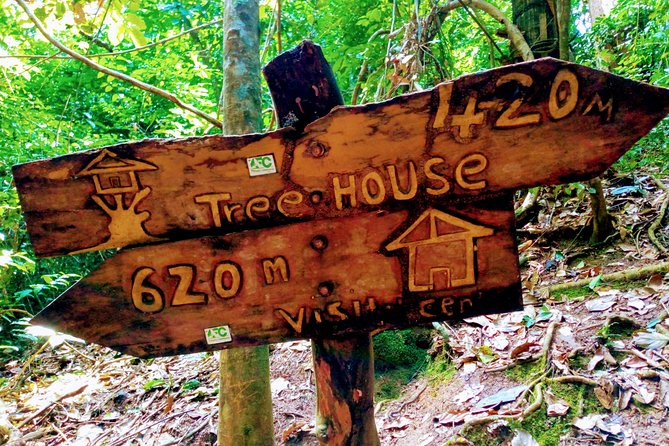
The highlight is the canopy walkway, suspended about 30 meters above the ground. It gives you a completely different view of the park than a trail at ground level. If you dislike heights, this part may be uncomfortable, but the itinerary also refers to self-guided hiking trails, so the park offers more than one way to experience it.
The planned visit lasts about two hours, with admission included. That is enough time to experience the walkway and get a taste of the forest, though not enough for a long hike or patient wildlife watching.
The drive matters here. One account put the journey to Kakum at about four hours from Accra. That makes this a demanding day, especially once you add two castle visits afterward. Bring water, keep your expectations realistic, and treat the time on the road as part of the price of reaching Ghana’s central coast.
Elmina Castle reveals the changing purpose of the coast
Elmina Castle was built by the Portuguese in 1482 as São Jorge da Mina. It was the first European trading post built on the Gulf of Guinea and is described as the oldest European building still existing south of the Sahara.
Its early purpose was trade, including gold and other goods. Over time, Elmina became one of the key sites connected with the Atlantic slave trade. That change in purpose is important. The castle was not created only as a prison, but its later role gives the visit much greater weight.
The guided visit lasts about one hour, and admission is included. You should expect a compact, concentrated presentation rather than a leisurely museum visit. The value comes from being inside the actual structure, where the history is tied to rooms, walls, and the coast outside.
This is not easy sightseeing. The subject matter is painful, and you may need quiet time afterward. One person described both castle tours as difficult to take in, even while enjoying the overall day. That is a fair warning. You should not schedule a carefree beach evening immediately after this portion unless you are comfortable processing difficult material quickly.
Cape Coast Castle adds another layer of painful history
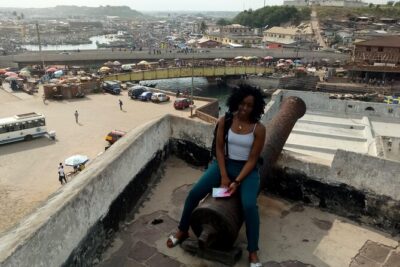
Cape Coast Castle began as a Portuguese trade lodge in 1555. A wooden fortress was later built by the Swedish Africa Company in 1653, then reconstructed in stone after the Danes took control. The fort changed hands among several European powers before becoming closely associated with the Atlantic slave trade.
Like Elmina, Cape Coast Castle shows how commerce, military power, colonial control, and human suffering became tied together along the Gold Coast. The one-hour visit is short, but the site gives you another angle on the same larger story.
Visiting both castles in one day has a clear benefit: you can compare them while the information is fresh. The drawback is repetition and emotional fatigue. You may feel that the second tour adds essential context, or you may find yourself struggling to absorb more after Elmina.
I would still favor seeing both if this is your main chance to visit the coast. Just allow yourself some mental space. The most valuable part of this day is not collecting two check marks. It is listening carefully and recognizing the human cost behind the buildings.
More things to do in Accra:
- Experience the Beauty, History and the Culture Of Accra in a Day
★ 5.0 · 323 reviews - Accra Detailed City Tour
★ 4.5 · 118 reviews - Accra Guided City Tour Experience
★ 4.7 · 88 reviews - Accra Guided City Tour Experience
★ 5.0 · 76 reviews
Accra’s W.E.B. DuBois Center connects Ghana with Pan-African thought
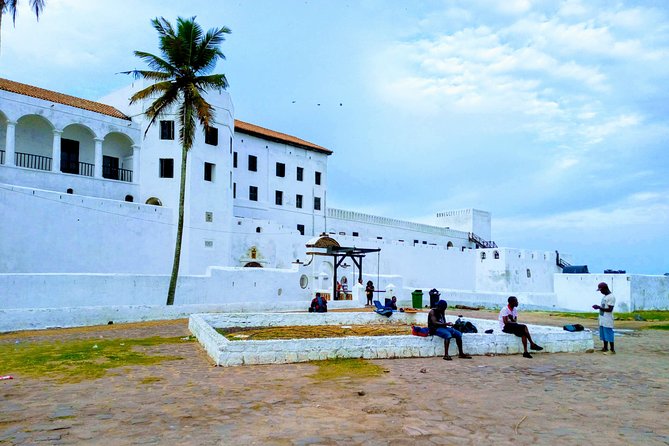
Day two changes pace. At the W.E.B. DuBois Center, you learn about the African-American civil rights activist who became a citizen of Ghana in the 1960s. DuBois is widely associated with the early development of Pan-Africanism.
The center occupies the place where he lived with his wife, and both are buried there. The site includes his personal library, a small museum, graduation robes and other personal items, a mausoleum, a seminar room, a restaurant, a gallery, an amphitheater, and a research center focused on Pan-African history and culture.
The scheduled visit lasts 40 minutes. That is enough for an introduction, but not enough for extended reading or research. I would approach this stop as a concise orientation to DuBois and his final years in Ghana rather than a full academic visit.
The center is especially useful after the castle day. The first day deals with forced movement and colonial exploitation. This stop turns toward African identity, political thought, and the connections between Ghana and the wider African diaspora.
The Kwame Nkrumah Memorial Park explains Ghana’s independence
The Kwame Nkrumah Memorial Park is the mausoleum and museum dedicated to Ghana’s first president, Osagyefo Dr. Kwame Nkrumah. It is also his final resting place.
The museum contains personal effects, publications, and photographs from his life. The focus is Nkrumah’s role in ending colonial rule in the Gold Coast and shaping Ghana as an independent nation.
You receive about one hour here, with admission included. That gives you time to view the displays and connect Nkrumah’s political work with the broader Pan-African themes introduced at the DuBois Center.
For you, the main benefit is context. Ghana’s independence was not an isolated event. It influenced other African countries seeking freedom from colonial rule. The next stop, Independence Square, reinforces that message in a much larger public setting.
Independence Square is grand, open, and brief
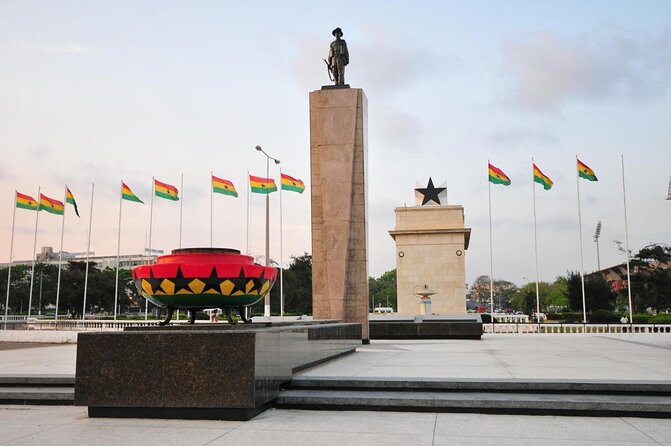
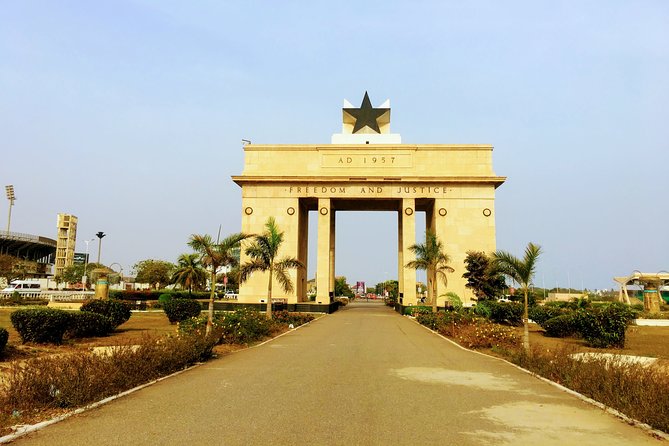
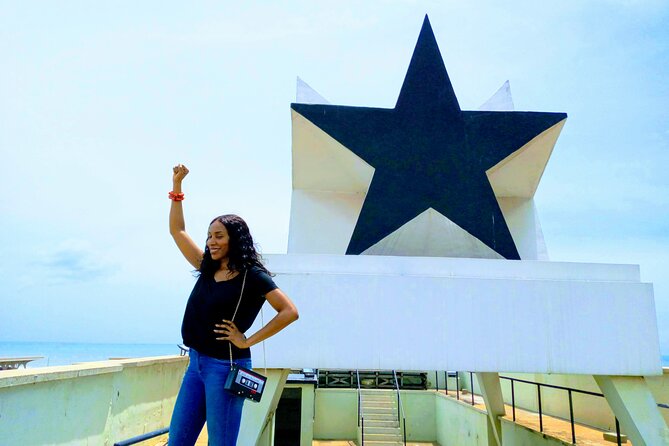
Independence Square, also known as Black Star Square, is a huge concrete plaza overlooked by spectator stands that can hold around 30,000 people. Kwame Nkrumah commissioned it in connection with the visit of Queen Elizabeth II.
The square includes the Independence Arch, the Flame of African Liberation, and the Black Star Gate, also known as the Black Star Monument. The monument was built in 1961.
The scheduled stop lasts only 20 minutes. That is appropriate for a large open plaza where the main activity is seeing the monuments and hearing their meaning. You should not expect a long museum visit or a shaded walking tour.
The space may seem stark compared with Kakum’s forest or the busy displays at the museums. That is part of its purpose. Its scale communicates national ceremony and public power. Keep your expectations simple, take in the symbols, and listen to the guide’s explanation.
The Arts Center is the place to shop for Ghanaian crafts
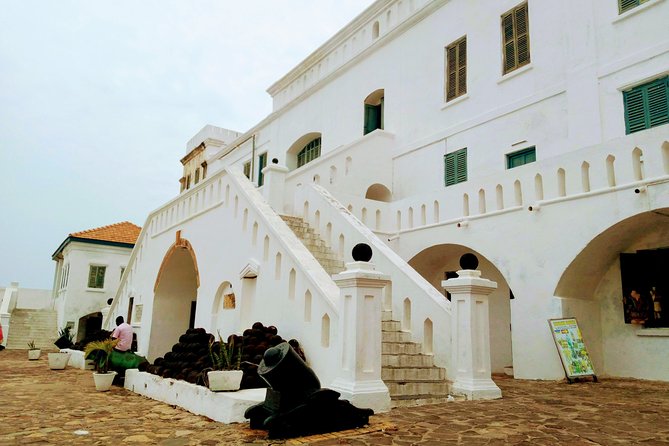
The Center for National Culture, often called the Arts Center, is the shopping stop on day two. Its stalls sell Ghanaian-inspired arts and crafts, including woven Kente cloth, wooden sculptures, earrings, and other fashion accessories.
This is a useful final stop because it gives you time to browse after a day of museums and monuments. You can look for a practical souvenir, a piece of fabric, or a small carved item rather than rushing through a market between major attractions.
You should expect to bargain or compare prices carefully, though the supplied information does not specify how purchasing works at individual stalls. If you find something you like, take your time checking the workmanship and asking about the material.
The planned visit is 30 minutes. That is enough for a quick purchase, but not much time for a relaxed shopping session. If you love crafts or want to choose several gifts, half an hour may feel short.
Transport, meals, and timing affect the value
Hotel pickup and drop-off are offered within Accra, and the listed meeting point is Accra Mall at Plot C11, Tetteh Quarshie Interchange, Spintex Road. The tour ends back at the meeting point.
That arrangement is helpful if you are staying in Accra and do not want to arrange a car for the coast. Local transportation, fuel charges, taxes, entrance fees, and guide support are included. Meals are not included, and accommodation is also outside the price.
The two days are described as full-day tours. Day one is the tougher day because it combines a long drive, a national park visit, and two major castle tours. Day two contains four shorter urban stops and should feel more manageable, although the timing still depends on traffic and the pace of the group.
The experience can accommodate most people, and service animals are allowed. It is near public transportation, but the provider also offers pickup. Confirmation is provided at booking, and the maximum group size is 40.
The cancellation terms are reasonable. You can receive a full refund if you cancel at least 24 hours before the start time. Changes made inside that period are not accepted, and bad weather may lead to another date or a full refund.
The guide can shape the entire experience
The guide matters greatly on a tour built around difficult history. A guide named Zainab received particularly warm praise for kindness, clear information, and her ability to make the drive and lunch period more engaging.
That detail is useful, but guide assignments can vary. If you are traveling alone, the provider’s female guides may also be reassuring. One solo visitor specifically valued having women guide her through Ghana and felt comfortable asking questions about the country.
Communication deserves attention. One account described a changed itinerary that was not explained clearly. Before departure, confirm the stops, pickup details, start time, and any changes. This is especially important because the two-day schedule has little spare time.
Who should book the Accra and Cape Coast Escape?
I would recommend this tour if you want a structured introduction to Ghana and have limited time in Accra. It covers major historical sites, a national park, national monuments, and a crafts market without requiring you to arrange multiple drivers or entrance tickets.
It suits solo visitors, first-time visitors, and anyone who wants guide support while learning about Ghana’s connection to the Atlantic slave trade and Pan-African independence movements. The included transportation also makes sense if you do not want to navigate the long road to Cape Coast yourself.
I would think twice if you dislike long road journeys, large groups, or emotionally difficult historical sites. Day one is not light sightseeing. It may be too compressed if you prefer slow museum visits, long forest walks, or time to reflect between castle tours.
At $250, the value is solid if you use the included transport and admissions. It is less attractive if you already have a car, plan to visit only Accra, or want a small private tour with flexible timing.
Should you book this Ghana tour?
Book it if you want the major Cape Coast sites, Kakum National Park, and central Accra landmarks in one organized package. The best reason to choose it is the range: forest, castles, independence sites, Pan-African history, and local crafts all appear within two days.
Before paying, confirm the exact itinerary and pickup arrangements. If you can handle the long first day and the serious subject matter, this is a useful, well-priced introduction to Ghana’s past and present.
FAQ
How long is the Accra and Cape Coast Escape?
The experience lasts approximately two days. Both days are described as full-day tours from Accra.
What is the price per person?
The listed price is $250 per person.
What does the price include?
The price includes local transportation, entrance fees, hotel pickup and drop-off within Accra, fuel charges, taxes, guide support, and the activities listed in the schedule.
Are meals included?
No. Daily meals are not included.
Is accommodation included?
No. Accommodation is not included in the tour price.
Where does the tour start?
The listed meeting point is Accra Mall, Plot C11, Tetteh Quarshie Interchange, Spintex Road, Accra, Ghana.
Where does the tour end?
The activity ends back at the meeting point.
How large can the group be?
The maximum group size is 40 people.
What sites are visited on day one?
Day one includes Kakum National Park, Elmina Castle, and Cape Coast Castle.
What sites are visited on day two?
Day two includes the W.E.B. DuBois Center, Kwame Nkrumah Memorial Park, Independence Square, and the Center for National Culture.
Can I cancel for a refund?
Yes. You can cancel at least 24 hours before the experience starts for a full refund. Cancellations made less than 24 hours before the start time are not refunded.
Can the tour be canceled because of weather?
Yes. The experience requires good weather. If poor weather causes cancellation, you will be offered another date or a full refund.
Just added in Accra
- Wli Waterfall And Tafi Monkey Sanctuary ( Volta Region)★ 5.0 · 1 review
- Traditional Beadmaking Workshop★ 5.0 · 1 review
- Private 9-Day Tour in Ghana★ 5.0 · 2 reviews
- Wli Waterfalls, Mount Afadjato & Tafi Atome Monkey Sanctuary★ 5.0 · 2 reviews
- Cape Coast and Elmina castle Day Trip★ 5.0 · 2 reviews
- Time with Nature★ 5.0 · 2 reviews
- Culinary for Social Change-Cooking Class★ 5.0 · 2 reviews
- Historical Day Tour to Cape Coast, Elmina and Kakum★ 5.0 · 3 reviews
Cape Coast and Elmina Castle Tours, compared.


Cape Coast, Elmina Castle & Kakum Park Day Tour
Read our review →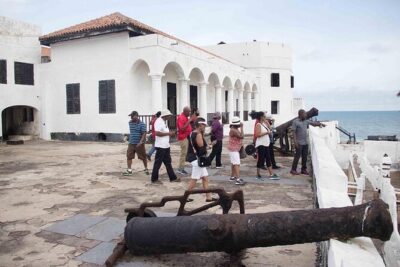
Cape Coast ,Elmina Castle and Kakum Full-Day Tour
Read our review →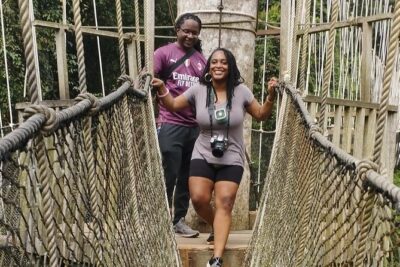

10 Days Trip to Cape Coast and Elmina Castles from Accra
Read our review →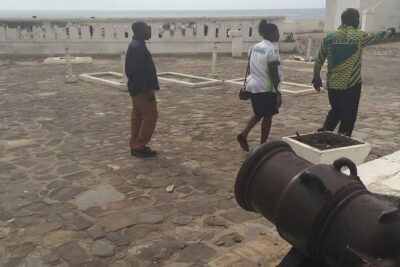
The Homecoming Experience To Cape-coast And Elmina.
Read our review →Browse the lists this tour appears in