
REVIEW · ACCRA TOURS
Accra City Experience
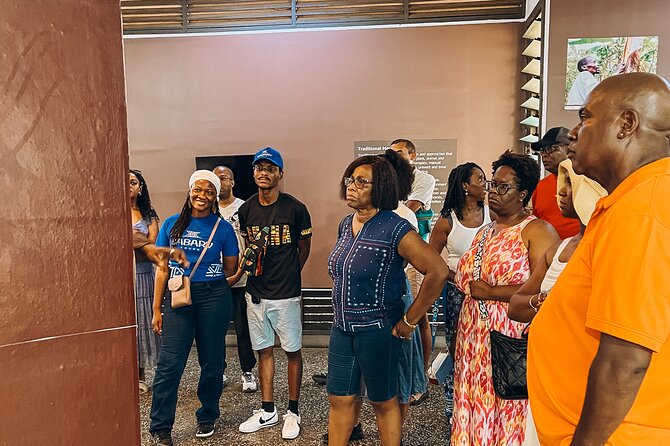
Accra rewards curious eyes. I like the mix of independence landmarks and coastal forts, plus the chance to hear local stories from Ghanaian guides who know the city beyond its main roads. I also like the small private format, with your group alone and no more than 12 people. The main drawback is the schedule: five stops in about four hours can feel brisk, especially at Ussher Fort and Osu Castle.
At $125 per person, this is not a bargain sightseeing bus. Still, the price includes an air-conditioned vehicle, admission fees, and a private tour. You are paying for door-to-door ease and local guidance, not just a ride between monuments. If your time in Accra is short, that convenience can be worth it.
In This Review
- Key points to know before booking
- Why this compact Accra tour works
- Kwame Nkrumah Memorial Park: Ghana’s independence begins here
- Black Star Gate and Independence Square
- Ussher Fort: a sobering coastal view
- The W.E.B. DuBois Centre: ideas, identity, and African connections
- Osu Castle and Accra’s Atlantic edge
- What $125 includes, and what it does not
- The guide and group format
- Who should book this Accra experience?
- Should you book the Accra City Experience?
- FAQ
- How long does the Accra City Experience last?
- What sites are included?
- Is transportation provided?
- Is this a private tour?
- What is the maximum group size?
- Are admission fees included?
- Is lunch included?
- What days and times does the tour operate?
- Can most people participate?
- What is the cancellation policy?
Key points to know before booking
- Five major Accra sites in about four hours: You visit the Kwame Nkrumah Memorial Park, Black Star Gate, Ussher Fort, the W.E.B. DuBois Centre, and Osu Castle.
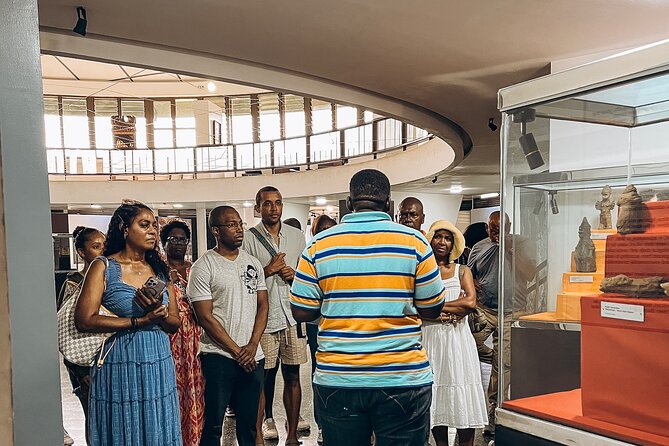
- A private group of up to 12 people: Your party takes the tour together, which allows more room for questions and a less crowded feel.
- Admission fees are included: You do not need to budget separately for the listed entrance charges.
- The coastal stops carry emotional weight: Ussher Fort and Osu Castle connect fine ocean views with Ghana’s difficult past.
- The tour includes air-conditioned transport: This matters in Accra, where moving between several sites can be tiring in the heat.
- Lunch is not included: Plan to eat before or after the tour, or ask about the day’s timing when you book.
Why this compact Accra tour works
This experience is built around contrast. You move from Ghana’s independence story to the slave trade and colonial rule, then to African political thought and the old forts along the coast. That gives you a useful first look at Accra without spending a full day on one subject.
I especially like the way the route links people and places. Kwame Nkrumah represents Ghana’s independence and pan-African aims. W.E.B. DuBois represents an international intellectual connection to African identity and social justice. The forts show the older and painful systems that shaped the coast long before independence.
The tour is described as lasting about four hours. The listed stop times add up to roughly three and a half hours, leaving a little time for driving and transitions. Accra traffic can affect the pace, so you should think of this as an efficient introduction, not a slow museum day.
Pickup is offered, and the vehicle is air-conditioned. Those two details matter more than they might on paper. You can save time finding each site, and you have a cool place to regroup between stops.
The tour operates Monday through Sunday from 8:00 a.m. to 5:00 p.m. Confirmation arrives at booking, and the experience is near public transportation. The exact pickup arrangement is not specified, so confirm the meeting point and start time before the day begins.
More city tours in Accra:
- Accra Detailed City Tour
★ 4.5 · 118 reviews - Accra Guided City Tour Experience
★ 4.7 · 88 reviews - Accra Guided City Tour Experience
★ 5.0 · 76 reviews
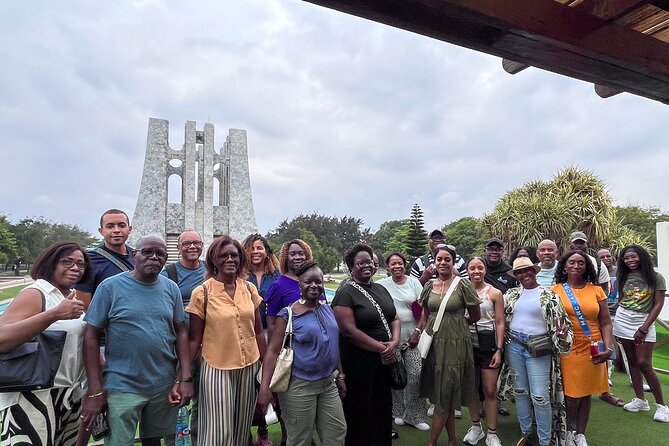
Kwame Nkrumah Memorial Park: Ghana’s independence begins here
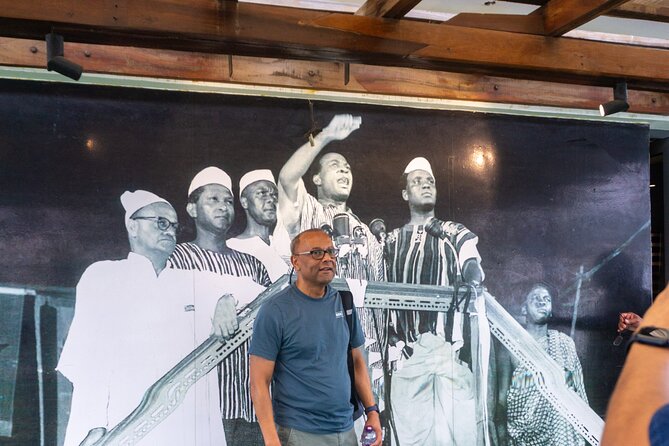
The first stop is the Kwame Nkrumah Mausoleum and Memorial Park. This is the right place to begin because Nkrumah’s life helps explain modern Ghana.
You can pay respects to Ghana’s first president and learn about his role in the independence movement. The exhibits include memorabilia from his presidency, while the surrounding gardens give you a quieter setting for reflection.
The site also introduces Nkrumah’s pan-African vision. That subject is important because his political ideas reached beyond Ghana’s borders. A good guide can help connect the memorial to the wider struggle for African self-rule.
You should expect a focused visit rather than a long academic lesson. The scheduled time is only one minute in the supplied timing, which is almost certainly a condensed listing detail rather than enough time for a real visit. If the stop is important to you, ask the guide how much time you will actually have on site.
The strength here is context. You do not simply take a photograph beside a monument. You begin the tour with the person most closely tied to Ghana’s independence story.
Black Star Gate and Independence Square
The Black Star Gate is the tour’s clearest public symbol of Ghana’s independence. It sits near Independence Square, where the setting helps you understand the scale and ceremony of the country’s national story.
The planned stop lasts about 30 minutes. That gives you time for photographs, a look at the monument, and an explanation of Ghana’s liberation struggle. The surrounding historic center adds atmosphere, although this is mainly an outdoor stop.
Bring a hat, water, and sun protection. The tour includes transport, but the description does not promise shade at the monument. Comfortable shoes also help because you will be moving around more than sitting.
I like this stop because it is easy to understand even if you know little about Ghana before arriving. The Black Star is not just a decorative landmark. It represents the country’s break from British rule and the pride tied to that achievement.
The limitation is that 30 minutes goes quickly. You will have time to see the main feature, but not a full exploration of every part of Independence Square.
Ussher Fort: a sobering coastal view
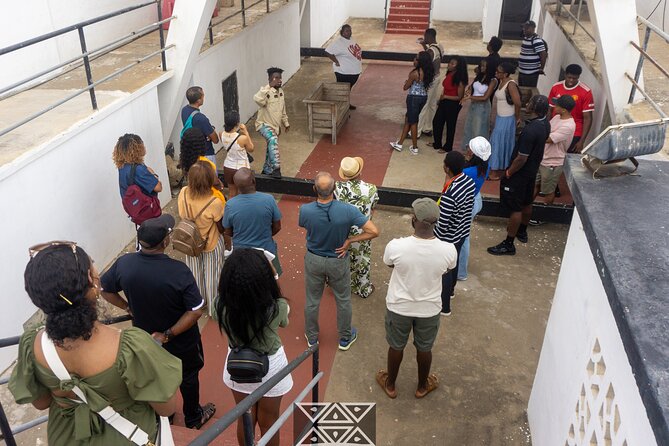
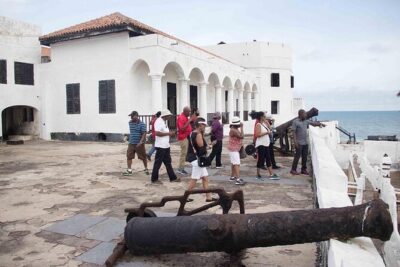
Ussher Fort is likely to be the most emotionally serious stop. Built by the Dutch in the 17th century, it later became associated with the transatlantic slave trade and colonial rule.
You can see preserved fortifications, bastions, and historic buildings. Exhibits and artifacts help explain how the site functioned and why it remains such an important part of Ghana’s past.
The fort also offers views toward the Atlantic Ocean and Accra’s coastline. That scenery can be striking, but it should not soften the meaning of the place. The calm water and old walls sit beside a story of confinement, violence, commerce, and forced movement.
The scheduled visit is about one hour. That is useful because Ussher Fort deserves more than a quick photo stop. You have time to listen, look closely, and ask questions about the fort’s Dutch beginnings, its later colonial role, and the slave trade.
I would treat this part of the tour with patience. It may be difficult, and that is part of its value. A local guide can add the human and Ghanaian viewpoint that a signboard alone cannot provide.
One practical point: the tour description says all fees and taxes are included, as are admission tickets for the stops. You should not need to pay a separate entry charge at Ussher Fort unless the operator tells you about a change.
More things to do in Accra:
- The Cape Coast Day Tour
★ 5.0 · 525 reviews - Experience the Beauty, History and the Culture Of Accra in a Day
★ 5.0 · 323 reviews - The Cape Coast Tour
★ 5.0 · 177 reviews - From Accra: Cape Coast, Elmina Castle & Kakum Park Day Tour
★ 4.6 · 144 reviews
The W.E.B. DuBois Centre: ideas, identity, and African connections
The W.E.B. DuBois Centre shifts the focus from national independence to African identity, culture, and social justice. DuBois was an American scholar and civil rights thinker who spent his final years in Ghana, making this site a useful link between Ghana and the wider African diaspora.
The centre includes exhibits on his life and legacy. You can also see personal belongings, artifacts, and displays connected to African culture and history. A library, café, gift shop, educational programs, guided tours, and workshops are listed among the available features.
The planned visit lasts about one hour. That makes it one of the more substantial stops, and it gives you a chance to slow down after the outdoor monuments.
I like this inclusion because it prevents the tour from becoming a simple parade of statues and forts. You get a look at ideas, writing, political thought, and the long relationship between Africa and people of African descent around the world.
The centre may appeal most to visitors interested in history, politics, literature, or civil rights. If you prefer only scenic stops, it may feel more serious and museum-focused. Still, it adds depth to the day and gives your guide room to explain Ghana’s role in a much larger story.
Osu Castle and Accra’s Atlantic edge
Osu Castle, also known as a Danish fort, brings you back to the coast. The 17th-century structure includes old bastions and Danish architectural features, while museum exhibits connect the building to Ghana’s past.
The visit is scheduled for about one hour. You can take a guided tour, study historic displays, and photograph the ocean views. Traditional Ghanaian performances and local artisan demonstrations are also listed as possible parts of the experience.
You should keep expectations flexible here. The description gives a broad picture of what the site can offer, but it does not specify which performance or demonstration will take place on your particular visit. Think of those elements as possible additions, not guaranteed highlights.
Osu Castle works well as a final stop because it combines architecture, history, and open coastal views. It is also another place where beauty and difficult history sit side by side. The fort’s location may look peaceful, yet its walls point to centuries of European influence and colonial power.
The one-hour timing is helpful, but the full day’s pace still matters. After four other sites, you may be ready for a meal or a quiet break. Since lunch is not included, plan to eat afterward unless your guide arranges a suitable pause.
What $125 includes, and what it does not
The price is $125 per person. That places the experience in the paid private-tour category rather than the casual city sightseeing category.
You receive an air-conditioned vehicle, admission fees, and taxes. You also receive a private experience for your own group, with a maximum of 12 people. Pickup is offered, which may save you the hassle of arranging separate taxis between five locations.
The value depends on how you travel. If you are comfortable using public transportation, arranging site visits yourself, and researching the history in advance, you could spend less. You would also need to manage the route, entrances, timing, and transport on your own.
If you have only one day in Accra, the price becomes easier to justify. You get a planned route through several significant places, and a Ghanaian guide can explain details that are easy to miss when you visit alone.
Lunch is the main extra cost named in the tour details. No meal is included, so keep money and time available for food. The tour information does not state whether bottled water, hotel pickup, or a specific meal stop is provided, so ask before booking if any of those matter to you.
The guide and group format
The guides are described as Ghanaian and local to the country. That is one of the strongest parts of the experience in principle. At historic places such as Ussher Fort and Osu Castle, a local perspective can help you understand how these sites fit into Ghanaian memory today.
The group is private, and only your party participates. The stated maximum is 12 people, which is small enough for questions without promising a one-on-one tour.
The published feedback gives particular praise to Sabary Tours for customer service, organization, and a comfortable bus. One response is signed by Laila, who also replied warmly to the comments. That suggests an operator paying attention to communication, though the available sample is very small.
A second account describes a refreshing Sabary Tours outing that included beach swimming and football, along with meeting new friends. Those activities are not listed in this five-stop city route, so do not assume they are part of this particular experience. They do show that the company may offer different kinds of Accra outings, including calmer coastal time.
Who should book this Accra experience?
I would recommend it to a first-time visitor who wants a broad introduction to Accra and prefers not to organize several historic sites alone. It also suits small families, couples, and private groups who value an air-conditioned vehicle and a fixed plan.
History-minded visitors will get the most from the route. You see independence memorials, forts, museums, and a centre focused on African identity in one compact outing.
You may want a different plan if you dislike quick transitions or prefer to spend half a day at one museum. The five-stop schedule covers a lot, but it cannot give every site equal attention.
It is also not the best fit if your main goal is swimming, football, or a beach day. Those activities appear in another type of Sabary Tours outing, not in the stated schedule here.
Free cancellation is available if you cancel at least 24 hours before the start time. Cancellations made less than 24 hours ahead are not refunded, and late changes are not accepted.
Should you book the Accra City Experience?
Book it if you want to cover Accra’s key historical sights in a single private outing and value local explanation, included admission, and cooled transport. The strongest reasons are the thoughtful range of sites and the ease of having one vehicle and one guide handle the day.
Skip it if you want a slow museum visit, a food-focused tour, or a guaranteed beach activity. Before paying, confirm pickup details, the real amount of time at the Kwame Nkrumah Memorial Park, and whether any coastal performance or artisan demonstration is scheduled.
For a first look at Accra, this is a useful and serious introduction. It gives you national pride, painful history, African political thought, and ocean views in one manageable route.
FAQ
How long does the Accra City Experience last?
The experience lasts approximately four hours.
What sites are included?
The route includes Kwame Nkrumah Memorial Park, Black Star Gate, Ussher Fort and Museum, the W.E.B. DuBois Centre, and Osu Castle.
Is transportation provided?
Yes. The tour includes an air-conditioned vehicle, and pickup is offered.
Is this a private tour?
Yes. Only your group participates in the activity.
What is the maximum group size?
The tour allows a maximum of 12 people.
Are admission fees included?
Yes. Admission tickets for the listed stops are included, along with all fees and taxes.
Is lunch included?
No. Lunch is not included in the tour price.
What days and times does the tour operate?
It operates Monday through Sunday between 8:00 a.m. and 5:00 p.m. for the stated operating period.
Can most people participate?
Yes. The tour information says most people can participate, and the experience is near public transportation.
What is the cancellation policy?
You can receive a full refund by cancelling at least 24 hours before the experience start time. Cancellations or changes made less than 24 hours before the start time are not accepted for a refund.
Just added in Accra
- Wli Waterfall And Tafi Monkey Sanctuary ( Volta Region)★ 5.0 · 1 review
- Traditional Beadmaking Workshop★ 5.0 · 1 review
- Private 9-Day Tour in Ghana★ 5.0 · 2 reviews
- Wli Waterfalls, Mount Afadjato & Tafi Atome Monkey Sanctuary★ 5.0 · 2 reviews
- Cape Coast and Elmina castle Day Trip★ 5.0 · 2 reviews
- Culinary for Social Change-Cooking Class★ 5.0 · 2 reviews
- Time with Nature★ 5.0 · 2 reviews
- Historical Day Tour to Cape Coast, Elmina and Kakum★ 5.0 · 3 reviews
Accra Tours, compared.


Experience the Beauty, History and the Culture Of Accra in a Day
Read our review →

Cape Coast, Elmina Castle & Kakum Park Day Tour
Read our review →

Browse the lists this tour appears in