
REVIEW · ACCRA TOURS
Accra City Tour With Drumming & Dancing Lessons
Accra rewards curious eyes. This tour brings together Makola Market and the Kwame Nkrumah Memorial Park, then adds hands-on drumming and dancing at the Centre for National Culture. I like the mix of street life and serious history, and I also like the comfort of a private, air-conditioned vehicle with WiFi, water, and soda included. The main drawback is the pace: six stops in four to seven hours can feel full, especially if you want long market browsing time.
I also like that return transport is offered from any location in Accra, which removes a common city-tour headache. The private format means your group can focus on its own questions, and a past booking praised the guide Kobby for explaining the monuments clearly. Keep in mind that lunch is not included, and the walking portions call for moderate physical fitness.
In This Review
- Six details worth knowing before you book
- A full Accra introduction in one long morning
- Makola Market: start with Accra’s daily rhythm
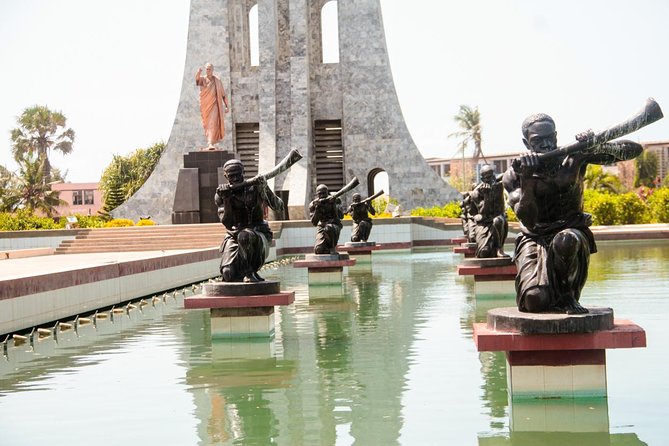
- Kwame Nkrumah Memorial Park: Ghana’s independence in place
- Drums, dance, and shopping at the Centre for National Culture
- Accra Sempe School and the story of Ga heritage
- Black Star Gate and the monuments of national memory
- W.E.B. DuBois Center: a Pan-African final stop
- What the private vehicle adds
- Timing, food, weather, and physical effort
- Who should book this Accra tour?
- Should you book the Accra City Tour?
- FAQ
- What time does the tour start?
- How long does the Accra City Tour last?
- Is hotel or accommodation pickup available?
- Is this a private tour?
- What transportation is provided?
- Are drinks included?
- Is lunch included?
- What happens if I cancel?
Six details worth knowing before you book
- Makola Market comes first, giving you an early look at buying, selling, and daily life in central Accra.
- Kwame Nkrumah Memorial Park combines three sites, a museum, tomb, and landscaped park focused on Ghana’s independence.
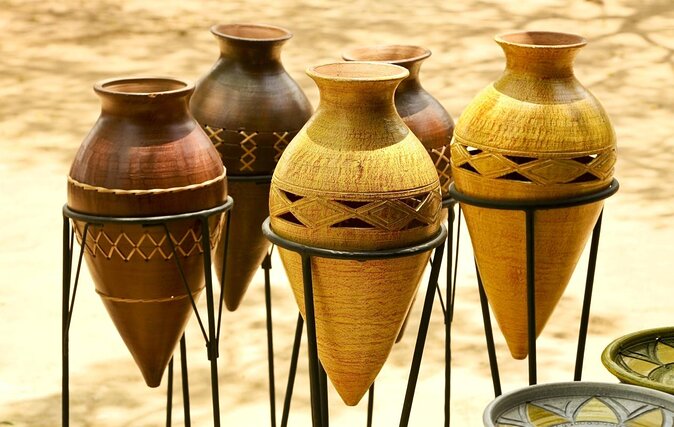
- The Centre for National Culture includes practical lessons, with time to try Ghanaian drums and dances.
- The tour is private, so only your group takes part.
- Transport includes working air conditioning, WiFi, water, and soda, useful in Accra’s heat and traffic.
- The final stops widen the story, from Ga heritage and colonial-era Accra to Pan-African thinker W.E.B. DuBois.
A full Accra introduction in one long morning
This is not a slow, single-neighborhood walk. It is a broad introduction to Accra, moving between commerce, independence, music, local heritage, monuments, and Pan-African thought.
The day begins at 9:00 a.m. and lasts about four to seven hours. That wide time range matters. Traffic, walking speed, shopping, questions, and the amount of time your group spends at the cultural center can all affect the finish.
For a first day in Accra, I like this structure. You get a quick sense of how the city works, then a series of places that explain Ghana’s past and culture. You will not get a slow, detailed study of every stop, but you will leave with a useful framework for understanding the city.
Because this is a private activity, the experience should suit couples, families, and small groups who prefer not to follow strangers from one site to the next. It may also work well for visitors with limited time in Accra who want transport and admission fees handled together.
More city tours in Accra:
- Accra Detailed City Tour
★ 4.5 · 118 reviews - Accra Guided City Tour Experience
★ 4.7 · 88 reviews - Accra Guided City Tour Experience
★ 5.0 · 76 reviews
Makola Market: start with Accra’s daily rhythm
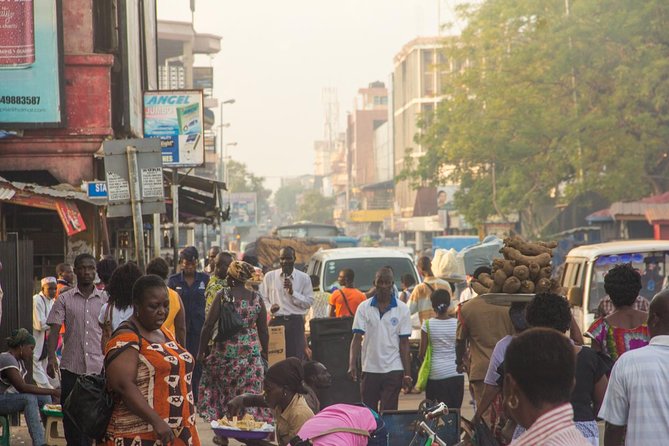
The first stop is Makola Market, described as the largest market in Accra. You spend about 45 minutes walking through this busy center of buying and selling, with people arriving from different parts of Ghana.
This is the kind of stop that gives a city tour its pulse. Instead of beginning with a monument and a plaque, you begin with ordinary commerce and the practical side of city life. You might find yourself watching the quick negotiations, examining the goods, and trying to keep track of the group as the market moves around you.
The admission fee is free, but that does not mean the visit costs nothing in attention. Wear comfortable shoes and keep your belongings secure. The tour calls this a walking visit, so moderate fitness is important.
Forty-five minutes is enough for an introduction, but it is not enough for a leisurely shopping session. If you enjoy markets, you may wish the schedule allowed more time. Still, as an opening stop, Makola does its job well: it gives you a direct look at Accra before the day turns toward formal history.
Kwame Nkrumah Memorial Park: Ghana’s independence in place
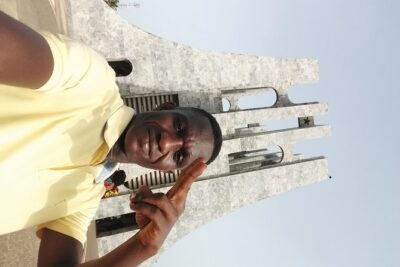
Next comes the Kwame Nkrumah Memorial Park, with one hour set aside for the museum, tomb, and park. The site focuses on Ghana’s drive for independence and the wider liberation movement that followed across Africa.
The three-part design makes this more than a quick monument photo. You can move between the museum displays, the burial site, and the open grounds while considering how Ghana’s independence became a model and source of encouragement for other African nations.
I would pay attention to the symbolism of the site’s design. The tour specifically includes an explanation of those details, so this is a place where a guide can add real value. A good explanation helps connect architecture, national memory, and the political story instead of leaving you with disconnected facts.
One hour is a useful amount of time for a guided introduction. If you are deeply interested in Ghana’s independence movement, you may want to return later for a longer visit. On this tour, the goal is clear context, not an exhaustive museum study.
Drums, dance, and shopping at the Centre for National Culture
The longest stop is the Centre for National Culture, with about two hours available. This is where the tour shifts from looking and listening to taking part.
You can practice Ghanaian drumming and learn some dances. That practical element is a strong reason to choose this tour over a standard driving circuit. You are not only being told about Ghanaian culture. You get a chance to test your rhythm, follow instruction, and see how music and movement work together.
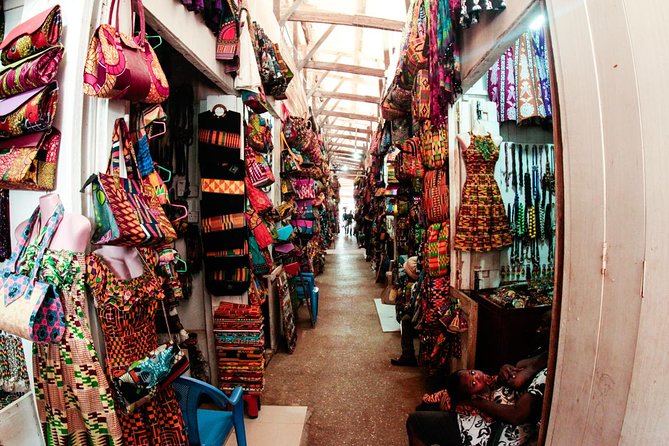
The center also offers a place to shop for local items. The tour introduces a one-third pricing principle for negotiation. Treat that as a starting point for learning how bargaining works, not as a promise that every item follows one fixed rule.
Two hours gives this stop room to breathe, though shopping can easily stretch the schedule. If you are not interested in buying anything, the drumming and dancing lesson still gives the visit a clear purpose. If you are shopping, keep your spending limit in mind and allow time to compare items before making a decision.
This may be the most playful part of the day, but it is not only entertainment. It lets you engage with a form of cultural expression in a direct way. You may feel awkward at first. That is part of the point. Nobody expects a first-time drummer to sound like a master.
More things to do in Accra:
- The Cape Coast Day Tour
★ 5.0 · 525 reviews - Experience the Beauty, History and the Culture Of Accra in a Day
★ 5.0 · 323 reviews - The Cape Coast Tour
★ 5.0 · 177 reviews - From Accra: Cape Coast, Elmina Castle & Kakum Park Day Tour
★ 4.6 · 144 reviews
Accra Sempe School and the story of Ga heritage
The fourth stop is Accra Sempe School, where you spend about an hour on a walking tour connected with the history and heritage of the Ga people.
The description refers to British, Brazil, and Dutch Accras. These names point to the different historical influences that shaped parts of the city. The stop offers a chance to connect Accra’s built environment and local identity with the communities who have long called the area home.
This part of the tour may be especially useful if you want more than national history. The memorial park explains Ghana’s independence at a countrywide level, while the Sempe School visit focuses on Accra and the Ga heritage linked to the city.
The information provided does not give a detailed list of buildings or exhibits at the school. I would treat this as a guided orientation and walking experience rather than a formal museum visit. Comfortable footwear matters here, as it does at Makola Market.
Black Star Gate and the monuments of national memory
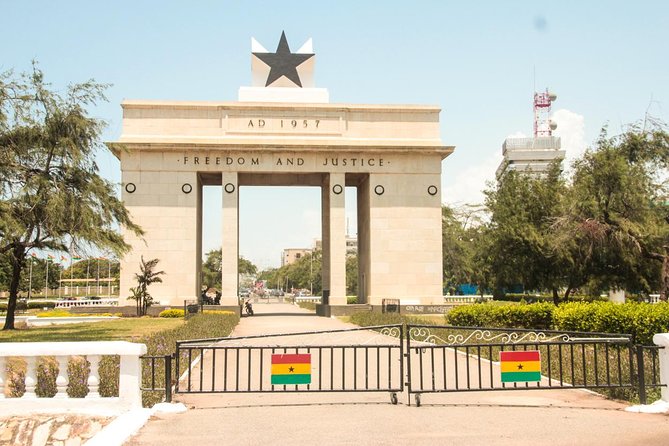
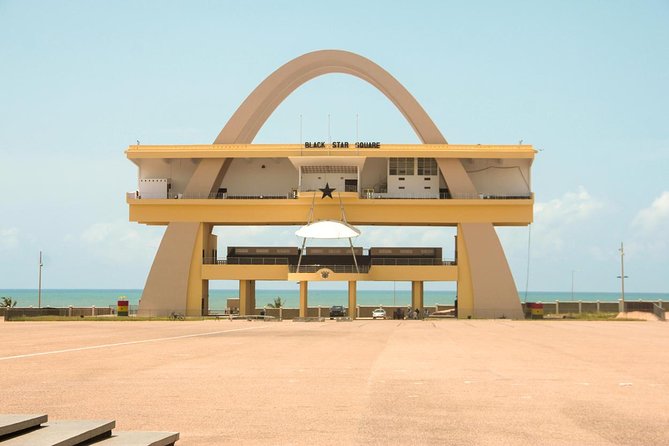
The Black Star Gate stop lasts about 30 minutes and is free to enter. The visit includes Victorian-era architecture, a monument honoring the three soldiers killed on February 28, 1948, and the area around Christianborg Castle and Asomdwee Peace Park.
That 1948 event is tied to a demand for rights and belongs to the larger road toward Ghana’s independence. Even with only half an hour, the stop adds an important layer to the national story. You see how public monuments preserve political memory in the city itself.
The Asomdwee Peace Park is the burial place of a former Ghanaian president. The tour also includes the Christianborg Castle area, so this is a compact stop with several subjects packed together.
Thirty minutes will probably feel brief if you want to study the architecture or ask many questions. Think of it as a focused outdoor visit, with the guide helping you understand why these locations matter. It is also a useful contrast to the indoor displays at the memorial park.
W.E.B. DuBois Center: a Pan-African final stop
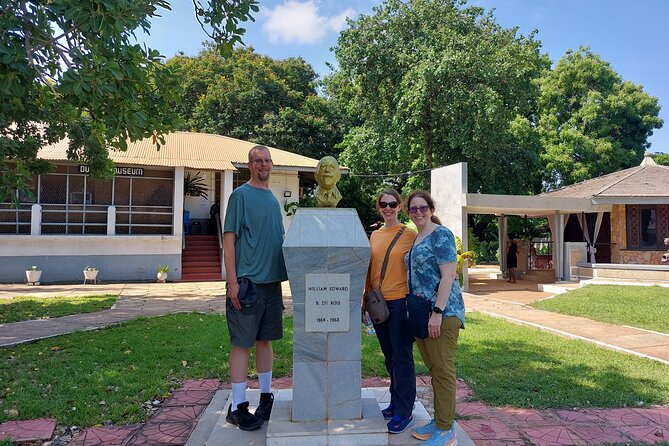
The final stop is the W.E.B. DuBois Center, with about 30 minutes and an included admission fee. Here you learn about W.E.B. DuBois, described in the tour information as the first Black graduate of Harvard University.
The center displays his academic gowns, books including the Encyclopedia Africana, and his tomb. Those objects make the visit personal. Instead of meeting DuBois only as a name in a history lesson, you see items linked to his academic work and public life.
The stop is short, but its theme connects well with the independence story from earlier in the day. Ghana’s place in Pan-African thought becomes clearer when you consider the people and ideas that linked the country with wider struggles for Black freedom and African unity.
As the last stop, it may leave you wanting more time. Still, it gives the tour a thoughtful finish rather than ending with shopping or a photo stop.
What the private vehicle adds
Return transport from any location in Accra is included, and the tour uses an air-conditioned vehicle with WiFi. In a city tour that includes several stops, that comfort has practical value. You can cool down between walks, keep your group together, and avoid arranging separate taxis between sites.
A past booking specifically praised Kobby for explaining the city’s monuments and sites, along with the clean car and working air conditioning. Kobby may not be the guide on every departure, so I would not assume a particular guide is guaranteed. Still, the feedback points to two things worth valuing: clear site explanations and reliable relief from the heat.
The private format is another advantage. You can ask why a monument matters, spend more time at the drums, or move on from shopping without worrying about a larger group’s schedule. The tradeoff is price. At $154.75 per person, this is not the cheapest way to see Accra, especially for a solo visitor.
For a group, though, the cost covers transport, guide service, admission fees, fuel surcharge, WiFi, bottled water, and soda. It also buys convenience and privacy. Compare it with the cost and effort of arranging several rides, entrance tickets, and separate cultural activities. The value improves as your group gets larger and as you place a high value on an organized day.
Timing, food, weather, and physical effort
Lunch is not included, so plan to eat before the 9:00 a.m. start or arrange your own food during the day. The supplied details do not specify a lunch stop, so do not count on a restaurant break being part of the schedule.
You should also expect walking at Makola Market and Accra Sempe School, with additional movement around the memorial and monument areas. The moderate fitness requirement is worth taking seriously. This is not a vehicle-only sightseeing loop.
Weather can affect the day. One past booking still had a good experience despite rain at the final stop, but rain may make outdoor walking less comfortable and can change how much time you want to spend outside. The air-conditioned vehicle helps between stops, though it does not replace practical clothing and suitable shoes.
The four-to-seven-hour range is unusually broad for a half-day experience. I would keep the rest of your day flexible, especially if you have an evening flight, appointment, or dinner reservation.
Who should book this Accra tour?
I would recommend it most to first-time visitors who want a broad city introduction without organizing several separate outings. It suits people who enjoy a mix of markets, monuments, guided history, and hands-on cultural activity.
Families may appreciate the changing pace. The drumming and dancing lesson breaks up the more serious memorial visits, while the private vehicle makes the day easier to manage. Couples and small groups who want their own schedule also gain from the private format.
History-focused visitors should value the Kwame Nkrumah Memorial Park, Black Star Gate, and W.E.B. DuBois Center. Culture-focused visitors may care most about the Centre for National Culture and the Ga heritage stop.
I would think twice if you want a slow market visit, a full museum day, or a long lunch. The tour covers a lot, but its strength is range, not extended time at one site.
Should you book the Accra City Tour?
Book it if you want a private, well-rounded introduction to Accra with transport, cultural practice, and major historical sites in one day. The combination of Makola Market, independence history, drumming, dancing, Ga heritage, national monuments, and Pan-African thought gives you a useful first picture of the city.
Skip it if your priority is a relaxed schedule or deep time at only one attraction. At $154.75 per person, the price makes the most sense for a private group that values comfort and convenience.
The free cancellation policy allows a full refund if you cancel at least 24 hours before the 9:00 a.m. start. Changes or cancellations within 24 hours are not refunded, so keep that deadline in mind when making plans.
FAQ
What time does the tour start?
The tour starts at 9:00 a.m.
How long does the Accra City Tour last?
The experience lasts approximately four to seven hours.
Is hotel or accommodation pickup available?
Return transport is offered from any location in Accra.
Is this a private tour?
Yes. Only your group participates in the activity.
What transportation is provided?
Transport is provided in an air-conditioned vehicle with WiFi on board.
Are drinks included?
Yes. Bottled water and soda or pop are included.
Is lunch included?
No. Lunch is not included in the tour price.
What happens if I cancel?
You can receive a full refund if you cancel at least 24 hours before the experience start time. Cancellations or changes made less than 24 hours before the start are not refunded or accepted.
Just added in Accra
- Wli Waterfall And Tafi Monkey Sanctuary ( Volta Region)★ 5.0 · 1 review
- Traditional Beadmaking Workshop★ 5.0 · 1 review
- Private 9-Day Tour in Ghana★ 5.0 · 2 reviews
- Wli Waterfalls, Mount Afadjato & Tafi Atome Monkey Sanctuary★ 5.0 · 2 reviews
- Cape Coast and Elmina castle Day Trip★ 5.0 · 2 reviews
- Culinary for Social Change-Cooking Class★ 5.0 · 2 reviews
- Time with Nature★ 5.0 · 2 reviews
- Explore Cape Coast – Elmina in a brief( Roles in the slave trade)★ 5.0 · 1 review
Accra Tours, compared.
Experience the Beauty, History and the Culture Of Accra in a Day
Read our review →

Cape Coast, Elmina Castle & Kakum Park Day Tour
Read our review →
Browse the lists this tour appears in