
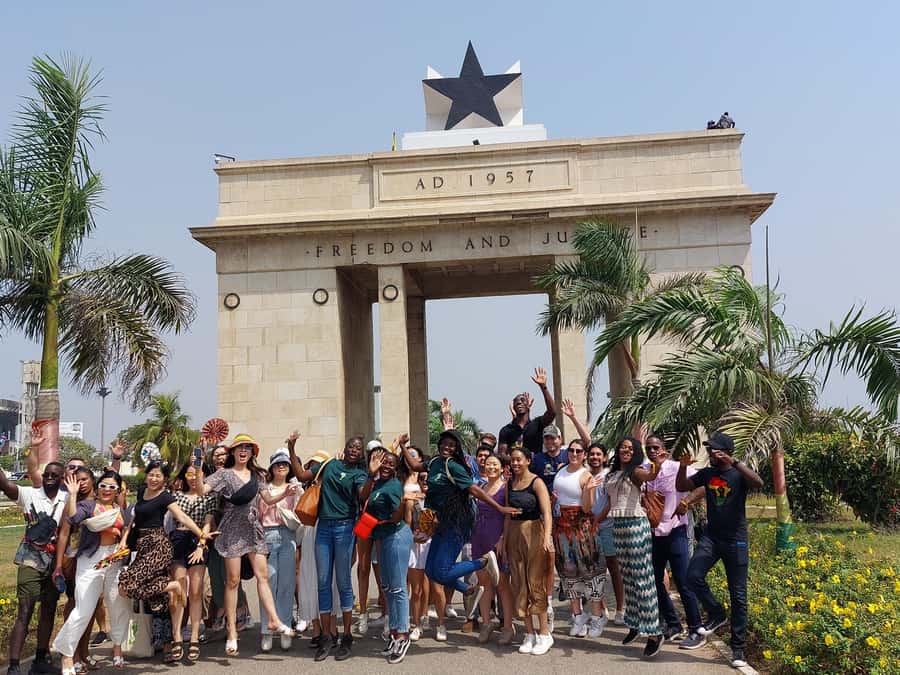
REVIEW · CAPE COAST AND ELMINA CASTLE TOURS
Accra Slave Tour
History is close to Accra’s streets. This three-hour private tour visits James Fort, Ussher Fort, the Lighthouse, Brazilian Lane, and other places tied to the Trans-Atlantic Slave Trade. I like that it shows Accra’s part in this painful story, and I like that a local Jamestown guide, Ritchie, brings personal insight to the walking portion. The main drawback is that the tour is short, so the subject can feel tightly packed.
I also like the simple setup: pickup and drop-off in Accra, private transportation, water, and an English-speaking guide are included. You have time to shop at the end, too. Still, this is not a full-day museum tour or a replacement for visiting Cape Coast. It is a focused look at Accra’s own role in the trade.
In This Review
- Key points to know before you book
- Why Accra deserves its own slave-trade tour
- James Fort, British power, and the first major stop
- Ussher Fort and the Dutch connection
- The Lighthouse, Brazilian Lane, houses, and tunnels
- What the three-hour schedule really gives you
- The guide team is a major part of the value
- Transportation, water, and the shopping stop
- Is $140 per person a fair price?
- Who should book this Accra history tour?
- Should you book the Accra Slave Tour?
- FAQ
- Where does the Accra Slave Tour begin?
- Where does the tour end?
- How long does the experience last?
- How much walking is included?
- Which historic sites are included?
- Is the tour private?
- What language is the tour conducted in?
- Is transportation included?
- Is lunch included?
Key points to know before you book
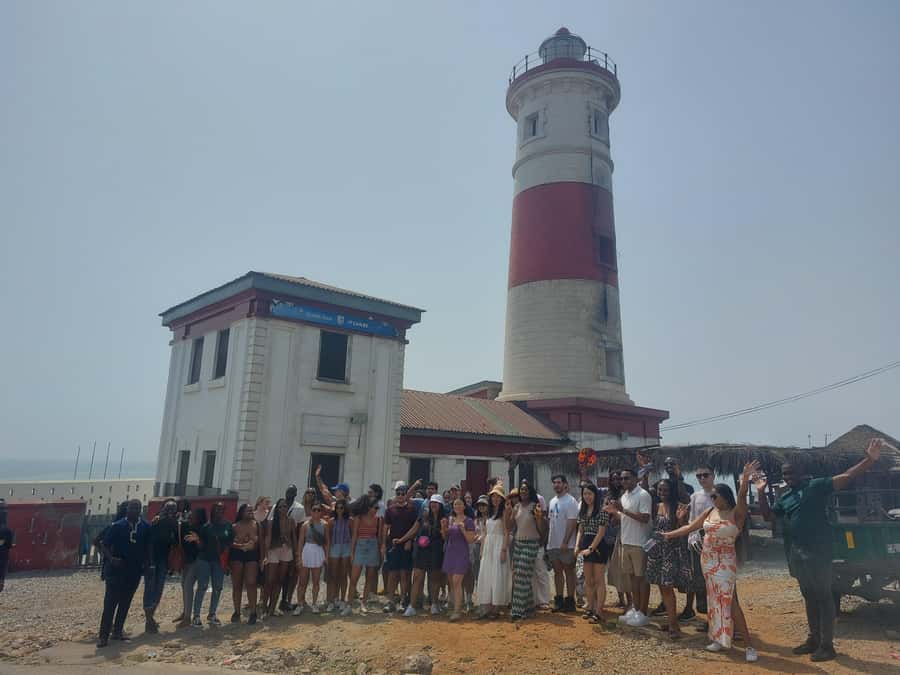
- James Fort anchors the tour: Expect a guided visit and walking time around one of Accra’s former British trading posts.
- Ussher Fort adds a Dutch perspective: The tour connects two European powers to Accra’s role in the slave trade.
- Jamestown’s local voice matters: Ritchie, identified as a Jamestown local guide, adds knowledge and perspective to the visit.
- The route reaches beyond forts: The Lighthouse, Brazilian Lane, houses, and tunnels help connect the trade to the streets of modern Accra.
- Private transport keeps the day easy: Pickup, drop-off, fuel charges, and transportation are included.
- Shopping comes at the end: You can browse after the historic portion before returning to your preferred Accra location.
Why Accra deserves its own slave-trade tour
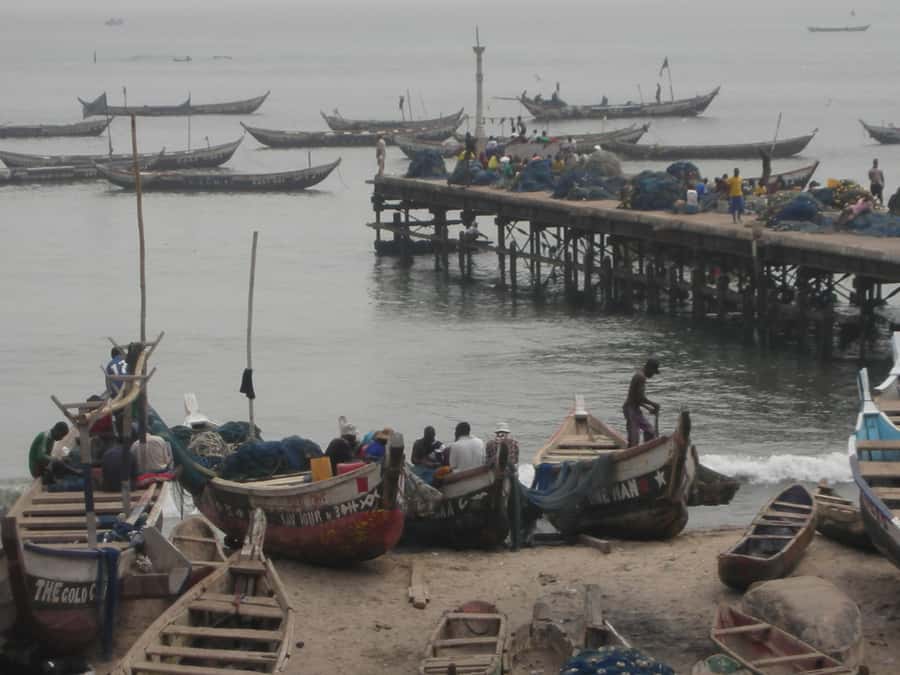
Cape Coast often receives most of the attention when people study Ghana’s role in the Trans-Atlantic Slave Trade. That focus makes sense, but it can leave Accra’s story in the shadows. This tour corrects that imbalance by taking you to sites in and around the capital that participated in the trade.
You are not simply visiting one large fort and leaving. The route links forts, streets, buildings, tunnels, and coastal landmarks. That matters because the trade was not confined to a single structure. It shaped commerce, settlement, movement, and the growth of Accra.
The experience also looks at the origins of Accra. You see how the city developed around European trading activity and local communities. The tour does not present history as something sealed inside a museum. Instead, it places that past among working streets and familiar city life.
This setting can be difficult. Forts and tunnels connected to human trafficking carry an emotional weight that photographs cannot fully convey. I would approach the tour with patience and respect. It is not light sightseeing, even though the schedule also leaves room for shopping.
More Cape Coast and Elmina castle tours:
- The Cape Coast Day Tour
★ 5.0 · 525 reviews - The Cape Coast Tour
★ 5.0 · 177 reviews - From Accra: Cape Coast, Elmina Castle & Kakum Park Day Tour
★ 4.6 · 144 reviews
James Fort, British power, and the first major stop
The guided portion begins around James Fort Street, with roughly two hours set aside for sightseeing and walking. James Fort is one of the key places on the route, and the guide explains its connection to British activity in Accra.
A fort can look like a simple old building from the outside. The guide helps you understand what its presence meant. European powers built trading posts to control commerce and hold a place in the coastal trade network. In this setting, the subject includes the forced movement of African people across the Atlantic.
You should expect the pace to be more on foot than a standard drive-by city tour. Wear practical shoes and keep water close, although bottled water is included. The supplied details do not specify the exact condition of the walking surfaces, so comfortable footwear is the sensible choice.
James Fort also helps you see how the trade was connected to the wider city. This is not an isolated ruin far from everyday life. The fort is part of an urban area, which can make the visit feel more immediate and less abstract.
Your guide is important here. Prince is listed as an excellent overall guide, while Ritchie, a local from Jamestown, leads the local walking insight. That combination gives you two useful layers: someone managing the trip and someone with a strong connection to the area.
Ussher Fort and the Dutch connection
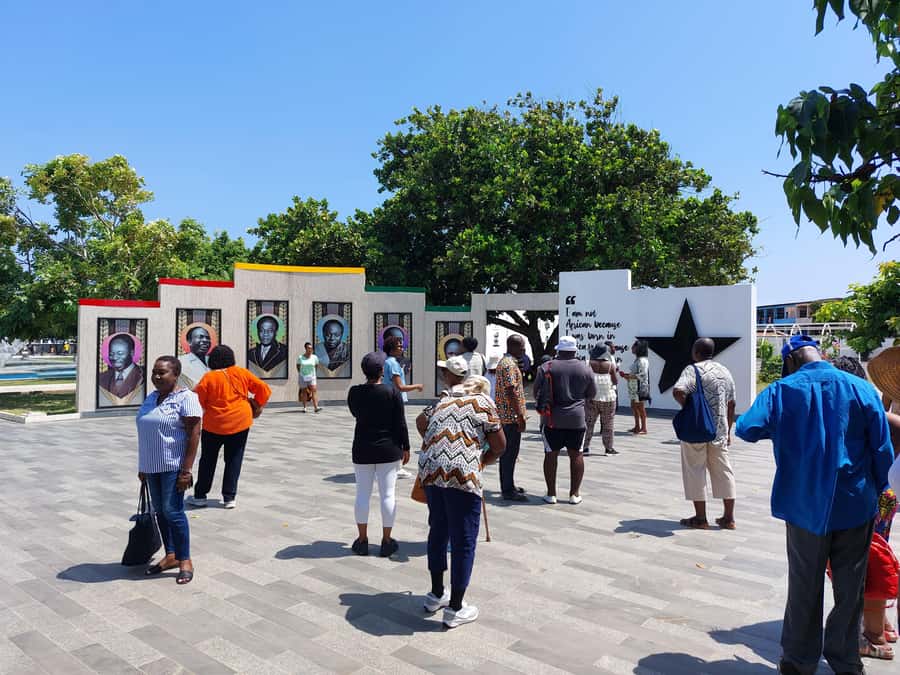
The route also includes Ussher Fort, built by the Dutch. Seeing both James Fort and Ussher Fort gives the tour a wider frame than a visit to one site alone.
The forts show that several European powers took part in coastal trade and competed for influence. The guide can help place the Dutch and British sites side by side, so you are not left with the impression that Accra’s story belonged to only one foreign power.
The two forts also help explain why Accra became important. Trade brought buildings, routes, officials, merchants, and outside control. It also brought violence and forced labor into the center of the city’s development. That mixture is uncomfortable, but it is central to understanding the place.
The provided schedule gives the whole walking and sightseeing section about two hours. That means Ussher Fort is part of a compact route rather than a long standalone visit. If you like to read every plaque or spend a long time at each structure, you may want a separate visit later. On this tour, listen closely to the guide and ask questions while you move.
The Lighthouse, Brazilian Lane, houses, and tunnels
The tour expands beyond the forts to include the Lighthouse, Brazilian Lane, and other houses and tunnels connected with the trade. These stops are useful because they show how the story reached into the built environment around Accra.
The Lighthouse gives the route a recognizable coastal landmark, while Brazilian Lane and the older houses add a street-level view. The tour description also points to tunnels associated with the trade. Those details can make the history more concrete for you, especially if forts alone begin to feel repetitive.
Do not expect every stop to function like a formal museum exhibit. The available information describes guided sightseeing and walking, not a set of galleries with long interpretive displays. The value comes from the guide explaining what you are seeing and how the locations fit together.
This is where Ritchie’s local perspective is especially useful. A person from Jamestown can help connect the sites to the area rather than treating them as disconnected historic objects. The strongest praise attached to this experience is directed at the guides, particularly their ability to share information, local insight, and perspective with energy.
The subject can also bring up questions about memory and responsibility. The tour connects Accra to the fact that enslaved Africans were transported across the Atlantic, helping explain why African-descended communities exist around the globe. You may find that the street setting makes that connection feel more personal than a general history lecture.
More things to do in Accra:
- Experience the Beauty, History and the Culture Of Accra in a Day
★ 5.0 · 323 reviews - Accra Detailed City Tour
★ 4.5 · 118 reviews - Accra Guided City Tour Experience
★ 4.7 · 88 reviews - Accra Guided City Tour Experience
★ 5.0 · 76 reviews
What the three-hour schedule really gives you
The full activity lasts three hours, with pickup in Accra and return to Accra. About two hours are assigned to the guided walking and sightseeing section around James Fort Street and the related sites.
That leaves the tour feeling like a focused city excursion. You get a substantial history lesson without giving up an entire day. If you have limited time in Accra, this is a useful format because transportation is arranged and the route combines several locations.
The short length is also the main limitation. The Trans-Atlantic Slave Trade is too large and painful a subject to cover fully in two hours of sightseeing. You will receive an introduction to Accra’s role, not every historical detail or every related site in Ghana.
I would book this early in your Accra stay if possible. That way, the tour can give context to the city you continue exploring afterward. You can also ask the guide questions as you encounter other forts, monuments, or older buildings during your trip.
The tour is private, so you are not placed into a large shared group. That can make a real difference at historic sites. You can ask for clarification, pause briefly when a point matters to you, and keep the pace suited to your group. The supplied information does not state the maximum group size, so private should not be taken to mean a specific number of people.
The guide team is a major part of the value
Prince serves as the overall guide, and Ritchie is described as a Jamestown local who provides expert guidance on the walking tour. Their roles suggest a useful division of attention: one person keeps the outing organized, while the other brings local experience and a strong grasp of the area.
Ritchie’s presence is one of the most distinctive details of this experience. A local guide can offer a sense of place that a purely scripted tour may lack. You should take advantage of that by asking about the sites, the neighborhood, and how the buildings fit into Accra’s past.
The tour is conducted in English. If you are comfortable with English, that keeps the explanations direct and makes it easier to discuss a subject that often requires careful wording.
Since the tour deals with slavery, colonial power, and the lasting effects of the trade, guide quality matters more than flashy extras. The most positive praise connected with this experience focuses on Prince and Ritchie, not on luxury transport or entertainment. That is exactly where the value should be.
Transportation, water, and the shopping stop
Pickup and drop-off are included in Accra, along with transportation, fuel surcharges, and water. For a three-hour city tour, this keeps the practical side simple. You do not need to arrange separate transport between the fort area and your starting point.
The tour ends with an opportunity to shop before you are dropped at your preferred location. This gives the day a lighter final note after a serious historical visit. The information does not specify the type of shopping or name particular markets, so treat it as an opportunity rather than a guaranteed shopping program with a fixed list of stores.
Lunch is not included. Since the entire activity lasts three hours, that may not be a problem, but check your start time before booking. You should plan your own meal if the tour overlaps with lunchtime.
Water is included, but you should still dress for walking and bring anything you normally need for a short city outing. The supplied details do not list a dress code, accessibility information, or exact walking distances, so ask the provider if those points are important for your group.
Is $140 per person a fair price?
At $140 per person, this is not the cheapest way to spend three hours in Accra. The price makes more sense if you value a private experience with transport and a guide, rather than simply paying admission at one historic site.
You are paying for pickup and drop-off, a private group, fuel, an English-speaking guide, water, and a route that joins several locations. You also avoid the work of arranging your own transportation between Accra and the sites. For a first visit, that convenience can be worthwhile.
The price is harder to justify if you mainly want a quick look at one fort or prefer to explore independently. The tour does not include lunch, and the three-hour duration limits how much historical detail you can receive. You should also remember that Cape Coast is not part of this outing.
For families, couples, or small groups who want a private guide, the price may feel reasonable. Solo visitors should weigh it more carefully, since the per-person cost is the same even though the booking is private. The strongest reason to pay is the combined route and guide quality, particularly the local perspective from Ritchie.
Who should book this Accra history tour?
I would recommend it to you if you want a direct introduction to Accra’s role in the Trans-Atlantic Slave Trade and prefer a guide to explain the sites as you walk. It suits first-time visitors who want history tied to real streets rather than a broad lecture removed from the city.
It is also a good fit if you have only a few hours free. Pickup and drop-off reduce wasted time, and the private format lets you keep the outing focused.
You may want another plan if you need a long, highly detailed museum visit, a full-day history program, or a trip to Cape Coast. This tour does not try to be all of those things. Its strength is the compact route through Accra, with forts, streets, tunnels, and local guidance in one package.
Book with the right expectations. You are signing up for a serious, guided look at difficult history, followed by a chance to shop. That balance makes the tour practical, but the history should remain the main reason you go.
Should you book the Accra Slave Tour?
Book it if you want to understand Accra’s part in the slave trade without spending a full day away from the capital. The combination of James Fort, Ussher Fort, the Lighthouse, Brazilian Lane, related houses and tunnels, private transportation, and local guidance gives you a useful introduction.
I would be especially inclined to book if Prince and Ritchie are available for your departure, since their guide work is the most praised part of the experience. Skip it only if you want a longer, museum-style study or need lunch included. For a compact and serious history tour in Accra, $140 can be fair when the private transport and guide attention matter to you.
FAQ
Where does the Accra Slave Tour begin?
Pickup is in Accra.
Where does the tour end?
The tour returns you to Accra and includes drop-off at your preferred location.
How long does the experience last?
The total duration is three hours.
How much walking is included?
The guided sightseeing portion includes walking and lasts about two hours.
Which historic sites are included?
The tour includes James Fort, Ussher Fort, the Lighthouse, Brazilian Lane, and other houses and tunnels associated with the Trans-Atlantic Slave Trade.
Is the tour private?
Yes. It is offered as a private group experience.
What language is the tour conducted in?
The live tour guide speaks English.
Is transportation included?
Yes. Pickup and drop-off, transportation, fuel surcharges, and water are included.
Is lunch included?
No. Lunch is not included in the tour price.
Just added in Accra
- Wli Waterfall And Tafi Monkey Sanctuary ( Volta Region)★ 5.0 · 1 review
- Traditional Beadmaking Workshop★ 5.0 · 1 review
- Private 9-Day Tour in Ghana★ 5.0 · 2 reviews
- Wli Waterfalls, Mount Afadjato & Tafi Atome Monkey Sanctuary★ 5.0 · 2 reviews
- Cape Coast and Elmina castle Day Trip★ 5.0 · 2 reviews
- Culinary for Social Change-Cooking Class★ 5.0 · 2 reviews
- Time with Nature★ 5.0 · 2 reviews
- Historical Day Tour to Cape Coast, Elmina and Kakum★ 5.0 · 3 reviews
Cape Coast and Elmina Castle Tours, compared.

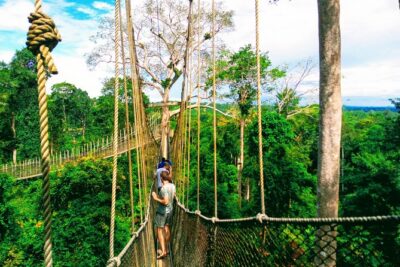

Cape Coast, Elmina Castle & Kakum Park Day Tour
Read our review →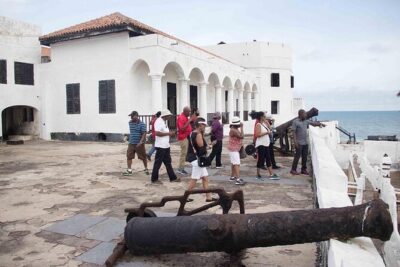
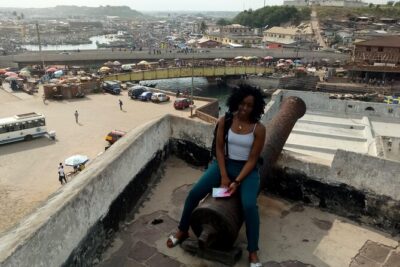
Cape Coast ,Elmina Castle and Kakum Full-Day Tour
Read our review →
10 Days Trip to Cape Coast and Elmina Castles from Accra
Read our review →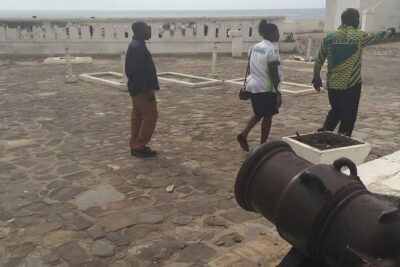
The Homecoming Experience To Cape-coast And Elmina.
Read our review →Browse the lists this tour appears in