
REVIEW · ACCRA TOURS
Discover Ghana in 8 days
Ghana opens its doors quickly. This private eight-day journey links Accra’s neighborhoods, Ashanti traditions, coastal forts, markets, cocoa country, and rainforest in one well-planned route. I like the private format, since your group can travel with its own driver and guide, and I like the strong mix of major sights and working communities, from Nima to Ntonso and Adanwomase.
The main thing to consider is the pace. You cover a wide part of southern Ghana, so this is not a slow beach holiday. Lunches, most drinks, and food beyond breakfast are extra, and the long sequence of markets, historic sites, craft villages, and nature stops will suit you best if you enjoy full days.
In This Review
- Key points to know before booking
- What the $2,000 price really covers
- Day 1: A simple arrival in Accra
- Day 2: Nima and the original Accra
- Day 3: Cocoa and the Ashanti Kingdom
- Day 4: Manhyia Palace, craft villages, and Lake Bosumtwi
- Day 5: Another market look and the slave river
- Day 6: Elmina Castle and Cape Coast Castle
- Day 7: Kakum’s canopy walkway and local industry
- Day 8: Makola Market and departure
- Transport, pace, and physical demands
- The human side of the private format
- Cancellation, meeting point, and booking details
- Who should book this Ghana tour?
- Should you book Discover Ghana in 8 Days?
- FAQ
- How long is the Discover Ghana tour?
- Where does the tour start?
- What time does the tour start?
- Is hotel pickup available?
- Is this a private tour?
- What accommodation is included?
- Are meals included?
- Is bottled water included?
- Is the Kakum canopy walkway included?
- Can I cancel for a full refund?
Key points to know before booking
- A private Ghana itinerary: Only your group participates, with a driver and guide assigned to your party.
- Accra beyond the postcard view: Nima, James Town, the Arts Centre, Makola Market, and Oxford Street show several sides of the capital.
- Ashanti culture in practice: You visit Manhyia Palace, ancient traditional buildings, adinkra and kente villages, and a carving center.
- A powerful coastal history route: Assin Manso, Elmina Castle, Cape Coast Castle, and the West African Historical Museum form the emotional center of the trip.
- Nature with a little height: Kakum National Park’s canopy walkway gives you a different view of the rainforest.
- A useful package, with some exclusions: Seven nights, breakfast, transport, bottled water, entrance fees, and activities are included, but lunch and drinks are not.
What the $2,000 price really covers
At $2,000 per person, this tour is not a budget Ghana trip. Its value comes from the number of services bundled into one private arrangement: seven nights in boutique hotel accommodation, fuel, breakfast, bottled water, national park fees, all listed activities, a driver and guide, local guides, and hotel pickup and drop-off.
That package matters in Ghana because the route is wide-ranging. You are not simply paying for a few guided walks in Accra. The trip connects Accra with the Ashanti Region, Lake Bosumtwi, the Central Region, Elmina, Cape Coast, and Kakum National Park. Having transport, navigation, and local arrangements handled for you can make the price easier to justify.
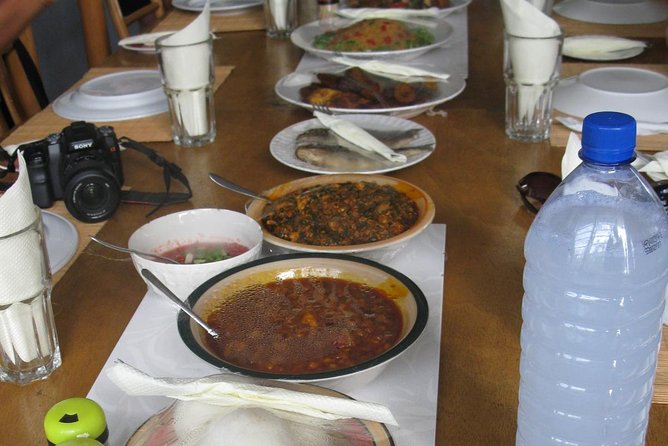
Still, check your daily spending before you book. Lunch is not included, and the package also excludes food and drinks beyond the stated breakfast and bottled water. Alcoholic drinks are available to purchase, but they are extra. Ask for a clear explanation of the hotel standard and meal arrangements if you want to compare this with a self-planned trip.
The private setup adds value for families and small groups. You are not matched with strangers, and the experience can be customized. Mimi helped one party shape its eight-day plan, which suggests you should raise special interests before arrival rather than waiting until the first morning.
More things to do in Accra:
- The Cape Coast Day Tour
★ 5.0 · 525 reviews - Experience the Beauty, History and the Culture Of Accra in a Day
★ 5.0 · 323 reviews - The Cape Coast Tour
★ 5.0 · 177 reviews
Day 1: A simple arrival in Accra
Your first day is deliberately easy. On arrival, a representative meets you in an air-conditioned vehicle and transfers you to a boutique hotel.
That private transfer is useful after an international flight. You avoid having to arrange transport while tired, and you have a chance to settle in before the sightseeing begins. Since the published meeting point is Accra Mall at Plot C11, near the Tetteh Quarshie Interchange on Spintex Road, confirm exactly where your airport pickup and hotel transfer will meet you.
The arrival day contains no listed sightseeing. That is a good choice for a trip with several early starts and full touring days ahead.
Day 2: Nima and the original Accra
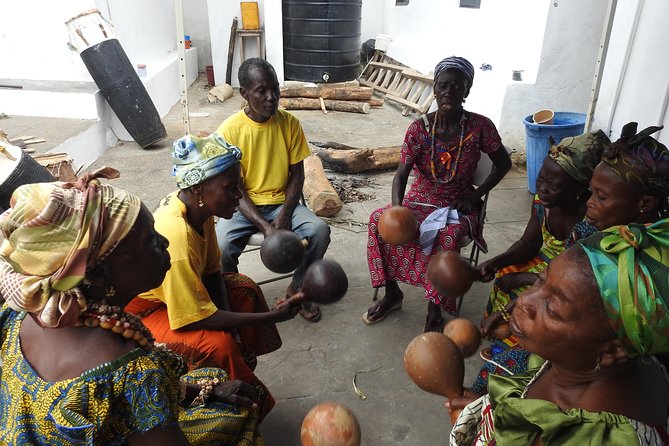
The city tour begins in Nima, a suburb where you see a more everyday side of Accra. The walk includes contact with local families and a look at ordinary community life, rather than only monuments and formal attractions.
You should treat this part of the day with respect and openness. The value is not in ticking off a famous building. It is in seeing how people live, work, and interact in a residential part of the city. Your local guide is especially important here, since a familiar guide can help you understand what you are seeing and how to behave politely.
The route continues to James Town, described as the original Accra. Its older streets, 19th-century lighthouse, Dutch-built Ussher Fort, and Portuguese James Fort connect the modern capital with its colonial-era waterfront.
If the lighthouse climb is operating and suitable for you, the view from the top gives you a useful sense of the city. It is also one of the few points on this itinerary where you can look across Accra from above. The climb adds a physical element, so travelers with limited mobility should ask about conditions in advance.
The nearby Arts Centre for National Culture rounds out the day with local arts and crafts. It is a natural place to browse for gifts, but take your time and compare items before buying. A private tour gives you more room to ask what an object represents and where it was made.
Day 3: Cocoa and the Ashanti Kingdom
Day three moves inland toward the Ashanti Region. The stop at the Cocoa Research Institute of Ghana gives the trip an agricultural angle that many city tours miss. You receive a guided look at cocoa research before continuing toward Kumasi and the Ashanti cultural sites.
The cocoa stop helps explain one of Ghana’s best-known products in a practical way. You are not only seeing a finished chocolate bar in a shop. You are visiting an institution connected with the crop itself, which adds context to the wider Ghanaian economy and rural life.
After arriving in the Ashanti Region, you visit Asante Traditional Buildings, including the Asemaso Traditional Shrine. These sites are valuable because they preserve local architectural and spiritual traditions in a setting connected to the community.
After lunch, the plan includes Kejetia Market, one of the largest open-air markets in West Africa. The sheer scale is part of the appeal, but markets are best approached as working places first and photo opportunities second. Keep your belongings secure, stay close to your guide, and wear comfortable shoes.
The itinerary also lists Kejetia again on day five. That could be useful if you want another look at the market, but it is worth asking how the two visits differ. A repeat visit may allow more time for shopping, or it may reflect a scheduling overlap that can be adjusted.
A completely different kind of day:
- From Accra: Cape Coast, Elmina Castle & Kakum Park Day Tour
★ 4.6 · 144 reviews - Accra Detailed City Tour
★ 4.5 · 118 reviews - Accra Guided City Tour Experience
★ 4.7 · 88 reviews - Accra Guided City Tour Experience
★ 5.0 · 76 reviews
Day 4: Manhyia Palace, craft villages, and Lake Bosumtwi
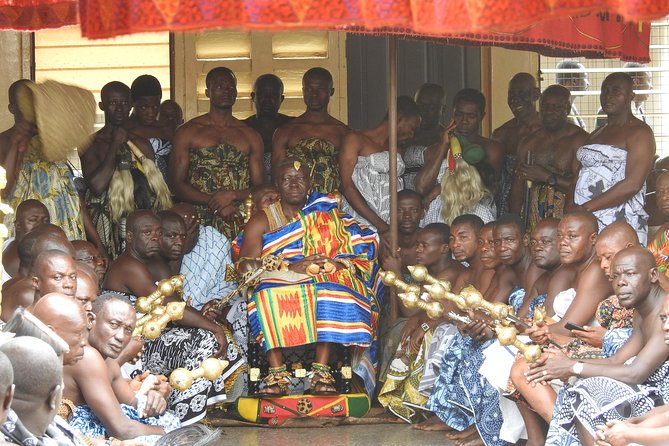
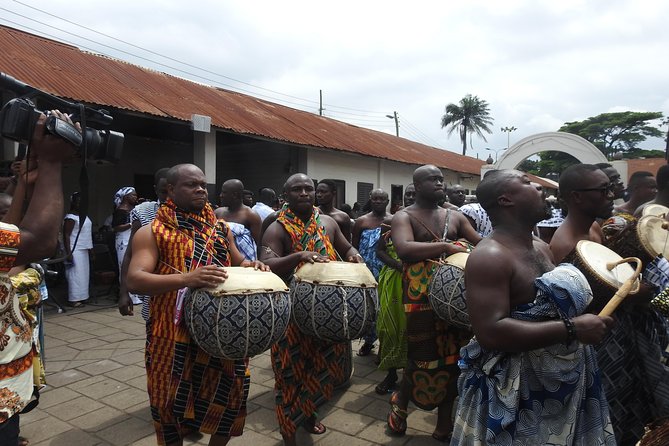
Day four is the strongest cultural day in the program. At Manhyia Palace, the former seat of the Ashanti Kingdom, you gain a direct connection to Ashanti royal history and traditions.
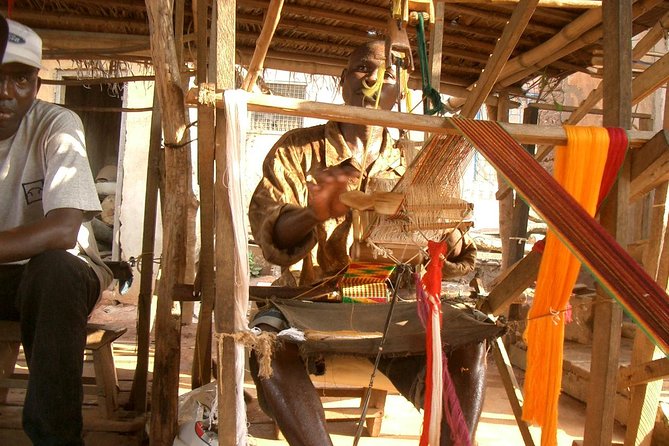
The tour then moves through several craft communities, each with a different specialty. Ntonso is known for adinkra design, Ahwiaa for wood carving, and Adanwomase for kente weaving. This is much more useful than visiting a single souvenir shop because you can see separate skills in their home settings.
At Adanwomase, the plan includes interaction with local people and demonstrations or explanations of traditional work such as kente weaving, palm wine tapping, and farming. Ask questions, but remember that these are living skills, not staged museum pieces. If you want to purchase cloth or carvings, ask about the maker and the process.
The day ends beside Lake Bosumtwi, a crater lake believed to have formed after a meteorite fell. The setting provides a change of pace after the palace and craft stops. You can expect this to be a scenic pause rather than a major activity day, since no boating or swimming is listed.
Day 5: Another market look and the slave river
The morning begins again at Kejetia Market before the route heads toward the Central Region. If shopping is important to you, this second market visit may be welcome. It gives you another chance to browse after seeing the crafts in the Ashanti villages.
The next major stop is Assin Manso, associated with a slave river. This is an important but difficult part of the route. The visit begins to connect the inland history of enslavement with the coastal forts and castles you see the next day.
You should allow yourself quiet time here. The subject is serious, and the value of the stop lies in placing the trade in a real geographic setting rather than treating the coastal castles as isolated monuments.
The itinerary does not specify the exact time spent at Assin Manso or the accommodation location that night. Ask how the day is paced, especially if you prefer more time at historical sites and less time on the road.
Day 6: Elmina Castle and Cape Coast Castle
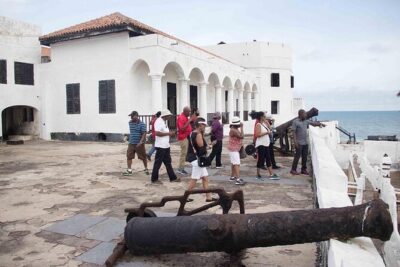
Day six is the historical center of the journey. You begin at Elmina Castle, described as well preserved, and then visit the nearby Elmina fish market.
The contrast matters. The castle represents European power and the transatlantic slave trade, while the fish market shows a living coastal economy nearby. Seeing both on the same day gives you a fuller picture of Elmina than a castle visit alone.
Cape Coast Castle follows, along with its West African Historical Museum. Cape Coast Castle is a UNESCO World Heritage site, and the museum adds background to the people, trade, and systems connected with the fort.
This day may be emotionally heavy. It is also the point where a good guide can make a major difference. Paul and Patrick were praised for their work with one family, while Michael was singled out for professionalism, punctuality, and being a pleasure to spend the week with. The available feedback is limited, but those names offer useful clues: ask who your driver and guide will be, and do not hesitate to request the same level of historical explanation.
Day 7: Kakum’s canopy walkway and local industry
Kakum National Park brings the trip into undisturbed rainforest. The featured activity is a walk on the park’s canopy walkway, described as the longest and highest in West Africa.
This is a memorable change from castles and markets, but it requires a moderate level of physical fitness. You should be comfortable walking and handling a raised walkway. The tour does not promise a particular wildlife sighting, so treat the forest setting and elevated route as the main attraction.
The stop at Hans Botel adds another nature angle. It is home to crocodiles and many birds. The itinerary also includes a rubber and oil palm plantation and a local factory, where you can see work in progress.
That combination is worthwhile because it links nature with production. You are not only looking at rainforest from a walkway. You are also seeing crops and local industry that form part of daily economic life. The plantation and factory visit may appeal especially to you if you want the trip to include more than monuments.
Day 8: Makola Market and departure
The final day leaves room for last-minute shopping at Makola Market, one of Accra’s colorful central markets. It is a practical ending for anyone who wants to buy crafts, cloth, or other Ghanaian goods after seeing the country’s production centers.
The route continues to Accra’s Oxford Street before airport check-in. Since the itinerary does not state the flight time, confirm the departure schedule and how much shopping time is realistic. You do not want a final bargain to become a race to the airport.
The tour ends back at the meeting point, with hotel drop-off and pickup listed among the included services. Confirm whether your final transfer goes directly to the airport or follows the stated meeting-point arrangement.
Transport, pace, and physical demands
This is a private tour with an air-conditioned vehicle, a driver and guide, and local guides at some locations. That makes the route more comfortable than arranging each segment independently, especially for a first visit to Ghana.
The pace is active. You will walk through Nima and James Town, climb the old lighthouse if conditions allow, move through several markets and craft villages, tour castles and museums, and use the Kakum canopy walkway. The stated requirement is a moderate physical fitness level.
Wear smart-casual clothing, as requested, and choose shoes that can handle market walks, historic sites, village visits, and the canopy route. Bottled water is included, but carry enough practical supplies for a full day, since lunch and most drinks are not part of the price.
The itinerary covers a large area in eight days. That is its strength and its limitation. You see a lot of Ghana, but you have less freedom for unplanned wandering than you would on a slower, single-region trip.
The human side of the private format
The most encouraging feedback centers on the staff. Paul was described as quiet and professional, Patrick as a valued guide, and Michael as punctual, professional, and pleasant company for a full week. Those details matter because you spend many hours in the vehicle and at sites.
The private arrangement also worked well for a family group made up of a mother, daughter, and niece. That suggests the format can suit families who want a controlled pace and a familiar group rather than a large coach.
At the same time, guide quality can shape the experience more than any printed schedule. Ask who will lead the historical visits, whether the same guide stays with you, and how customization works. Mimi helped one group customize its route, so you may be able to adjust emphasis between markets, crafts, history, and nature.
Cancellation, meeting point, and booking details
Confirmation is provided when you book, and the experience is usually booked about 13 days ahead. Pickup is offered, while the listed starting point is Accra Mall at 8:30 a.m. The activity ends back at the meeting point, with hotel pickup and drop-off included in the stated services.
Free cancellation applies if you cancel at least 24 hours before the local start time. Cancellations or changes made within 24 hours are not accepted for a refund. You can also use a mobile ticket, and group discounts may be available.
Who should book this Ghana tour?
I would recommend it to you if you want a first Ghana visit organized around culture, history, markets, and nature. It is particularly suitable for families, small private groups, and people who value a driver, local guide, and fixed route.
You should think twice if you want long lazy mornings, independent transport, or a trip focused mainly on beaches. You should also budget separately for lunch, drinks, shopping, and any alcoholic beverages.
Should you book Discover Ghana in 8 Days?
Book this tour if you want one private itinerary that connects Accra, Ashanti culture, cocoa, craft villages, slave-trade history, rainforest, and major markets. The strongest reasons are the range of experiences, the private vehicle, the included entrance fees and activities, and the personal attention suggested by the positive feedback about Paul, Patrick, Michael, and Mimi.
Before paying, confirm the hotel details, the airport transfer plan, the purpose of the second Kejetia Market visit, and the daily driving schedule. If those answers suit you, the $2,000 price can be fair for an eight-day private trip with seven nights and many inclusions. If you prefer a slower pace, use this itinerary as a guide and remove a few stops rather than trying to do everything at top speed.
FAQ
How long is the Discover Ghana tour?
The tour is designed as an eight-day experience with seven nights of accommodation.
Where does the tour start?
The listed meeting point is Accra Mall, Plot C11, Tetteh Quarshie Interchange, Spintex Road, Accra, Ghana.
What time does the tour start?
The listed start time is 8:30 a.m.
Is hotel pickup available?
Yes. Hotel pickup and hotel drop-off are included, and pickup is offered.
Is this a private tour?
Yes. Only your group participates in this private activity.
What accommodation is included?
The package includes seven nights at a boutique hotel.
Are meals included?
Breakfast is included. Lunch, food and drinks, and most other drinks are not included.
Is bottled water included?
Yes. Bottled water is included in the tour package.
Is the Kakum canopy walkway included?
Yes. The Kakum National Park visit and its canopy walkway experience are included, along with national park fees.
Can I cancel for a full refund?
Yes, if you cancel at least 24 hours before the experience start time. Cancellations within 24 hours are not refunded.
Just added in Accra
- Wli Waterfall And Tafi Monkey Sanctuary ( Volta Region)★ 5.0 · 1 review
- Traditional Beadmaking Workshop★ 5.0 · 1 review
- Private 9-Day Tour in Ghana★ 5.0 · 2 reviews
- Wli Waterfalls, Mount Afadjato & Tafi Atome Monkey Sanctuary★ 5.0 · 2 reviews
- Cape Coast and Elmina castle Day Trip★ 5.0 · 2 reviews
- Culinary for Social Change-Cooking Class★ 5.0 · 2 reviews
- Time with Nature★ 5.0 · 2 reviews
- Explore Cape Coast – Elmina in a brief( Roles in the slave trade)★ 5.0 · 1 review
Accra Tours, compared.


Experience the Beauty, History and the Culture Of Accra in a Day
Read our review →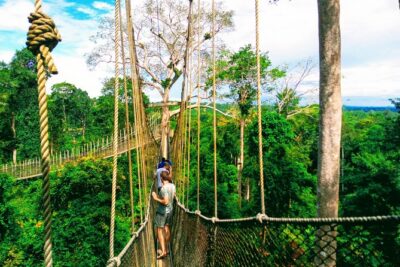

Cape Coast, Elmina Castle & Kakum Park Day Tour
Read our review →

Browse the lists this tour appears in