
REVIEW · ACCRA TOURS
Experience the Culture of Ashanti Kingdom in 5days
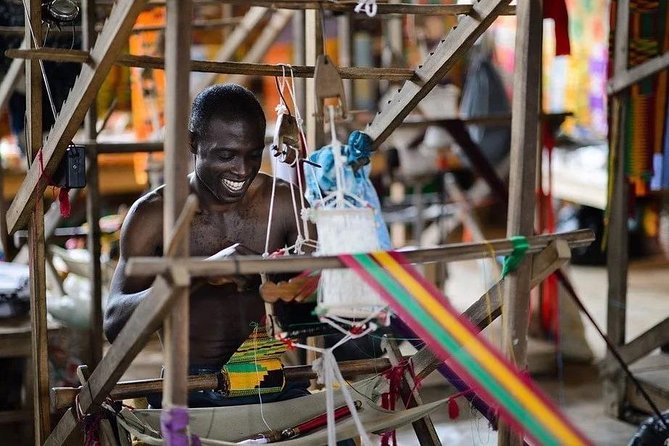
History comes alive in Kumasi. This five-day private tour links Ghana’s Ashanti capital with working craft villages, Lake Bosomtwe, and Accra, giving you far more than a quick city visit. I like the Manhyia Palace Museum for its direct introduction to the Asantehene and Ashanti traditions, and I especially like the hands-on Adinkra printing and Kente weaving in Ntonso and Adanwomase. The main drawback is pace: long road days and several major stops mean you will spend plenty of time in the vehicle.
I also like the personal touch from Tripafrica Tours, with airport pickup, a private vehicle, accommodation, breakfast, attraction fees, and ongoing support included. Guides and staff named in past feedback include Nuru Dean, Eazi, and Maxwell, with particular praise for careful planning and warm hospitality. Still, the listing gives conflicting information about private guide costs, so I would confirm exactly what is included before paying.
In This Review
- Five things that make this Ashanti tour different
- Why Kumasi is the right starting point
- Manhyia Palace Museum and the Ashanti royal story
- Kejetia Market, where Kumasi gets loud
- Ntonso Adinkra Village and the meaning behind symbols
- Adanwomase Kente Weaving Village
- The Okomfo Anokye Sword Site and the Golden Stool
- Lake Bosomtwe and Abono Village
- Accra, the final city day
- What the $1,350 price includes
- Who will get the most from this tour
- Should you book the Ashanti Kingdom tour?
- FAQ
- Where does the tour begin?
- Is airport pickup included?
- What time does the tour start?
- How long is the experience?
- Is this a private tour?
- Is transportation included?
- Are attraction fees included?
- Are meals included?
- What is not included in the tour price?
- Can I cancel for a full refund?
Five things that make this Ashanti tour different
- A direct look at Ashanti royal life: The Manhyia Palace Museum sits within the grounds of the Asantehene’s residence in Kumasi.
- Craft workshops, not just displays: You print Adinkra symbols at Ntonso and watch or try Kente weaving at Adanwomase.
- Kejetia Market in Kumasi: You visit one of West Africa’s largest open-air markets, a noisy and memorable slice of daily commerce.
- The Okomfo Anokye Sword Site: A more than 300-year-old sword is linked to one of the Ashanti Kingdom’s best-known spiritual figures.
- Lake Bosomtwe and Abono Village: The tour adds a nature stop and lakeside community visit between the Ashanti cultural sites.
- A private five-day route: You begin with arrival in Accra, spend the central part of the tour around Kumasi, then return to the capital.
Why Kumasi is the right starting point

The tour begins with arrival at Kotoka International Airport’s Terminal 3 in Accra. A staff member meets you and transfers you to your hotel, with no admission fee for this short arrival service.
That first day is intentionally light. After an international flight, I would treat it as a recovery day rather than expect sightseeing. The start time listed for the tour is 7:30 a.m., so you should be ready for an early departure after breakfast the next morning.
Day two takes you to Kumasi, the capital of the Ashanti Kingdom. This is the cultural center of the tour, and it gives the five-day program a clear purpose. Instead of seeing isolated attractions in Accra, you reach the place most closely tied to Ashanti royal history, craft traditions, markets, and local identity.
The route is handled in an air-conditioned vehicle with fuel and insurance included. That matters in a program with several full eight-hour touring days. You will want comfortable clothes, water, and a little patience for time on the road. The private format means the schedule is for your group rather than a large shared coach, which can make stops feel more manageable.
More things to do in Accra:
- The Cape Coast Day Tour
★ 5.0 · 525 reviews - Experience the Beauty, History and the Culture Of Accra in a Day
★ 5.0 · 323 reviews - The Cape Coast Tour
★ 5.0 · 177 reviews
Manhyia Palace Museum and the Ashanti royal story
Your first major stop in Kumasi is the Manhyia Palace Museum. The museum is located within the grounds of Manhyia Palace, the residence of the Asantehene, the king of the Ashanti Kingdom.
This setting gives the visit extra weight. You are not simply entering a general museum about Ghana. You are visiting a place connected to the living royal institution of the Ashanti people. Exhibits explain Ashanti customs and Ghana’s cultural heritage during the colonial period.
I would pay close attention to how the museum connects royal authority, ceremony, and national history. The value here comes from context. Later stops, including the Golden Stool story and the Okomfo Anokye site, make more sense after you have learned about the Ashanti kingdom’s political and spiritual traditions.
The tour then continues to the Prempeh II Jubilee Museum at the Kumasi Cultural Center. This provides another look at Ashanti history and adds material related to the kingdom’s past. Since both museums cover connected subjects, your guide can make a big difference by explaining the links rather than simply walking you from room to room.
Tripafrica’s past customers gave strong credit to the planning and support from Nuru Dean and his team. If Nuru Dean, Eazi, or Maxwell is assigned to your group, ask questions freely. The experience is likely to be more rewarding when you treat the museum visits as conversations rather than passive viewing.
Kejetia Market, where Kumasi gets loud
The Kumasi day also includes Kejetia Market, described as one of the largest open-air markets in West Africa. This is not a quiet museum stop. Expect a more active setting, with stalls, shoppers, goods, and constant movement.
Kejetia helps balance the royal and historical visits. You see how Kumasi functions as a commercial center, not only as the former seat of a powerful kingdom. The market is useful for understanding everyday trade and the scale of city life.
Allow yourself to stay alert and close to your guide. The supplied information does not specify how long you spend inside the market or which sections you visit, so the exact experience may depend on the day and the guide. You may also want to ask before the tour if there is time for purchases, since this is a good place to look for local goods but not a stop to rush through casually.
The full Kumasi touring day is listed at about eight hours. With two museums and the market, that is a substantial schedule. I would not plan another major activity for the evening.
Ntonso Adinkra Village and the meaning behind symbols

Day three shifts from royal institutions to village craft traditions. At Ntonso Adinkra Village, you learn about Adinkra symbols and their proverbial meanings.
The best part is the local textile printing workshop. You choose symbols and print with them, rather than only looking at finished cloth behind glass. That small act gives you a clearer sense of how a design carries an idea or saying.
The tour description specifically highlights the history behind the symbols. Ask your guide to explain the meaning of each design you select. You will get more from the workshop if you understand what you are printing and why it matters.
This was one of the experiences praised in past feedback, along with an Ashanti naming ceremony and a cocoa farm visit. Those two additional activities appear in the feedback but not in the stated five-day schedule, so you should not assume they are part of your booking. Ask Tripafrica directly if you want them included.
Ntonso is also a useful shopping stop. You may find Adinkra products to take home, but the main value is the process and the chance to connect an object with its meaning. The hands-on format suits anyone who prefers making and asking questions to simply taking photographs.
A completely different kind of day:
- From Accra: Cape Coast, Elmina Castle & Kakum Park Day Tour
★ 4.6 · 144 reviews - Accra Detailed City Tour
★ 4.5 · 118 reviews - Accra Guided City Tour Experience
★ 4.7 · 88 reviews - Accra Guided City Tour Experience
★ 5.0 · 76 reviews
Adanwomase Kente Weaving Village
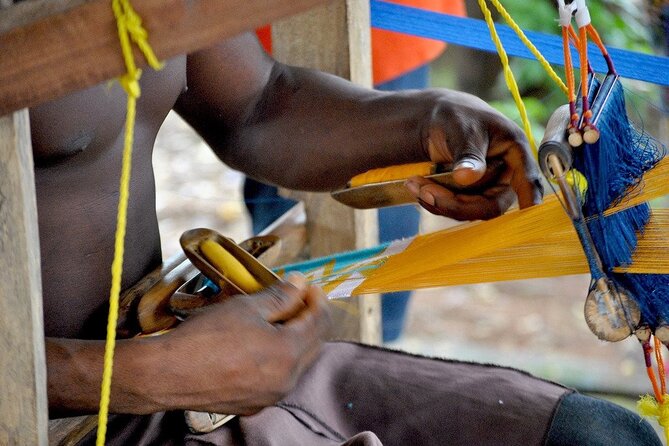
The next village is Adanwomase, known for Kente weaving. Kente is a colorful silk and cotton fabric made from interwoven strips and is strongly connected with Akan culture and special occasions.
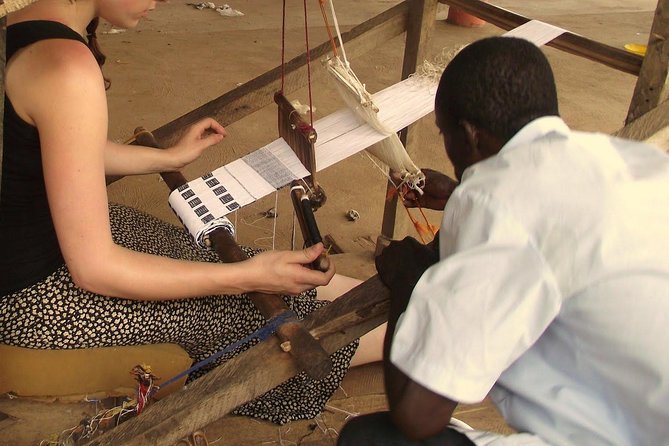
You receive a weaving workshop and have the chance to buy Kente products. This is a practical stop because you can see how the cloth is made before deciding what, if anything, you want to purchase.
Do not confuse a workshop with a full technical course. The information promises an introduction and workshop, not a long apprenticeship. Still, it gives you a better basis for judging the work and understanding why handmade Kente can cost more than a mass-produced imitation.
The two village visits form a strong pair. At Ntonso, symbols carry messages. At Adanwomase, color, pattern, and weaving show another side of Akan culture. Together, they offer a more personal experience than a standard museum circuit.
Day three is also listed at about eight hours. The villages are the kind of stops where you may want time to ask questions, look carefully, and make purchases. If your group has specific interests in textiles, tell the guide early in the day so the schedule can be handled sensibly.
The Okomfo Anokye Sword Site and the Golden Stool
Day four begins at the Okomfo Anokye Sword Site, located on the grounds of Okomfo Anokye Teaching Hospital in Kumasi.
The site contains a sword said to be more than 300 years old. According to the account presented there, the famous priest Okomfo Anokye planted it in the ground, and attempts to remove it have failed. The site is also connected with the story of Okomfo Anokye conjuring the Golden Stool for the Ashanti Kingdom.
The sword is valuable as a place of belief and memory. You do not need to accept every part of the story in the same way to understand its importance. A good guide can explain how the site relates to Ashanti identity, leadership, and spiritual tradition.
This visit also gives you a chance to ask about the Golden Stool, one of the central symbols of Ashanti authority. The tour does not promise a view of the Golden Stool itself, so keep your expectations focused on the site and its interpretation.
Because the location is within a hospital compound, this is a very different setting from a palace museum or rural craft village. That contrast helps show how historical and spiritual places remain part of present-day Kumasi.
Lake Bosomtwe and Abono Village
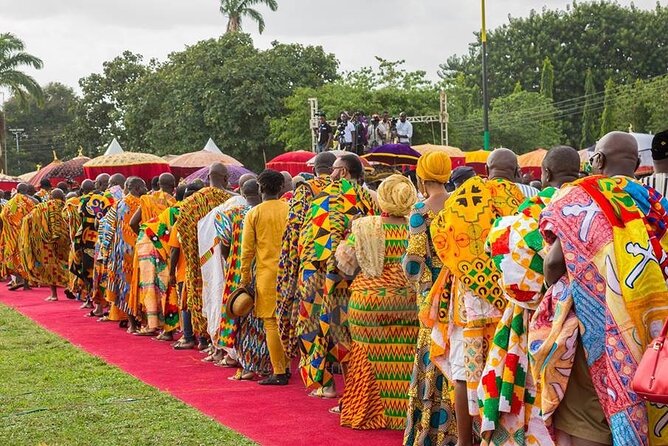
After the sword site, you depart for Abono Village at Lake Bosomtwe. The day description identifies Lake Bosomtwe as the first stop, then refers to departure to Abono Village, so the precise order may vary. Confirm the timing with your guide on the morning of the visit.
Lake Bosomtwe adds scenery and a change of pace after several cultural sites. You can expect views of the lake area and time connected with Abono Village, though the supplied details do not specify particular water activities or a boat trip. Do not assume those are included.
This stop makes sense in the larger route because it places Ashanti culture in a broader setting. You have already seen museums, royal sites, markets, and workshops. The lake day gives you room to notice Ghana’s physical setting and community life outside Kumasi’s center.
The day is again planned for about eight hours. Since the tour includes transport, fuel, and an air-conditioned vehicle, you can cover the route without arranging separate transfers. The tradeoff is that this is not a slow, resort-style lake break. It is one part of a packed cultural circuit.
Accra, the final city day
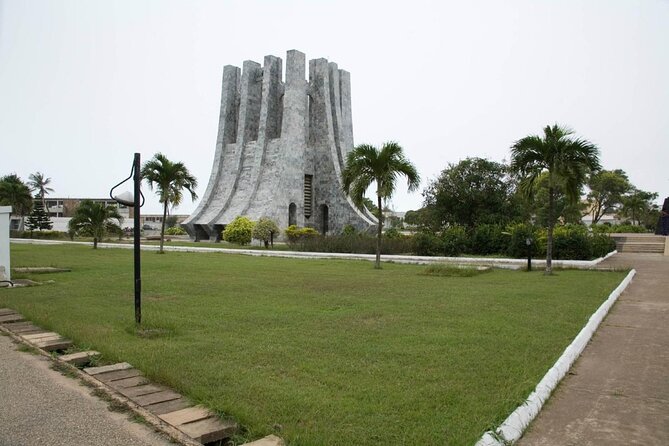
On day five, you return to Accra after breakfast. The program includes an Accra city tour and a visit to Kwame Nkrumah Memorial Park before your airport transfer.
The park is a fitting final stop. Kwame Nkrumah was Ghana’s first prime minister and president, and the memorial helps shift the story from the Ashanti Kingdom to modern Ghana as an independent country. After several days centered on Ashanti identity, you finish by looking at the nation’s wider political story.
The city tour is listed at about eight hours, including the transfer toward the airport. Ask for a clear departure plan if your international flight is later that day. The itinerary says you will be transferred to the airport to depart home or continue to your location, but it does not give a guaranteed airport arrival time.
This final day can feel full, particularly after the road travel from Kumasi. Pack your belongings before breakfast and keep any purchases organized. A private vehicle should make the airport transfer easier, but your guide still needs to work around traffic and your flight time.
What the $1,350 price includes
At $1,350 per person, this is not a low-cost sightseeing package. Its value depends on how much you want handled for you.
The price includes:
- Air-conditioned transportation, fuel, and vehicle insurance
- Air-conditioned-room accommodation
- Four breakfasts
- Attraction and activity fees
- All listed taxes and fees
- A private tour guide
- Airport pickup and transfer arrangements
- Twenty-four-hour ongoing support
- A private tour for your group
That is a useful bundle for a five-day route involving Accra, Kumasi, villages, a lake area, and a return to Accra. You are paying for transport, planning, lodging, admissions, and support, not just guided entry to a few sites.
Meals beyond the four included breakfasts are not included. International airfare and visa fees are also excluded. The information also lists private tour guide as not included, which conflicts with the inclusion of a private tour guide. I would ask Tripafrica to confirm this in writing before booking, along with the hotel names, meal arrangements, and the exact airport transfer plan.
You should also ask how much free time is available for shopping. Adinkra and Kente products are part of the village experience, but purchases are your responsibility unless otherwise stated.
Who will get the most from this tour
I would recommend this tour to you if you want Ghana presented through culture, craft, royal history, and local communities. It suits first-time visitors who prefer a planned private route and do not want to arrange several hotels, drives, and admissions on their own.
It is also a strong fit if you care about family roots or African heritage. One past customer described the experience as reconnecting with a lost family and returning to true roots. That emotional response cannot be promised, but the Ashanti focus gives the tour more meaning than a generic city package.
The tour may be less suitable if you want leisurely mornings, long stays in one place, or a highly specialized historical study. Three days are listed at about eight hours, and the route covers substantial ground. You will see many places, but you will need to accept a fairly active schedule.
The private format is helpful for families, couples, and small groups with shared interests. Most people can participate, and the tour is near public transportation, though the experience itself uses the arranged vehicle. Confirmation is provided at booking, and the mobile ticket is convenient for keeping the details on your phone.
Should you book the Ashanti Kingdom tour?
Book it if you want a broad, organized introduction to Ashanti culture with real craft workshops, royal sites, a major market, a lake stop, and an Accra finish. The strongest parts are the palace setting, the Adinkra and Kente activities, and the care associated with Nuru Dean, Eazi, and Maxwell.
Before paying, confirm the guide inclusion, hotel details, exact village activities, and the timing of your final airport transfer. You can cancel for a full refund up to 24 hours before the start time, but cancellations or changes within 24 hours receive no refund.
For a first visit to Ghana, this route offers plenty of substance in five days. It is busy, but the variety is the point.
FAQ
Where does the tour begin?
The tour begins with arrival at Terminal 3 of Kotoka International Airport in Accra, Ghana.
Is airport pickup included?
Yes. A staff member meets you at the airport and transfers you to your hotel on arrival.
What time does the tour start?
The listed start time is 7:30 a.m.
How long is the experience?
The tour lasts approximately five days.
Is this a private tour?
Yes. Only your group participates in the private tour or activity.
Is transportation included?
Yes. An air-conditioned vehicle with fuel and insurance is included.
Are attraction fees included?
Yes. All activity and attraction fees, along with taxes and fees, are included.
Are meals included?
Four breakfasts are included. Other meals are not included in the stated price.
What is not included in the tour price?
International airfare and visa fees are not included. The information also gives conflicting details about private guide costs, so confirm that point with Tripafrica before booking.
Can I cancel for a full refund?
Yes, if you cancel at least 24 hours before the experience start time. Cancellations within 24 hours are not refunded, and changes within that period are not accepted.
Just added in Accra
- Wli Waterfall And Tafi Monkey Sanctuary ( Volta Region)★ 5.0 · 1 review
- Traditional Beadmaking Workshop★ 5.0 · 1 review
- Private 9-Day Tour in Ghana★ 5.0 · 2 reviews
- Wli Waterfalls, Mount Afadjato & Tafi Atome Monkey Sanctuary★ 5.0 · 2 reviews
- Cape Coast and Elmina castle Day Trip★ 5.0 · 2 reviews
- Culinary for Social Change-Cooking Class★ 5.0 · 2 reviews
- Time with Nature★ 5.0 · 2 reviews
- Historical Day Tour to Cape Coast, Elmina and Kakum★ 5.0 · 3 reviews
Accra Tours, compared.


Experience the Beauty, History and the Culture Of Accra in a Day
Read our review →

Cape Coast, Elmina Castle & Kakum Park Day Tour
Read our review →
Browse the lists this tour appears in