
REVIEW · ACCRA TOURS
Ghana Adventure , History , Cultural And Heritage Tour
Ghana’s story unfolds one memorable stop at a time. This eight-day Ghana tour links Accra, Kumasi, Lake Bosomtwe, Cape Coast, Elmina, and Kakum National Park, giving you far more than a city break. I like the strong mix of Pan-African history and living craft traditions, especially the W.E.B. DuBois Centre, Kente weaving, and Adinkra printing. I also like the airport-to-hotel support, which can make a first visit to Ghana feel much easier. The main caution is the confusing duration shown in the details: the package is described as eight days, while the summary says one to two hours. Confirm the full schedule before paying.
I also like the human touch. Guide Edmund is specifically praised for helping with airport arrival, departure, and visa-related questions, as well as guiding the tour itself. The tradeoff is that this is a busy program, with long road transfers and short stated visits at several major sites. You will see a lot, but you should not expect a slow, relaxed pace at every stop.
In This Review
- Key points to know before booking
- What the eight-day Ghana route is really like
- Landing in Accra with help from Edmund
- Accra’s Pan-African landmarks and Independence Square
- James Town, lighthouses, and Afro-Brazilian connections
- Kumasi and the careful work of Kente weaving
- Ntonso Adinkra cloth and a souvenir you make yourself
- Manhyia Palace and the Ashanti royal story
- Okomfo Anokye Sword Site and brass casting in Kumasi
- Lake Bosomtwe and a quieter side of Ghana
- Assin Manso and the painful route to the coast
- Kotokuraba Market, fishing boats, and boat builders
- Elmina Castle and the Door of No Return
- Kakum National Park and the high canopy walkway
- Is $500 good value?
- Who should book this Ghana tour?
- Should you book it?
- FAQ
- How long is the Ghana tour?
- What time does the tour start?
- Where does the tour begin?
- Does the tour include accommodation?
- Are meals included?
- Is transport provided?
- What is the largest possible group size?
- What is the cancellation policy?
Key points to know before booking
- Accra begins the journey with Pan-African landmarks, Independence Square, James Town, and the Kwame Nkrumah Memorial Park.
- Kumasi adds hands-on craft stops, including Kente weaving at Adanwomase and Adinkra cloth production at Ntonso.
- The coastal section confronts the slave trade directly, from Assin Manso to Elmina Castle and the Door of No Return.
- Lake Bosomtwe and Kakum National Park provide a welcome change of pace, with water, forest, wildlife, and a high canopy walkway.
- Airport pickup, an air-conditioned vehicle, bottled water, taxes, accommodation, meals, and an expert guide are described as part of the package.
- The $500 price can be strong value for a full package, but you should verify exactly what accommodation, meals, transport, and entrance fees cover.
What the eight-day Ghana route is really like
This is not a single short outing. It is a broad cultural and heritage program beginning and ending in Accra, with several overnight areas included in the package description. You move from Ghana’s modern capital to the former Ashanti center at Kumasi, then toward the coastal forts and forests of the Central Region.
The route has a clear purpose. It shows how Ghana’s past is preserved in monuments and museums, but also how it continues through royal traditions, weaving, fishing, markets, spiritual practices, food, and everyday city life.
The stated visit times are often brief. A 30-minute or 45-minute stop may be enough for an introduction, but it will not allow unlimited time for photographs, shopping, or long conversations. Much of the day will also be spent on the road, so this suits you if you prefer a packed survey of Ghana rather than a stay in one place.
More history tours in Accra:
- Experience the Beauty, History and the Culture Of Accra in a Day
★ 5.0 · 323 reviews - Ghana Heritage Tours – Beyond The Return
★ 5.0 · 36 reviews - 10 Days Ghana Cultural and Heritage Trip
★ 5.0 · 31 reviews
Landing in Accra with help from Edmund
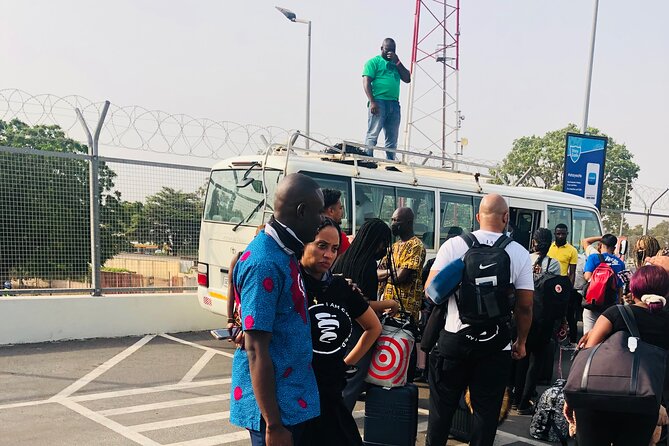
Your first stage begins at Kotoka International Airport. After immigration, baggage collection, and customs, a cultural guide meets you for the transfer to your Accra hotel.
That welcome matters. Arriving in a new country can involve small stresses, from finding the right vehicle to handling airport procedures. Having a named guide meet you at the airport gives the trip a clear starting point. Edmund receives especially strong praise for assistance with arrival, departure, and visa questions, so it is worth confirming in advance if he will be your assigned guide.
After hotel check-in, the guide provides a welcome briefing and explains the days ahead. The first day is otherwise set aside for rest. That is sensible after an international flight, even though the supplied timing of 30 minutes for this stage seems to describe only the transfer or welcome, not a full day.
The package description includes hotel accommodation, meals, transport, and an expert guide. The separate inclusions list specifically names bottled water, an air-conditioned vehicle, and all fees and taxes. Ask for a written breakdown of the hotels, meals, entrance charges, and number of driving days, since the wording is not fully consistent.
Accra’s Pan-African landmarks and Independence Square
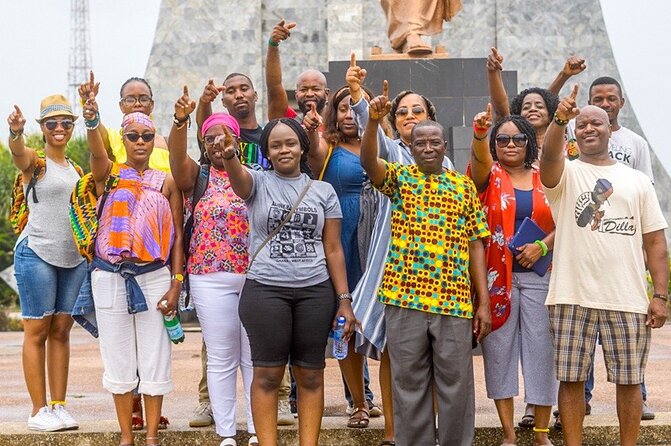
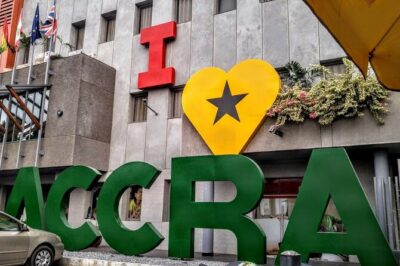
Your first full sightseeing day introduces Accra as a city where older colonial-era structures share space with modern buildings and busy commercial districts. The route includes the W.E.B. DuBois Centre, Independence Square, and the Kwame Nkrumah Memorial Park.
The DuBois Centre honors W.E.B. DuBois, the American scholar and Pan-Africanist who chose to live and work in Ghana. His connection to the country gives this stop special meaning for anyone interested in African independence movements, Black internationalism, or the intellectual ties between Africa and the diaspora.
Independence Square brings the national story into public space. You see the enclosed flame of African liberation, lit by Kwame Nkrumah in 1961. This is a useful place to connect Ghana’s independence with the wider political changes taking place across Africa during that era.
The Kwame Nkrumah Memorial Park is listed separately in the route, although the written descriptions overlap slightly. It is the final resting place of Ghana’s first president and a central stop for understanding the country’s independence story. Allow time to listen closely to the guide here. The meaning of the site is more important than simply taking a photograph beside the monument.
James Town, lighthouses, and Afro-Brazilian connections
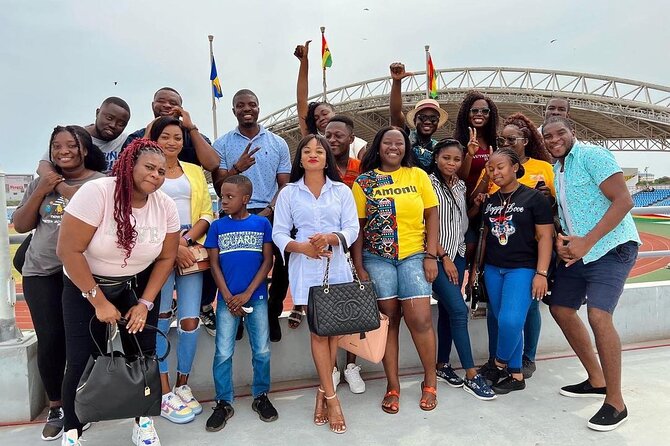
James Town is one of Accra’s oldest and most characterful districts. Its lighthouses point to the area’s long connection with maritime trade. The first lighthouse was built by the British in 1875, and a larger replacement completed in 1921 is still functioning.
You may also visit Brazil House, linked to seven Afro-Brazilian families who returned to Ghana in 1836. Names such as De Souza, Palmares, Azumah, Amorin, Da Costa, Santos, De Medeiros, and Olympio remain associated with this part of Accra.
This stop gives the tour a wider view of the African diaspora. The story is not only about people being taken from West Africa. It also includes people and families who later returned, built lives, and shaped local communities.
The stated visit time is only 30 minutes. That is enough for a quick introduction, but James Town deserves patience. If photography or neighborhood life matters greatly to you, ask how much free time is possible. The busy streets and uneven flow of city traffic can also make the area feel rushed.
More things to do in Accra:
- The Cape Coast Day Tour
★ 5.0 · 525 reviews - The Cape Coast Tour
★ 5.0 · 177 reviews - From Accra: Cape Coast, Elmina Castle & Kakum Park Day Tour
★ 4.6 · 144 reviews - Accra Detailed City Tour
★ 4.5 · 118 reviews
Kumasi and the careful work of Kente weaving
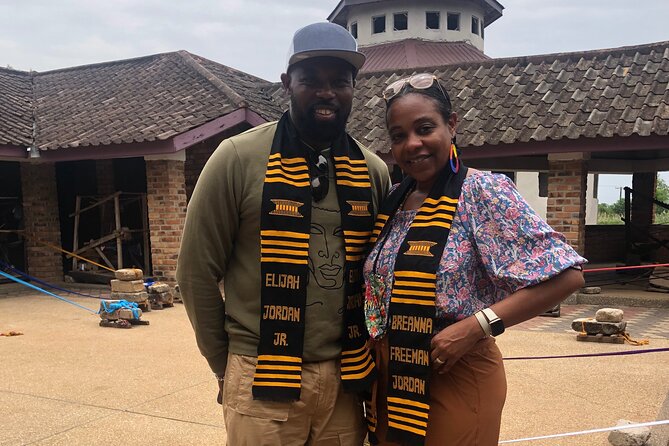
After breakfast and checkout, you travel through Ghana’s forest zone toward Kumasi, the historic center of the Ashanti Empire. The route first reaches craft villages near Ejisu, including Adanwomase.
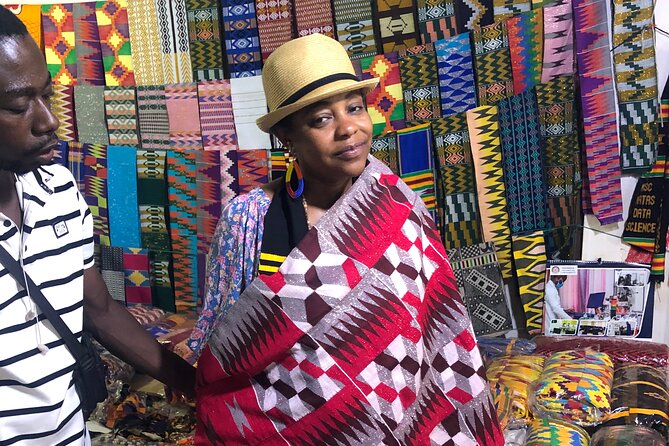
At the Kente weaving center, you see cloth made by hand on traditional looms. The patterns and colors carry meaning, and the skill comes from techniques passed through generations. This is one of the better stops for buying a meaningful souvenir because you can see how the cloth is produced rather than simply finding it in a city shop.
You may have the chance to meet the paramount chief, with drumming and dancing, or visit cocoa farms. These options are presented as possibilities, so do not assume both will happen on every departure.
The visit is listed at 35 minutes. That is short for a weaving demonstration and shopping, particularly if several people want to ask questions. If you plan to buy Kente, decide beforehand whether you want a small piece, an Adanwomase-made item, or a larger length of cloth. Prices and designs can vary, and the guide can help explain what you are seeing.
Ntonso Adinkra cloth and a souvenir you make yourself
Ntonso offers a different craft tradition. Artisans hand-stamp symbols onto cotton cloth to create Adinkra textiles. You learn how black dye is made from tree bark and may create your own Adinkra sash.
This is one of the most personal parts of the route. A finished sash is more than a purchased object because you have seen the process and taken part in it. The symbols also provide a window into Ashanti ideas and visual language.
Black-on-black and black-on-red cloth is associated with funerals and solemn occasions. That detail helps you read the textiles with more care. Not every pattern is simply decoration.
The planned 45 minutes should allow for a basic demonstration and a small activity, but you may need to keep shopping focused. Larger handmade pieces are available, and the village is also a place to ask about the meaning of specific symbols before purchasing.
Manhyia Palace and the Ashanti royal story
The Manhyia Palace Museum was once the official residence of Ashanti kings until 1974. Today, it holds objects connected with the Ashanti Kingdom and explains the legacy of its unified monarchy.
I would give this stop your full attention. The museum helps connect the craft villages to the political world that gave many Ashanti traditions their importance. Without this context, Kente, royal symbols, and ceremonial objects can be easy to admire without fully understanding.
The stated stop is 30 minutes, which may feel hurried for a museum. If you are especially interested in royal history, ask whether the schedule allows extra time. The tour also refers to the ancient Ejisu Ashanti Shrine, where people seek healing and advice connected with spiritual beliefs. That visit offers a look at traditions that remain meaningful today, but it should be approached respectfully and without treating sacred practices as a performance.
Okomfo Anokye Sword Site and brass casting in Kumasi
The Okomfo Anokye Sword Site carries one of the strongest legends in the Ashanti story. It marks the place associated with the descent of the Golden Stool and the unity of the Ashanti people. The sword is said to have remained in place for 300 years, with the belief that removing it would bring about the kingdom’s collapse.
Whether you approach the story as history, royal tradition, or sacred belief, it shows how symbols can hold a community together. The site is listed for a 25-minute visit, so the guide’s explanation will be important.
The route also includes Sokoban Krofrom, where brass casting has supported families for generations. You may find beads, jewelry, and other cast items for sale. This stop balances the royal and political material with a working craft tradition. It also gives you another chance to buy directly from makers, though you should leave room in your luggage.
Lake Bosomtwe and a quieter side of Ghana
The road then turns toward Lake Bosomtwe, Ghana’s largest natural freshwater lake. The atmosphere changes here. You can walk along the shore, meet local fishing people, and learn about life around a lake considered sacred by the Ashanti.
Fishing, swimming, and water sports are part of the lake’s appeal, though the tour specifically emphasizes peace, nature, and conversation with local people. After several city and museum stops, this pause can be restorative.
The planned visit is 45 minutes. That gives you time for a short walk and photographs, but not necessarily a long swim or extended lakeside stay. If you want a slow day by the water, this route may move too quickly. If you simply want to see how the lake fits into Ashanti life, the timing should provide a useful introduction.
Assin Manso and the painful route to the coast
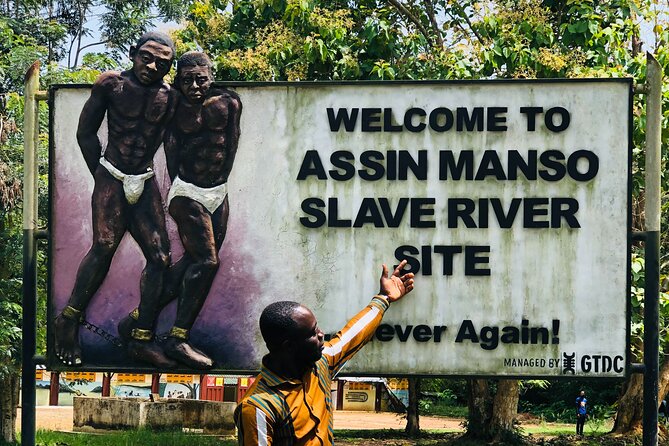
The visit to Assin Manso Ancestral Slave River Park is one of the most serious parts of the tour. The site includes the burial place of two formerly enslaved people from the United States and Jamaica, whose remains were reinterred during Ghana’s first Emancipation Day celebration in 1998.
The Slave River, known as Donkor Nsuo, is identified as the place where captured Africans were washed before being held in the coastal castles for shipment to the Americas and the Caribbean. The language and subject matter are difficult, and that is appropriate. This is not a decorative heritage stop. It asks you to face the human cost behind the buildings you later visit.
The planned time is 50 minutes. Listen carefully and allow yourself space to process what you hear. The value of this stop comes from placing the coastal forts within a larger route of capture, confinement, and forced transport.
Kotokuraba Market, fishing boats, and boat builders
Kotokuraba Market is the economic center of Cape Coast. It has served as a major trading point for decades and remains a place where local commerce gathers around stores, stalls, and the market itself.
The route also brings you near the harbor, where colorful fishing boats return with their catch. You may meet boat builders who still use traditional tools and methods passed down over centuries.
This stop adds daily life to the tour. Castles and museums explain major events, but the market and harbor show how Cape Coast functions now. I like that the program does not treat the coast as only a memorial zone.
The market visit is listed at 20 minutes, which is very brief. Keep valuables secure, stay close to your guide, and do not expect a long shopping session. The most useful approach is to observe, ask questions, and let the guide help you move through the area.
Elmina Castle and the Door of No Return
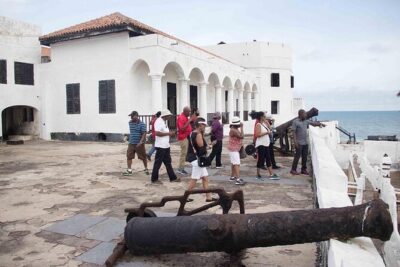
The coastal castle visit is the emotional center of the program. Elmina Castle is a UNESCO World Heritage site with dungeons, a museum, and the Door of No Return. The castle held more enslaved Africans than any other in the region, making the visit especially powerful when paired with Assin Manso.
The museum explains the castle and Cape Coast, while the rooms and dungeons make the history physical. You will not simply hear about confinement. You will see the spaces where people were held before forced shipment across the Atlantic.
The stated visit time is 45 minutes. That may cover a guided introduction, but it leaves little margin for a long museum visit or browsing the historical books sold on site. If the subject is central to your trip, ask whether the castle schedule can be extended.
This part of Ghana is essential for anyone tracing family history, studying the transatlantic slave trade, or seeking a more direct connection with African and diaspora history. It can also be emotionally heavy, so plan some quiet time after the visit if possible.
Kakum National Park and the high canopy walkway
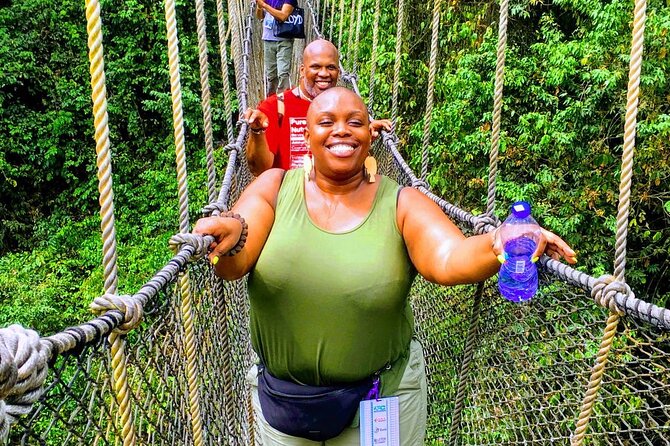
Kakum National Park closes the route with forest and wildlife. A short walk on the forest floor introduces how people traditionally lived in the forest, while the park itself is home to more than 40 species of mammals, including monkeys and the reclusive forest elephant. You may also see birds and butterflies.
The main attraction is the canopy walk, described as a 1,000-foot suspended walkway with viewing platforms more than 150 feet above the ground. It is identified as Africa’s only aerial walkway through the tree canopy.
The one-hour visit includes both the forest-floor walk and canopy experience, so the schedule is tight. Wear practical clothing and shoes suitable for walking, although no formal dress guidance is provided. You should also understand that wildlife sightings are not guaranteed, especially for the forest elephant.
A brief stop at Abandze connects the natural portion of the route back to the diaspora story. It is identified as the ancestral home of Louis Armstrong, the American jazz musician. That final link gives the journey a fitting cultural reach, from Ghanaian forests and royal courts to African American music.
Is $500 good value?
At $500 per person, this can be good value if the advertised package is delivered as described. An eight-day trip with hotel accommodation, meals, private or organized transport, an expert guide, bottled water, entrance fees, and airport transfers would otherwise require careful planning and multiple separate bookings.
The air-conditioned vehicle matters because the route covers long distances between Accra, Kumasi, the lake, and the coast. Airport support also has real value on a first visit, particularly if you want one person handling the arrival and departure process.
Still, the price needs clarification. The details do not clearly identify the hotel standard, room arrangements, meal plan, group transportation, or the exact entrance fees covered. The maximum group size is 50, which is large for a cultural visit. A group that size can make museum access, village conversations, and quick departures less flexible.
Ask these questions before booking:
- Is the price truly for eight days and seven nights?
- Which hotels and meals are included?
- Are all listed entrance tickets covered?
- Is the vehicle shared, and how many people usually ride?
- Will Edmund be the guide for your dates?
- How much time is spent driving between each region?
Free cancellation is available if you cancel at least 24 hours before the start time. Inside that window, the amount paid is not refunded, and changes are not accepted.
Who should book this Ghana tour?
I would recommend it to first-time visitors who want a wide introduction to Ghana without arranging every hotel, road transfer, guide, and entrance ticket themselves. It is particularly well suited to people interested in Pan-African history, the Ashanti Kingdom, the transatlantic slave trade, Ghanaian textiles, and living cultural traditions.
It also suits diaspora travelers who want to connect Accra and the Central Region with places tied to African American and Afro-Caribbean history. The DuBois Centre, Assin Manso, the coastal castles, Brazil House, and Abandze create a meaningful chain of connections.
I would hesitate if you prefer slow travel, long museum visits, or several free afternoons. The program covers a great deal of ground, and the short stop times suggest a survey rather than a deep stay in each place. A group of up to 50 may also feel too large for intimate village visits.
Should you book it?
Book this tour if you want breadth, structure, and strong historical content at a single price. Its best features are the airport support, the mix of major sites and working craft villages, and the careful connection between Ghana’s past and its present.
Before committing, get the eight-day schedule and inclusions in writing. The duration mismatch is the biggest warning sign, not because the route lacks value, but because your expectations should match what you are buying. If the full package really includes accommodation, meals, transport, guides, and fees for $500, it is an appealing way to begin Ghana. If it is only a short Accra activity, the description needs correction.
FAQ
How long is the Ghana tour?
The experience is described as an eight-day tour package beginning and ending in Accra. The summary also shows a duration of approximately one to two hours, so you should confirm the correct length before booking.
What time does the tour start?
The stated start time is 8:00 am.
Where does the tour begin?
The tour begins in Accra, with airport arrival support at Kotoka International Airport. The guide meets you after immigration, baggage collection, and customs.
Does the tour include accommodation?
The package description says accommodation in a hotel is included. The specific hotel names and standards are not provided.
Are meals included?
The package description says meals are included. It does not specify which meals are provided each day.
Is transport provided?
Yes. The package includes transport in an air-conditioned vehicle. Bottled water is also included.
What is the largest possible group size?
The activity can have a maximum of 50 travelers.
What is the cancellation policy?
You can cancel at least 24 hours before the experience start time for a full refund. Cancellations or changes made less than 24 hours before the start time are not accepted and are not refunded.
Just added in Accra
- Wli Waterfall And Tafi Monkey Sanctuary ( Volta Region)★ 5.0 · 1 review
- Traditional Beadmaking Workshop★ 5.0 · 1 review
- Private 9-Day Tour in Ghana★ 5.0 · 2 reviews
- Wli Waterfalls, Mount Afadjato & Tafi Atome Monkey Sanctuary★ 5.0 · 2 reviews
- Cape Coast and Elmina castle Day Trip★ 5.0 · 2 reviews
- Culinary for Social Change-Cooking Class★ 5.0 · 2 reviews
- Time with Nature★ 5.0 · 2 reviews
- Explore Cape Coast – Elmina in a brief( Roles in the slave trade)★ 5.0 · 1 review
Accra Tours, compared.


Experience the Beauty, History and the Culture Of Accra in a Day
Read our review →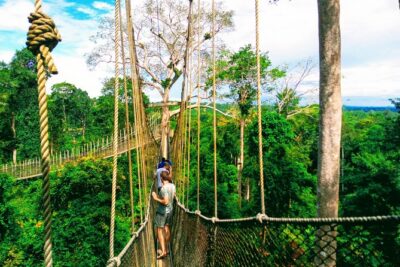

Cape Coast, Elmina Castle & Kakum Park Day Tour
Read our review →
Browse the lists this tour appears in