
REVIEW · ACCRA TOURS
Ghana City 2-day Tour
History comes close to the shore here. This two-day private tour links Ghana’s painful slave-trade past with the living streets of Accra, from the Assin Manso Slave River to Cape Coast Castle, James Town Lighthouse, and Ussher Fort. I like the private group format, which gives you a more personal day with your guide, and I like that daily hotel transfers from Accra are included. The main concern is time: the first day involves a long trip into Ghana’s Central Region, so this is a serious history outing rather than a light city excursion.
I also like the clear focus. You are not being rushed through a random collection of attractions. The route follows a historic chain, beginning with the Last Bath at Assin Manso and continuing to the castle where captives were held before crossing the Atlantic. On the second day, you see how Accra’s coastal communities and forts shaped the city.
The price is $307.70 per group of up to four, not per person, which can be good value for a small party. Still, the itinerary gives each day about six to seven hours of sightseeing, before allowing for road time, so you should be ready for a full schedule and emotionally heavy subject matter.
In This Review
- Key points to know before booking
- Why this two-day route works
- Day one at Assin Manso Slave River Park
- Cape Coast Castle and the Gate of No Return
- What the long first day means for you
- James Town Lighthouse and Accra’s coastal story
- Ussher Fort and its museum
- The guide can shape the experience
- Price, group size, and overall value
- Who should book this experience?
- Should you book the Ghana City 2-Day Tour?
- FAQ
- Where does the Ghana City 2-Day Tour take place?
- How long does the tour last?
- Is hotel pickup available?
- Is this a private tour?
- What is included at Assin Manso?
- Is Cape Coast Castle a UNESCO site?
- How long is the Cape Coast Castle visit?
- What will I see in James Town?
- What is Ussher Fort?
- What is the cancellation policy?
Key points to know before booking
- Assin Manso begins the story: You visit the Ancestral Slave River Park, the Slave River, and the Last Bath, where the historic slave trek is explained.
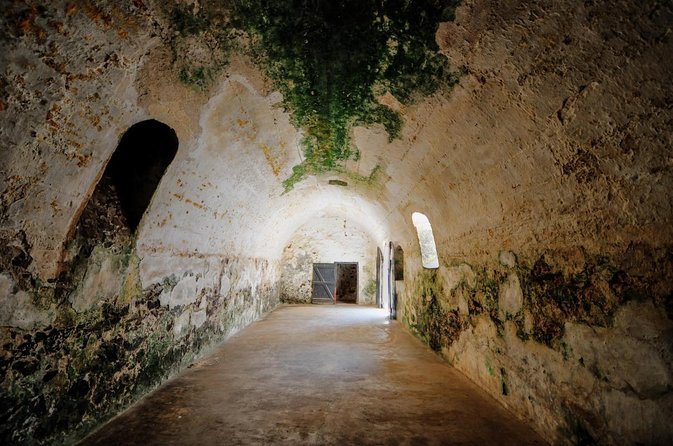
- Cape Coast Castle is the centerpiece: The UNESCO World Heritage Site includes rooms, artifacts, relics, and accounts connected to the transatlantic slave trade.
- Accra gets its own full day: James Town Lighthouse and Ussher Fort show the city’s coastal, fishing, colonial, and slave-trade connections.
- The tour is private: Only your group participates, with a maximum of four people.
- Hotel pickup and transfers are included: This removes the need to arrange separate transport for each day.
- Guide quality matters: Isaac has been praised for his well-informed guidance and for adding sites such as Elmina Castle, Boti Waterfalls, and Umbrella Rock on one reported outing, though those places are not listed as standard stops here.
Why this two-day route works
Many Ghana history tours focus only on Cape Coast Castle. This one gives you more context by beginning at Assin Manso and ending in Accra’s old coastal quarter.
That order matters. At Assin Manso, the subject is the forced movement of people before they reached the coast. At Cape Coast Castle, you see the place where captives were confined before shipment. In Accra, you examine the forts, lighthouse, and fishing community that formed part of the coastal network.
I find that approach more useful than seeing a single castle in isolation. You get a sequence of places, each with a different role. The experience also gives you two very different settings: the Central Region on day one and the streets of old Accra on day two.
Because the activity is private, you can ask questions without worrying about a large group. That is especially helpful at sites where the meaning is not always obvious from the buildings alone. The guide is expected to explain the local and historical setting, not merely drive you from one entrance to the next.
More city tours in Accra:
- Accra Detailed City Tour
★ 4.5 · 118 reviews - Accra Guided City Tour Experience
★ 4.7 · 88 reviews - Accra Guided City Tour Experience
★ 5.0 · 76 reviews
Day one at Assin Manso Slave River Park
The first stop is Assin Manso Ancestral Slave River Park, with about four hours allocated to the visit.
This is where the tour begins its account of the slave trade in West Africa from the 16th through the 19th centuries. The focus is the historic slave trek, including the river and the Last Bath. The stop is meant to help you understand what happened before captives reached the coastal forts and castles.
The name Last Bath refers to the final bathing place associated with enslaved people before they were taken onward. It is a difficult subject, and the park is intended as a sober historical site rather than a casual photo stop. You should allow yourself time to listen and reflect instead of treating the stop as a quick introduction to Cape Coast.
The four-hour allocation is generous compared with a brief roadside visit. That gives your guide time to explain the site and its place in the larger route. It also means day one is not designed for a late start or a relaxed pace.
If you want to understand the human scale of the journey, this is one of the most important stops. Cape Coast Castle can feel visually dominant because of its thick walls and chambers. Assin Manso shifts attention back to the people who were marched toward the coast.
Cape Coast Castle and the Gate of No Return
The tour continues to Cape Coast Castle, with about three hours at the site.
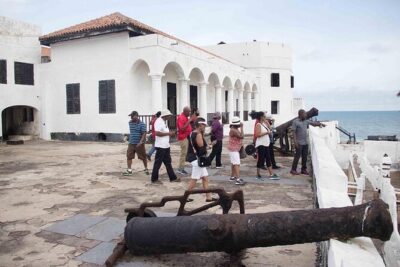
Cape Coast Castle is a UNESCO World Heritage Site and one of Ghana’s best-known places connected with the transatlantic slave trade. The tour presents it as the Gate of No Return to the Atlantic, the point where captives were held before being placed on ships bound for the Americas.
You can expect to see historical artifacts, relics, and accounts describing the actions and conditions linked to slavery. The castle’s power comes from the contrast between its formal military structure and the human suffering associated with its rooms and passages.
This is not a stop where you need entertainment or a long list of attractions. The value is in the setting and the explanation. A good guide can help you connect the physical site with the wider history of European trade, coastal forts, forced removal, and the Atlantic crossing.
The castle was visited by President Barack Obama in 2009, a detail that has brought additional international attention to the site. That visit does not replace the historical importance of the castle, but it helps explain why Cape Coast appears on so many Ghana itineraries.
Three hours should give you time to take in the main areas without reducing the visit to a hurried walk. The subject is heavy, and you may appreciate having enough time to pause. If you prefer a light sightseeing day, this tour may feel demanding. If you want a serious introduction to Ghana’s role in the slave trade, Cape Coast Castle is the central reason to book.
What the long first day means for you

The first day includes four hours at Assin Manso and three hours at Cape Coast Castle, in addition to transfers between Accra and the Central Region.
That makes this a full day. You will spend much of it moving through a connected historical story, but the road time still matters. Pickup from your Accra hotel is offered, and daily transfers are included, so you do not need to build your own transport plan.
I see the included transfers as a major part of the tour’s value. Visiting both sites independently would require you to arrange transport, timing, and entry details. Here, the route is handled for your group, and admission tickets are included at both day-one stops.
Still, do not mistake private transport for a short journey. The tour description gives sightseeing times but not exact driving times, so your start and finish can depend on traffic and the day’s road conditions. Keep your schedule open rather than planning a tight dinner reservation immediately afterward.
More things to do in Accra:
- The Cape Coast Day Tour
★ 5.0 · 525 reviews - Experience the Beauty, History and the Culture Of Accra in a Day
★ 5.0 · 323 reviews - The Cape Coast Tour
★ 5.0 · 177 reviews - From Accra: Cape Coast, Elmina Castle & Kakum Park Day Tour
★ 4.6 · 144 reviews
James Town Lighthouse and Accra’s coastal story
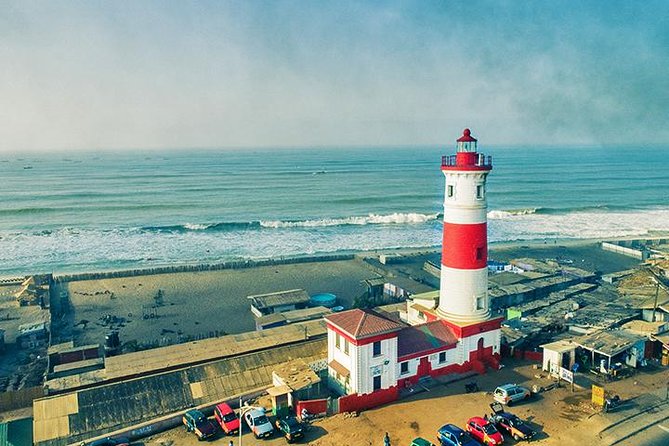
Day two moves into Accra, beginning at James Town Lighthouse with about three hours at the site.
James Town is described as one of the oldest and most historic parts of Accra. Fishing remains the main occupation, and the district is known for close family and neighborhood ties. That gives the stop a more human scale than a purely military or colonial monument.
The lighthouse connects the area to maritime traffic. The original lighthouse was built in 1871, and the existing 28-meter, or 92-foot, structure was built in the 1930s. It has a stone tower, lantern, gallery, and attached keeper’s house.
The site is not presented as a polished tourist complex. You should not expect a row of gift shops or formal ticket offices. That can be a plus if you prefer places that still feel connected to daily life, but it also means the visit may feel less structured than a major museum.
A spiral staircase leads to a panoramic view from the top. If the lighthouse is open for your visit, that view gives you a useful sense of the coastal setting and the surrounding part of Accra. Admission is included, but the supplied details do not promise that every part of the tower will always be accessible, so your guide will be important in explaining what you can see on the day.
James Town also helps place the slave trade within Accra’s coastal setting. Its position near the sea made it part of the network that served incoming ships, and the lighthouse was built as a navigation aid. You are not only looking at an old tower. You are seeing how the shoreline shaped work, movement, and trade.
Ussher Fort and its museum
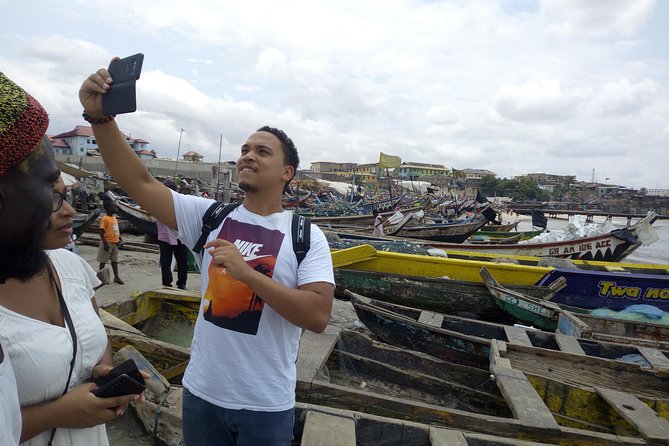
The final listed stop is Ussher Fort, with about three hours scheduled.
The Dutch built the fort in 1649 as Fort Crêvecoeur. It became one of the prominent forts in James Town, an area closely tied to coastal trade and the slave trade. The structure was later restored through a project involving the Ghanaian government, the European Union, and UNESCO in 2007.
Today, the fort is presented as a museum and a place to learn about the slave trade in Accra. Its value is different from Cape Coast Castle. Cape Coast is the major centerpiece of the first day, while Ussher Fort gives you a closer look at Accra’s own role in the network of forts along the coast.
Three hours is a substantial amount of time for the stop. That should allow space for the building, exhibits, and your guide’s explanation. Since the fort’s importance is tied to both Dutch construction and the later history of Accra, ask questions if you want to compare it with Cape Coast Castle.
The restoration work is also worth noting. Historical buildings can survive in poor condition, and the 2007 restoration helped turn Ussher Fort into a museum rather than leaving it only as a deteriorating monument. You get a site that connects architecture, colonial competition, local history, and the forced movement of people.
The guide can shape the experience
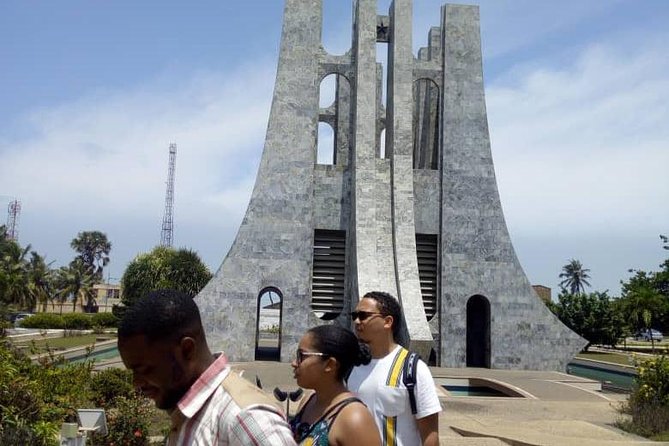
The tour includes a guide who explains Ghana and Accra’s past, and the private setup gives you direct access to that person throughout the day.
One guide named Isaac has been praised for his detailed knowledge of Ghana and for taking a guest to every requested site. That same account includes extra stops such as Elmina Castle, Boti Waterfalls, and Umbrella Rock. Those places are not part of the standard two-day route described here, so you should not assume they are included. If Isaac is assigned to your group, it is sensible to ask early about the exact route and any possible additions.
The best use of a private guide is not simply to collect more stops. It is to make the existing four sites easier to understand. Ask about the difference between a castle and a fort, the role of Assin Manso, the meaning of the Last Bath, and how James Town fits into Accra’s coastal development.
You can also clarify the day’s pace. The planned stop times are long, and your guide can tell you how transfers and site visits will be arranged. Since the experience is private, your questions can guide the conversation in a way that a large bus group cannot.
Price, group size, and overall value
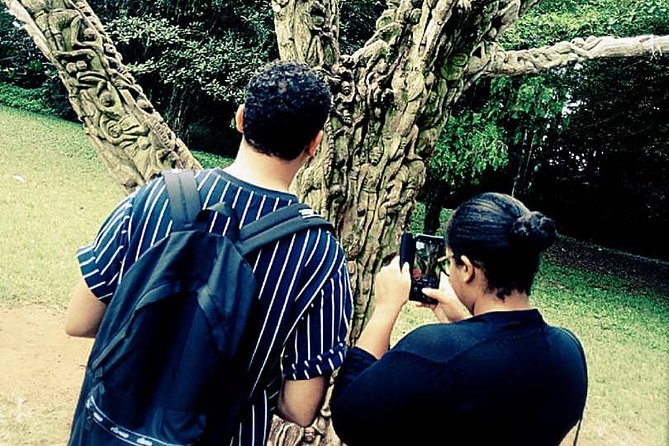
The listed price is $307.70 per group of up to four people.
For one person, that is a high price. For four people sharing the cost, it works out to about $76.93 per person. For two people, it is about $153.85 each, before considering any personal expenses not covered by the tour.
The value comes from the combination of private touring, hotel pickup, transfers, and admission tickets. You are paying for a two-day service that links Accra with the Central Region, not just for entry to one attraction. If you were already planning to hire a private vehicle and guide, the package may save effort and reduce the number of details you must coordinate.
The price is less attractive if you are traveling alone or mainly want to see Accra. In that case, the first day’s long regional outing may not fit your priorities. The tour makes the most financial sense for a small group of up to four people who want both Cape Coast and Accra’s historic coastal sites.
The tour is booked an average of 65 days in advance, which suggests that you should not leave planning until the last moment if your dates are fixed. Confirmation is provided at booking, and pickup is offered from your Accra hotel.
Who should book this experience?
I would recommend this tour to you if you want a focused introduction to Ghana’s slave-trade history and prefer having transport and a guide arranged for you.
It suits:
- First-time visitors based in Accra
- Small groups of up to four people
- Anyone who wants Cape Coast Castle with additional context
- Visitors interested in forts, coastal communities, and historic buildings
- People who prefer private sightseeing over a large group
- Those comfortable with serious subject matter and full sightseeing days
I would think twice if you want a slow holiday, dislike long road transfers, or only want modern Accra attractions. The tour is built around history, and much of that history is painful. It asks for attention and respect.
The tour also requires good weather. If poor weather causes cancellation, you are offered another date or a full refund. You can cancel for a full refund up to 24 hours before the start time, but cancellations or changes inside that window are not accepted.
Should you book the Ghana City 2-Day Tour?
Book it if you want the most structured way to connect Assin Manso, Cape Coast Castle, James Town, and Ussher Fort in one private trip from Accra.
The strongest feature is the route itself. Assin Manso introduces the forced journey, Cape Coast Castle shows the coastal prison and departure point, and day two places Accra inside that wider story. The private format, hotel transfers, and included admission make the price easier to justify for a group of four.
My caution is simple: this is not a casual two-day city break. Day one is long, the subject matter is upsetting, and James Town and Ussher Fort may feel less polished than major museum sites. If that sounds like the kind of honest, serious history experience you want, this tour is a strong choice. If you want only easygoing sightseeing, choose a lighter Accra itinerary.
FAQ
Where does the Ghana City 2-Day Tour take place?
The tour is based in Accra, Ghana, with day one traveling to Assin Manso and Cape Coast in Ghana’s Central Region.
How long does the tour last?
The experience lasts approximately two days.
Is hotel pickup available?
Yes. Pickup is offered, and the tour includes daily transfers to and from your Accra hotel.
Is this a private tour?
Yes. Only your group participates, and the group can include up to four people.
What is included at Assin Manso?
The visit includes the Ancestral Slave River Park, the Slave River, and the Last Bath. Admission is included.
Is Cape Coast Castle a UNESCO site?
Yes. Cape Coast Castle is a UNESCO World Heritage Site.
How long is the Cape Coast Castle visit?
The scheduled visit to Cape Coast Castle lasts about three hours, with admission included.
What will I see in James Town?
You will visit James Town Lighthouse and learn about the area’s coastal community, fishing activity, and connection to the slave trade. The lighthouse is 28 meters, or 92 feet, tall, and has a panoramic view from the top of its spiral staircase.
What is Ussher Fort?
Ussher Fort is a historic fort in James Town built by the Dutch in 1649 as Fort Crêvecoeur. It was restored in 2007 and converted into a museum.
What is the cancellation policy?
You can cancel up to 24 hours before the experience begins for a full refund. Cancellations or changes made less than 24 hours before the start time are not accepted, and poor-weather cancellations may result in another date or a full refund.
Just added in Accra
- Wli Waterfall And Tafi Monkey Sanctuary ( Volta Region)★ 5.0 · 1 review
- Traditional Beadmaking Workshop★ 5.0 · 1 review
- Private 9-Day Tour in Ghana★ 5.0 · 2 reviews
- Wli Waterfalls, Mount Afadjato & Tafi Atome Monkey Sanctuary★ 5.0 · 2 reviews
- Cape Coast and Elmina castle Day Trip★ 5.0 · 2 reviews
- Culinary for Social Change-Cooking Class★ 5.0 · 2 reviews
- Time with Nature★ 5.0 · 2 reviews
- Explore Cape Coast – Elmina in a brief( Roles in the slave trade)★ 5.0 · 1 review
Accra Tours, compared.


Experience the Beauty, History and the Culture Of Accra in a Day
Read our review →

Cape Coast, Elmina Castle & Kakum Park Day Tour
Read our review →

Browse the lists this tour appears in