
REVIEW · ACCRA TOURS
The Kumasi Cultural and Heritage Tour
History has a royal address in Kumasi. This experience takes you from Accra to the heart of Ashanti culture, with visits to Manhyia Palace Museum, the Okomfo Anokye Sword Site, Prempeh II Museum, Kejetia Market, and Bonwire, the home of kente weaving. I like the mix of royal history and living craft, and I also like that private transport, an air-conditioned vehicle, a guide, and the round trip from Accra are included. The main concern is time: a day trip from Accra with five stops can feel very packed, especially since the schedule begins at 6:00 a.m.
The strongest parts are the palace collections and the Bonwire weaving workshop. You get a clearer sense of how Ashanti rulers used ceremony, symbols, politics, and religion to govern. The tradeoff is that the price is $260 per person, and lunch is not included. For a private vehicle and long journey from Accra, that may be fair value, but it deserves careful thought if you are traveling alone or on a tight budget.
In This Review
- Key details at a glance
- Why this tour matters in Kumasi
- Manhyia Palace Museum and Ashanti royal power
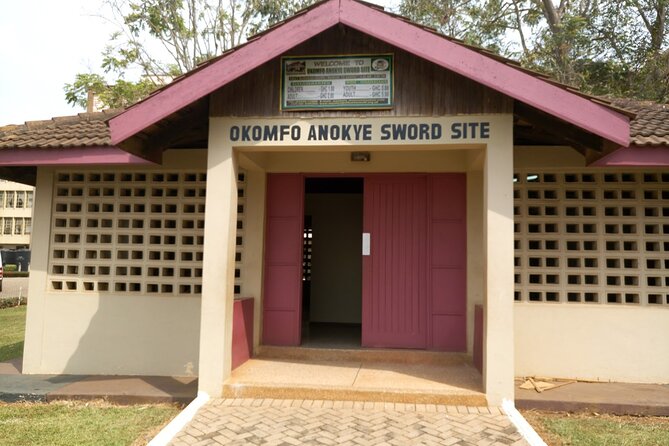
- Okomfo Anokye Sword Site and the Golden Stool story
- Prempeh II Museum and the details of palace life
- Kejetia Market, Kumasi at full volume
- Bonwire and the meaning of kente cloth
- Is $260 a fair price?
- Who will enjoy this Ashanti heritage route?
- Cancellation and weather details
- Should you book the Kumasi Cultural and Heritage Tour?
- FAQ
- Where does the Kumasi Cultural and Heritage Tour begin?
- How much does the tour cost?
- What transportation is included?
- Is a guide included?
- Which museums are visited?
- Is admission included at the stops?
- Is lunch included?
- How large can the group be?
- Are service animals allowed?
- Can I cancel for a refund?
- What happens if bad weather cancels the tour?
Key details at a glance

- Royal history at Manhyia Palace: See palace rooms, ceremonial objects, and material connected with Yaa Asantewaa and the present Ashanti ruler.
- The Golden Stool’s origin story: Visit the place linked to Osei Tutu I and the priest Okomfo Anokye.
- A compact but useful museum stop: Prempeh II Museum displays royal clothing, jewelry, protective amulets, household items, and gold-weighing weights.
- A close look at Kumasi commerce: Kejetia Market gives you a sense of the scale and pressure of one of West Africa’s largest markets.
- Kente in its hometown: Bonwire connects the famous cloth to Ashanti identity, royal dress, and local weaving.
- A long day from Accra: The early start matters, and the round trip can take much of your day, or more, depending on the schedule.
Why this tour matters in Kumasi
Kumasi is the center of Ashanti culture, and this route gives you several ways to understand it. You are not only looking at old objects in glass cases. You are also seeing royal institutions, religious symbols, local trade, and a craft tradition that remains tied to identity and status.
That range is the tour’s main strength. The palace explains authority. The sword site explains sacred tradition. Prempeh II Museum puts daily royal life on display. Kejetia shows the commercial energy of the city, while Bonwire connects history to a working textile tradition.
The experience begins in Accra, with pickup offered and a start time of 6:00 a.m. Private transport is included, and the vehicle is air-conditioned. That makes the long distance more manageable, particularly in warm weather. A private tour also gives you more control than a large coach trip, though the advertised maximum group size is 15 people, so confirm the expected group size when booking.
One point needs attention. The listed duration is approximately two to six hours, yet the itinerary includes five stops and a round trip from Accra to Kumasi. A previous description of the experience also refers to a packed two-day schedule with substantial time in transit. I would ask the operator to confirm the actual number of days, driving schedule, and time available at each stop before paying.
More history tours in Accra:
- Experience the Beauty, History and the Culture Of Accra in a Day
★ 5.0 · 323 reviews - Ghana Heritage Tours – Beyond The Return
★ 5.0 · 36 reviews - 10 Days Ghana Cultural and Heritage Trip
★ 5.0 · 31 reviews
Manhyia Palace Museum and Ashanti royal power
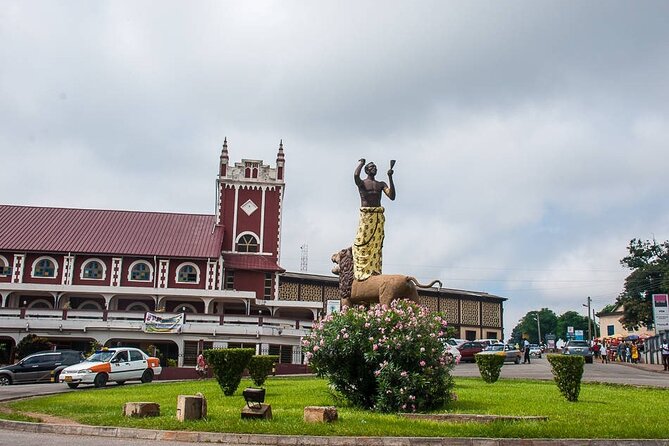
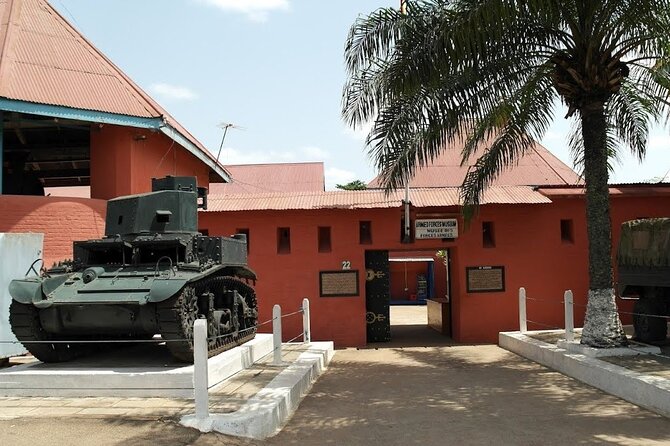
Manhyia Palace Museum is the best place to begin because it gives the rest of the day a political frame. You first watch a film about the Ashanti people, then move through original palace rooms containing historical objects.
The focus is not only on kings as individuals. You learn how rulers used political authority, ceremony, and tradition to govern the Ashanti Kingdom. The display also brings in Yaa Asantewaa, remembered as a war queen, and the current ruler connected with the throne.
The palace visit lasts about an hour, with admission included. That is enough time for an introduction, but not enough for a slow museum visit with extended reading at every display. Listen closely to the guide and ask questions while you are in the rooms. The explanations will help you connect the objects to the larger story.
An especially useful detail is the reference to the Akwasidee gathering. Ashanti chiefs meet every six weeks for this traditional assembly, at a location not quite next to the museum. If this gathering is not taking place during your visit, you should still ask the guide to explain its purpose. It helps show that Ashanti leadership is not only a subject from the past.
I like this stop because it makes royal history feel organized and human. The drawback is that the visit may feel too brief if you are passionate about political history. With a fixed route, you probably will not have the freedom to linger over every room.
Okomfo Anokye Sword Site and the Golden Stool story
The Okomfo Anokye Sword Site is tied to the founding story of the Ashanti nation. Here you hear about King Osei Tutu I, regarded as the founder of the Ashanti Kingdom, and Okomfo Anokye, the chief priest associated with the sacred sword.
According to the tradition presented at the site, the Golden Stool descended into Osei Tutu I’s lap. The sword was then driven into the ground by Okomfo Anokye nearly 300 years ago. The story says that Okomfo Anokye declared nobody would be able to remove it, and the sword has remained in place despite attempts to pull it out.
This stop is valuable because it shows how spiritual belief and political power were joined. The Golden Stool was not simply a piece of furniture. It represented the soul and unity of the Ashanti people, while the sword story helped give the kingdom’s founding a sacred dimension.
The visit is scheduled for about an hour, with admission included. The supplied description also refers to an attempt involving the boxer Muhammad Ali, a detail your guide may explain at the site. Ask for the local version of the story rather than treating the stop as a quick photo opportunity.
This is one of those places where context matters more than size. The physical site may not take long to see, but the story behind it carries much of the meaning. If you prefer museums with many objects and labels, this stop may seem modest. If you like places tied to oral tradition, it can be one of the most memorable parts of the route.
Prempeh II Museum and the details of palace life
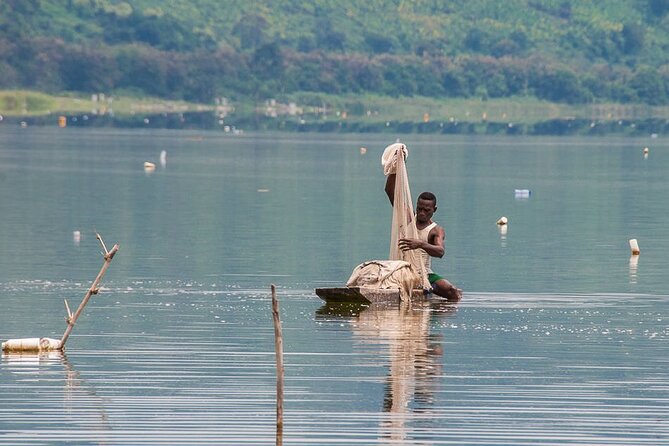
Prempeh II Museum is smaller than Manhyia Palace Museum, but it adds a useful personal layer. Instead of focusing mainly on royal government, it shows the material world of Ashanti kingship.
The collection includes ceremonial and battle clothing worn by King Prempeh II. You can also see jewelry, protective amulets, personal dining and bathing items, furnishings, royal insignia, and brass weights once used to weigh gold.
Those brass weights deserve attention. They connect the museum to the long importance of gold in Ashanti commerce and symbolism. The objects may look small, yet they help you understand how trade, wealth, ritual, and royal authority overlapped.
The building was designed to resemble an Ashanti chief’s home. It has a front courtyard and walls decorated with ethnic sculptures. That setting is part of the display. You are not only viewing isolated objects. You are seeing how a royal home might have been arranged and decorated.
A personalized tour is included with admission, which is helpful because the museum is modest in size and can be easy to rush through. I would give this stop your full attention, especially if you want practical details about daily royal life. The limitation is simple: the collection is not large, so visitors expecting a major national museum may finish quickly.
More things to do in Accra:
- The Cape Coast Day Tour
★ 5.0 · 525 reviews - The Cape Coast Tour
★ 5.0 · 177 reviews - From Accra: Cape Coast, Elmina Castle & Kakum Park Day Tour
★ 4.6 · 144 reviews - Accra Detailed City Tour
★ 4.5 · 118 reviews
Kejetia Market, Kumasi at full volume
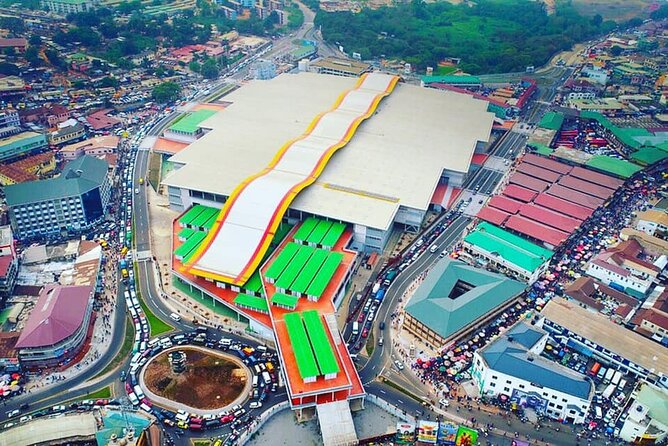
Kejetia Market gives you a sharp change of pace. From royal objects and sacred stories, you move into one of Kumasi’s busiest commercial spaces.
From a distance, the market’s rusted tin roofing is described as looking like an enormous metal structure dropped into the city. Up close, the scale becomes clearer. The market contains about 11,000 stalls, with at least four times as many people working there as stalls. It is often described as one of the biggest markets in West Africa.
The official stop is listed as one minute, which cannot be enough for a genuine market visit. Treat that figure as an obvious scheduling problem and confirm how much time you will actually have. A proper visit should allow you to look around, understand the layout, and take in the range of trade without being hurried straight back to the vehicle.
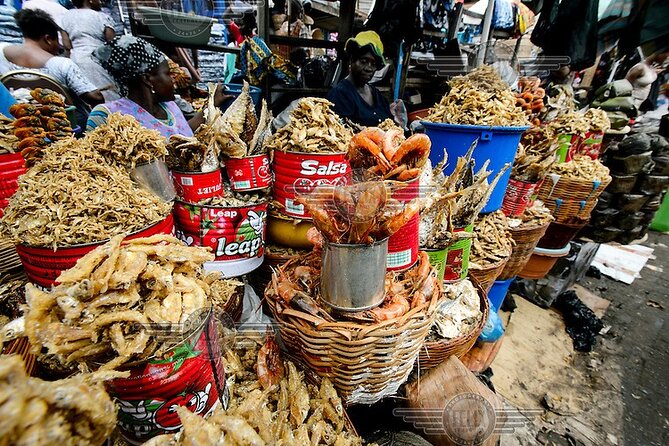
Kejetia can feel intense. The interior is crowded, noisy, and confusing, and the rusted roofing does not make it feel polished. That is also the point. This is a working market, not a staged cultural display.
Stay close to your guide and follow practical instructions. The experience is described as a chance to explore Kejetia like a local, but you should still expect a fast-moving public space. If you want carefully arranged shops and a quiet browsing experience, this will not be your favorite stop. If you want to see how Kumasi functions as a trading city, it is essential.
Bonwire and the meaning of kente cloth
Bonwire is about 18 kilometers along the Kumasi to Mampong road, in the Ejisu-Juaben Municipal area of the Ashanti Region. The town is identified as the origin of kente, one of Africa’s best-known textiles.
This is the stop I would protect if the schedule becomes tight. The planned visit lasts about two hours, longer than any other stop. That extra time gives the craft room to make sense.
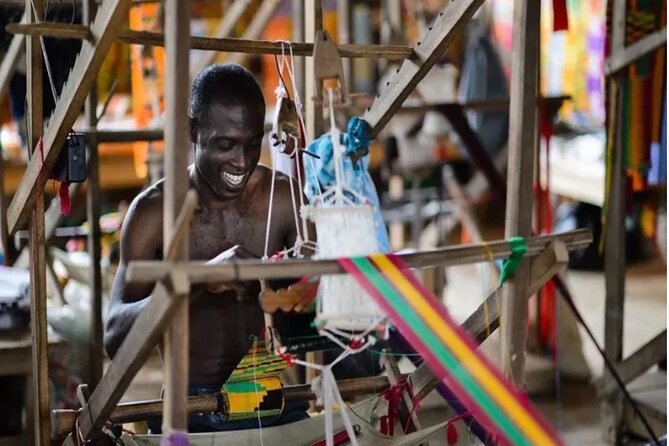
Kente is not just attractive cloth. It is associated with Ashanti kings and remains a strong symbol of Ghanaian identity. At the Bonwire weaving center, you can connect the patterns and colors to the place where the tradition began.
The weaving workshop is also the most hands-on part of the experience. You can watch the making process and learn how the cloth is produced, rather than seeing only finished pieces in a shop. The supplied experience does not specify what demonstrations or purchasing arrangements are available, so ask before assuming that every visit includes a full workshop lesson.
Bonwire also offers the best chance to buy a meaningful item, though you should ask about prices, sizing, and whether a piece is locally made. A rushed stop would reduce it to shopping. With two hours, you have a better chance to understand why kente matters before deciding what, if anything, to take home.
Is $260 a fair price?
The cost is $260 per person. That price includes private transportation, an air-conditioned vehicle, a private guide, admission to the listed attractions, and the round trip from Accra to Kumasi. Lunch is not included.
The value depends heavily on group size and the confirmed schedule. For a private group sharing the vehicle, the price can make sense because the journey is long and the guide handles the route. The air conditioning is a practical benefit, not a luxury detail, given the distance and warm conditions.
For one person, $260 is a serious expense. You are paying for convenience, transport, admissions, and a guided cultural route, not only for several hours at a museum. Group discounts are offered, so ask how the price changes for two or more people.
I would also clarify whether the experience is genuinely a same-day outing or part of a longer schedule. The five listed stops add up to about five hours before driving time, meals, traffic, and transitions. The early 6:00 a.m. departure is sensible for a long road journey, but the day may still feel demanding.
Who will enjoy this Ashanti heritage route?
I would recommend this tour to you if you want an organized introduction to Kumasi and prefer having transport arranged from Accra. It suits first-time visitors who want royal history, religious tradition, local commerce, and textile craft in one route.
It is also a good fit if you value interpretation. The objects at the museums matter more when someone explains their connection to Ashanti kingship, Osei Tutu I, Okomfo Anokye, Yaa Asantewaa, and Prempeh II.
You may want a different plan if you dislike early starts, long road journeys, or tightly timed sightseeing. The market stop especially needs clarification, since one minute is not realistic for exploration. You should also budget separately for lunch.
The maximum group size is 15, and most people can participate. Service animals are allowed, and the tour is near public transportation. Confirmation is provided at booking. These are useful basics, but they do not replace checking the exact pickup point and the day’s driving plan.
Cancellation and weather details
You can cancel at least 24 hours before the start time for a full refund. Cancellations made within 24 hours are not refunded, and changes within that window are not accepted.
The experience requires good weather. If poor weather causes cancellation, you are offered another date or a full refund. Keep the local cutoff time in mind when making changes.
Should you book the Kumasi Cultural and Heritage Tour?
Book it if you want a broad, guided introduction to Ashanti culture and you value private transport from Accra. The palace museums, Okomfo Anokye Sword Site, and Bonwire kente center give you a useful sequence: power, belief, royal life, trade, and craft.
Before booking, confirm the actual duration, the time at Kejetia Market, the expected group size, and how the round trip from Accra is handled. At $260, the tour offers reasonable value when shared and when the schedule is clearly explained. It is less appealing if you expect a relaxed day or a short outing.
My strongest advice is to protect the Bonwire visit and ask for enough time at Kejetia. Those two stops bring the culture out of display cases and into everyday life. If that balance appeals to you, this is a worthwhile way to meet Kumasi.
FAQ
Where does the Kumasi Cultural and Heritage Tour begin?
The tour begins in Accra, with pickup offered. The listed start time is 6:00 a.m.
How much does the tour cost?
The listed price is $260 per person. Group discounts are offered.
What transportation is included?
Private transportation and an air-conditioned vehicle are included. The package also includes the round trip from Accra to Kumasi.
Is a guide included?
Yes. A private tour guide is included.
Which museums are visited?
The route includes Manhyia Palace Museum and Prempeh II Museum.
Is admission included at the stops?
Admission tickets are included for the listed stops.
Is lunch included?
No. Lunch is not included in the tour price.
How large can the group be?
The activity has a maximum of 15 participants.
Are service animals allowed?
Yes. Service animals are allowed.
Can I cancel for a refund?
You can receive a full refund if you cancel at least 24 hours before the experience start time. Cancellations within 24 hours are not refunded.
What happens if bad weather cancels the tour?
If poor weather causes cancellation, you are offered a different date or a full refund.
Just added in Accra
- Wli Waterfall And Tafi Monkey Sanctuary ( Volta Region)★ 5.0 · 1 review
- Traditional Beadmaking Workshop★ 5.0 · 1 review
- Private 9-Day Tour in Ghana★ 5.0 · 2 reviews
- Wli Waterfalls, Mount Afadjato & Tafi Atome Monkey Sanctuary★ 5.0 · 2 reviews
- Cape Coast and Elmina castle Day Trip★ 5.0 · 2 reviews
- Culinary for Social Change-Cooking Class★ 5.0 · 2 reviews
- Time with Nature★ 5.0 · 2 reviews
- Historical Day Tour to Cape Coast, Elmina and Kakum★ 5.0 · 3 reviews
Accra Tours, compared.


Experience the Beauty, History and the Culture Of Accra in a Day
Read our review →

Cape Coast, Elmina Castle & Kakum Park Day Tour
Read our review →

Browse the lists this tour appears in