
REVIEW · CAPE COAST AND ELMINA CASTLE TOURS
Trails of the transatlantic slave trade in Ghana
History here is personal and powerful. This eight-day private tour links Accra with Ghana’s coastal forts, slave castles, ancestral sites, and rainforest attractions, giving you a wide look at the country rather than a single-city visit. I especially like the private air-conditioned vehicle and the chance to visit both Cape Coast Castle and Elmina Castle, two major sites that deserve time and careful attention. The main drawback is the pace: several days involve long road journeys, and Ghana’s heat and humidity can make the schedule tiring.
I also like the balance between difficult history and daily Ghanaian life. You move from memorial parks and forts to beach hotels, a canoe trip to Nzulezo Stilt Village, Kakum National Park, and the Accra Arts Centre. The tour includes accommodation, breakfast, entrance fees, a driver-guide, and ongoing support, but you still need to budget for international airfare, visas, lunch, dinner, and personal purchases.
In This Review
- Key points to know before booking
- What the eight-day route gives you
- Day 1: A simple arrival in Accra
- Day 2: Accra, Pan-African thought, and national independence
- Day 3: Assin Manso and Cape Coast Castle
- Day 4: Elmina Castle and Fort St. Jago
- Day 5: Canoeing to Nzulezo Stilt Village
- Day 6: Portuguese and British forts near Axim
- Day 7: Fort Metal Cross, Kakum, and the return to Accra
- Day 8: Accra crafts and the journey home
- What the $1,955 price includes
- Comfort, pace, and who should book
- Should you book this Ghana tour?
- FAQ
- Where does the tour begin and end?
- How long is the tour?
- What time does the tour start?
- Is airport pickup included?
- Is this a private tour?
- What transportation is provided?
- Are accommodation and breakfast included?
- Are lunch and dinner included?
- Which major castles are included?
- Can the tour be canceled for a full refund?
Key points to know before booking
- Cape Coast and Elmina form the emotional center: You visit two UNESCO-listed slave castles and hear about the people held there before forced shipment across the Atlantic.
- The route covers more than Accra: The journey reaches the Central and Western regions, including Axim, Busua, Elmina, Beyin, and Kakum.
- Your group has a private vehicle: Only your party takes part, with an English-speaking driver-guide and air conditioning for the long coastal drives.
- Nzulezo adds a different side of Ghana: A canoe carries you across Amansari Lake to a village built on stilts above the water.
- The schedule mixes history with nature: Forts and memorial sites are paired with a rainforest canopy walkway, beaches, markets, and cultural stops.
- The price includes useful essentials: At $1,955 per person, the package includes eight nights of accommodation, breakfast, fuel, the vehicle, guide services, fees, taxes, and support.
What the eight-day route gives you
This is not a short excursion from Accra. It is a private circuit that begins and ends in the capital, with the coast as its main thread. You visit sites connected with the European forts and castles used during the transatlantic slave trade, while also seeing Ghanaian towns, markets, beaches, forests, and waterways.
The route is thoughtfully varied, but it is not light sightseeing. The castles can be distressing, especially when you stand in rooms connected with confinement, punishment, and forced departure. I would approach the historical visits with patience and respect. They are not simply old buildings with sea views.
The private format matters. You are not tied to a large coach group, and the driver-guide can answer questions, manage the daily transfers, and adjust attention to your interests. The company’s team members named in the supplied comments include Nuru-Deen, Tony, and Ezekiel. Specific guide assignments can vary, but the repeated praise for punctuality, care, professionalism, and personal attention is encouraging.
More Cape Coast and Elmina castle tours:
- The Cape Coast Day Tour
★ 5.0 · 525 reviews - The Cape Coast Tour
★ 5.0 · 177 reviews - From Accra: Cape Coast, Elmina Castle & Kakum Park Day Tour
★ 4.6 · 144 reviews
Day 1: A simple arrival in Accra
Your first day is deliberately easy. After arriving at Terminal 3 of Kotoka International Airport, a staff member meets you and takes you to your hotel. The listed transfer time is about 30 minutes, though the actual journey depends on traffic and your hotel’s location.
That airport pickup is useful after an international flight. You do not need to arrange a first transfer on your own, and the 24-hour ongoing support gives you a contact if plans change or questions come up.
There is no major sightseeing scheduled on arrival day. That is a good choice. Use the evening to rest, settle in, and prepare for an early start the next morning.
Day 2: Accra, Pan-African thought, and national independence
The first full sightseeing day focuses on Accra’s political and cultural landmarks. You begin at the W.E.B. Du Bois Centre for Pan-African Culture, where Du Bois spent his final years in Ghana after accepting Kwame Nkrumah’s invitation to work on the Encyclopedia Africana.
This stop gives the tour a wider frame. The trip is centered on the slave trade, but Ghana’s role in Pan-African thought and independence is just as important to understanding the country today. A guided visit helps connect Du Bois’s work with Ghana’s place in the African independence movement.
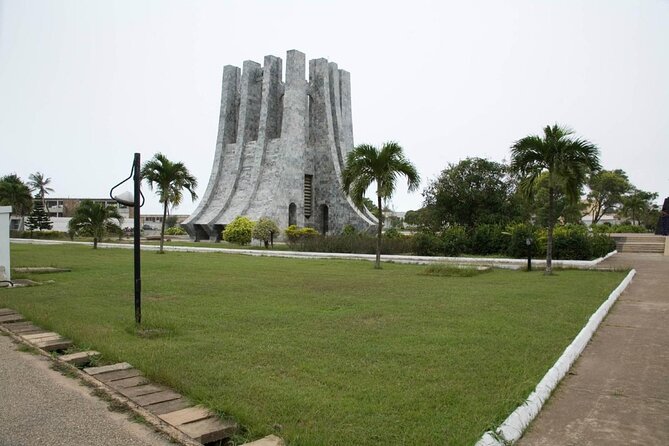
Next comes Kwame Nkrumah Memorial Park, dedicated to Ghana’s first president. The visit includes the mausoleum and nearby Independence Square. These sites explain the political meaning Ghana carries across Africa as the first sub-Saharan African country to gain independence from colonial rule in 1957.
You then continue to Osu Castle, also known as Christiansborg Castle. It served as the administrative seat of the colonial governor and later became associated with Ghana’s government. The combination of colonial power, independence, and the slave-trade route makes this a full day of serious historical material.
The schedule is about seven hours. Accra traffic can make a city day feel longer, and the capital’s noise and movement may contrast sharply with the quieter coastal towns ahead. Still, this opening day helps you understand Ghana as a modern nation, not only as a place marked by painful colonial history.
Day 3: Assin Manso and Cape Coast Castle
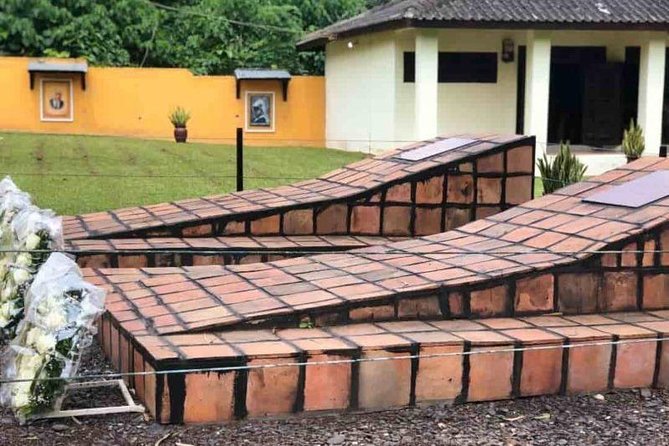
Day three takes you toward the Central Region. The first important stop is the Assin Manso Ancestral Slave River Site. The river is identified as the place where enslaved people received a final bath before being taken toward the coast and shipment overseas. The site also includes an ancestral graveyard.
This visit can be especially meaningful if you are tracing family roots or trying to understand the forced movement of people from inland communities toward the castles. It adds context before you reach the coast, showing that the trade involved a route, not a single building.
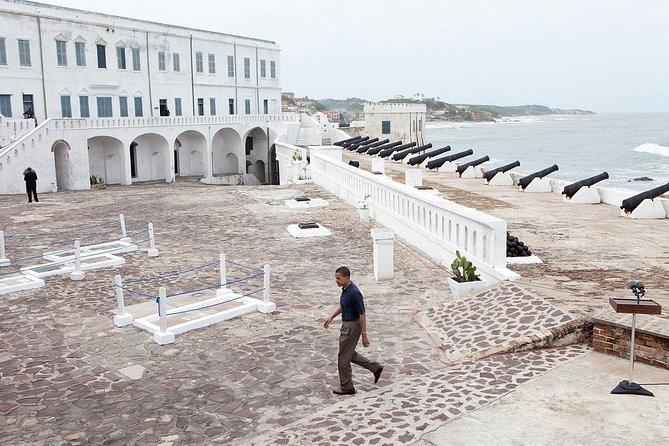
The main visit is Cape Coast Castle, a UNESCO World Heritage Site. Built in 1653 by the Swedish and later taken over by the British, the castle is one of the best-known sites connected with the transatlantic slave trade in Ghana. The tour explains how the castle was used, how enslaved people were treated, and how the building fit into the wider system.
Plan to give this visit your full attention. The rooms and passages are not easy sightseeing, and the experience may bring up grief, anger, or personal memories. A private tour allows your group to move at a more suitable pace, although the exact length of the guided visit is not specified.
The day runs for about seven hours and includes admission. You spend the night in the Cape Coast area, giving you a break before the next castle day.
More things to do in Accra:
- Experience the Beauty, History and the Culture Of Accra in a Day
★ 5.0 · 323 reviews - Accra Detailed City Tour
★ 4.5 · 118 reviews - Accra Guided City Tour Experience
★ 4.7 · 88 reviews - Accra Guided City Tour Experience
★ 5.0 · 76 reviews
Day 4: Elmina Castle and Fort St. Jago
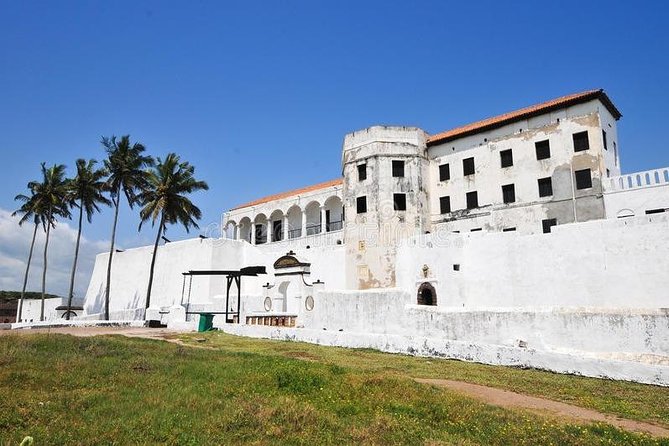
Elmina is one of the most important stops on the entire route. Elmina Castle, also called St. George’s Castle, is described as Ghana’s oldest and largest slave castle and is also a UNESCO World Heritage Site.
The castle’s scale and position beside the water make a strong impression, but the real value is the guided explanation of what happened inside. You learn about the use of the castle for holding enslaved people before shipment and the conditions they endured.
The day also includes a wider tour of Elmina township. That is worthwhile because it prevents the visit from becoming a single-site history lesson. You see a living coastal community, not only a preserved colonial fort.
Fort St. Jago sits on a hill overlooking Elmina. Its position offers a different view of the town and the castle below. The fort is part of the military struggle surrounding control of the coast and its trade routes.
After the visits, you return to a beachfront hotel in Elmina. The afternoon is free for rest. This pause is well placed. Two days of difficult history can leave you mentally tired, and the chance to sit quietly by the coast gives the day a gentler ending.
The listed sightseeing time is about five hours. That makes this one of the more manageable days, especially compared with the longer drives later in the trip.
Day 5: Canoeing to Nzulezo Stilt Village
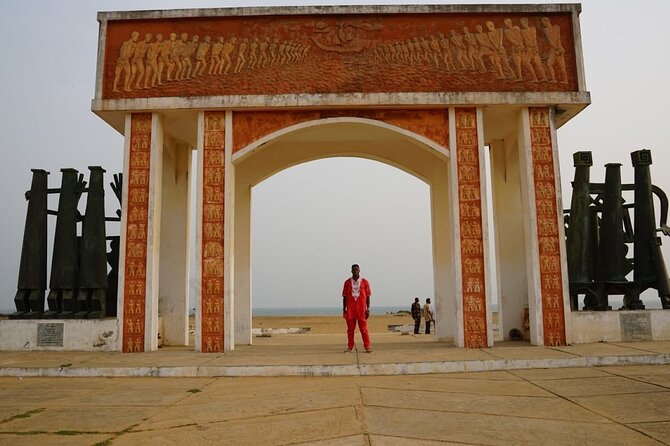
Day five changes the mood and the scenery. You travel west to Beyin in the Western Region, then take a canoe across Amansari Lake to Nzulezo Stilt Village.
The community is built above the lake, and the canoe ride is part of the attraction rather than just a transfer. Once you arrive, you receive a tour of the village. This is one of the route’s most distinctive experiences because it shows a form of settlement very different from Ghana’s cities and coastal forts.
The visit is also a useful break from the castle circuit. You still have a connection to the region’s past, but the focus shifts to community life, water, and local adaptation.
After returning to Beyin, you visit Fort Appollonia, built by English merchants. The fort adds another layer to the coastal trade story and shows how many European powers established positions along this stretch of the Gulf of Guinea.
You spend the night in Axim. The day lasts about seven hours, so expect substantial time in the vehicle as well as the canoe trip. The tour does not provide a detailed account of canoe conditions or weather arrangements, so you should be prepared for the possibility that the water portion depends on local conditions.
Day 6: Portuguese and British forts near Axim
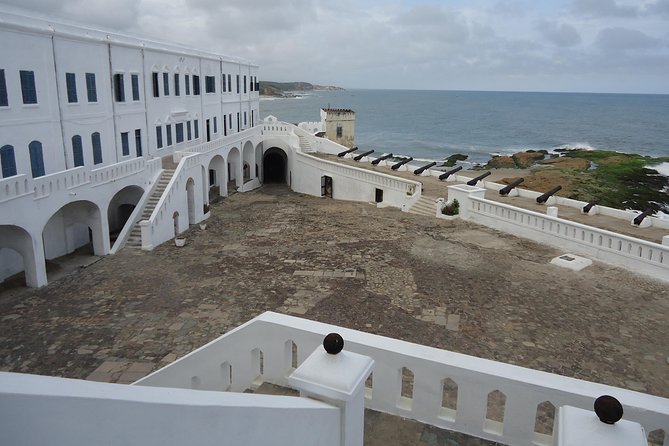
The next morning brings two more historic forts. Fort St. Anthony, or Fort Santo Antonio, was built by the Portuguese in 1515 near Axim. It is one of the oldest European forts in Ghana and helps show how early Portuguese involvement preceded later British and Dutch control along the coast.
You then continue to Fort Batenstein in Butre. After the fort visit, the plan is to spend the rest of the day at a beach before staying overnight in Busua.
This is a shorter sightseeing day at about five hours. That helps balance the long route, though the drive between sites and onward to Busua still takes time. The beach stop is welcome, but one practical point deserves attention: beach conditions can vary, and one supplied comment specifically found a selected beach unsuitable for swimming or walking along the shore. Treat this part as downtime rather than a guaranteed swimming experience.
Humidity is another factor. A past participant found the heat and moisture difficult, and you should take that seriously. Light clothing, water, and a relaxed pace will make the fort visits easier.
Day 7: Fort Metal Cross, Kakum, and the return to Accra
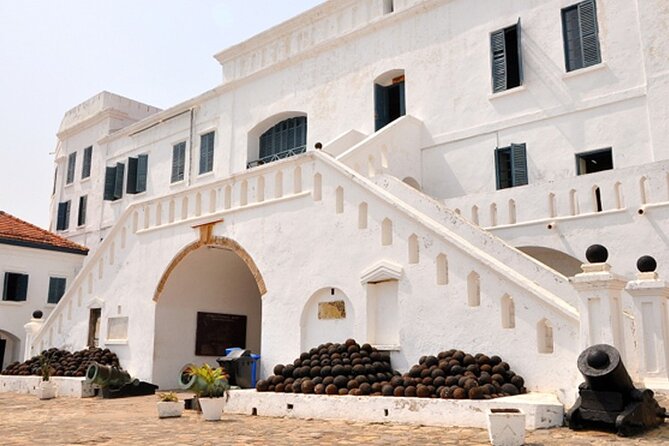
Day seven starts at Dixcove, where you visit Fort Metal Cross, originally called Fort Dixcove. It was built as a military structure and adds another stop to the long chain of forts along Ghana’s coast.
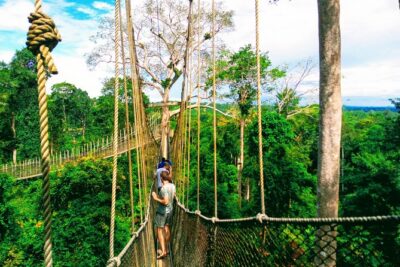
You then begin the return drive to Accra, with a detour to Kakum National Park. The park protects tropical rainforest and is home to endangered mammals, including forest elephants and monkeys.
The best-known activity is the canopy walkway, suspended about 30 meters above the forest floor. You can also choose a guided nature walk. The tour description identifies the canopy route as the preferred activity, but it does not state whether the walkway or nature walk has a separate fee beyond the included admission.
Kakum gives the itinerary a welcome change in pace. After several days focused on buildings, confinement, and colonial power, you spend time among trees and wildlife habitat. The day is still about seven hours, followed by the drive to Accra and an overnight stay there.
This is a demanding day because it combines a fort, a national park, and a long transfer. If you want more time at Kakum, ask about the expected timing before departure.
Day 8: Accra crafts and the journey home
The final day begins with hotel checkout and a visit to the Accra Arts Centre. This large market sells many kinds of artifacts, making it the natural place to buy gifts or locally made objects.
You should expect active bargaining. Sellers may be persuasive, and the experience is part shopping trip, part lesson in local commerce. Bring Ghanaian currency for convenience. A simple conversion chart in your wallet can help you compare Ghanaian denominations with US dollars, and cash is useful for small purchases and tips.
If time allows, the schedule includes a recreational center before airport transfer. The key words are if there is time. Your departure hour, traffic, checkout, and shopping will determine how relaxed this final stop feels. Do not leave your airport transfer until the last possible moment.
What the $1,955 price includes
At $1,955 per person, this is a substantial purchase. The value depends on how much you would otherwise spend arranging a private vehicle, accommodation, airport transfers, fuel, site admissions, and a guide across eight days.
The package includes:
- A private insured air-conditioned car with fuel
- An English-speaking professional driver-guide
- Accommodation with air conditioning
- Eight breakfasts
- All listed fees and taxes
- Ongoing support at any time
That list covers many of the costs that can complicate a multi-region trip. The private car is especially useful because public transport would make this route slower and less straightforward.
You still pay for international airfare, visa fees, lunch, dinner, and shopping. Meals beyond breakfast can add up over eight days, so plan for them rather than treating the package as fully inclusive. Tips are also worth budgeting for. One useful piece of practical advice is to use Ghanaian currency for everyday payments and tips.
The price makes the most sense for a small private group that values support and historical access over a low-cost, independent itinerary. For a solo visitor, it may feel expensive. For a group sharing the private vehicle and guide, the value is easier to see.
Comfort, pace, and who should book
Most people can participate, and the tour is private. Pickup is offered, mobile tickets are available, and confirmation is received at booking. The listed start time is 7:00 a.m., so you should be ready for early mornings.
The daily drives, heat, humidity, fort stairs, canoe ride, and Kakum canopy walkway all shape the physical experience. The data does not give detailed accessibility information, so ask the operator about mobility needs before paying.
I would recommend this tour to:
- People tracing Ghanaian or African ancestry
- First-time visitors who want a guided route through several regions
- Small groups who prefer a private car
- Anyone seeking a serious introduction to Ghana’s slave-trade sites
- Visitors who want history balanced with nature, markets, beaches, and local towns
I would hesitate if you want a slow beach holiday, dislike early starts, or prefer to choose each hotel and meal independently. This is a packed route, not a lazy coastal stay.
Should you book this Ghana tour?
Book it if the purpose of your trip is to understand Ghana through its slave-trade sites and national story, while still seeing forests, villages, forts, beaches, and markets. The strongest parts are the private support, the range of destinations, and the careful pairing of Cape Coast Castle and Elmina Castle with sites such as Assin Manso and Nzulezo.
Before booking, confirm the hotel locations, expected daily driving times, beach plans, and how much time you will have at Kakum. Also budget clearly for meals, visas, airfare, tips, and purchases.
For a personal, history-focused first visit to Ghana, this itinerary offers a lot in eight days. It asks for stamina, but it gives you a far fuller picture than an Accra-only tour.
FAQ
Where does the tour begin and end?
The tour begins in Accra after airport arrival and ends in Accra, with airport transfer arranged for departure on the final day.
How long is the tour?
The experience lasts approximately eight days.
What time does the tour start?
The listed start time is 7:00 a.m.
Is airport pickup included?
Yes. On arrival at Terminal 3 of Kotoka International Airport, a staff member meets you and takes you to your hotel.
Is this a private tour?
Yes. Only your group participates in the activity.
What transportation is provided?
You receive a private insured air-conditioned car with fuel, along with an English-speaking driver-guide.
Are accommodation and breakfast included?
Yes. Accommodation with air conditioning and eight breakfasts are included.
Are lunch and dinner included?
No. Lunch and dinner are not included in the price.
Which major castles are included?
The route includes Cape Coast Castle and Elmina Castle, both UNESCO World Heritage Sites, along with several coastal forts.
Can the tour be canceled for a full refund?
Yes. You can cancel at least 24 hours before the local start time for a full refund. Cancellations or changes made less than 24 hours ahead are not accepted for a refund.
Just added in Accra
- Wli Waterfall And Tafi Monkey Sanctuary ( Volta Region)★ 5.0 · 1 review
- Traditional Beadmaking Workshop★ 5.0 · 1 review
- Private 9-Day Tour in Ghana★ 5.0 · 2 reviews
- Wli Waterfalls, Mount Afadjato & Tafi Atome Monkey Sanctuary★ 5.0 · 2 reviews
- Cape Coast and Elmina castle Day Trip★ 5.0 · 2 reviews
- Culinary for Social Change-Cooking Class★ 5.0 · 2 reviews
- Time with Nature★ 5.0 · 2 reviews
- Explore Cape Coast – Elmina in a brief( Roles in the slave trade)★ 5.0 · 1 review
Cape Coast and Elmina Castle Tours, compared.


Cape Coast, Elmina Castle & Kakum Park Day Tour
Read our review →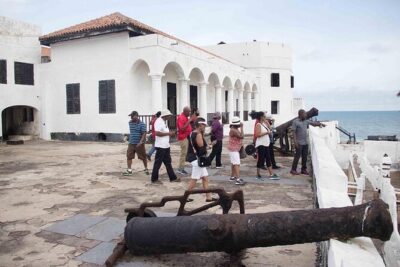
Cape Coast ,Elmina Castle and Kakum Full-Day Tour
Read our review →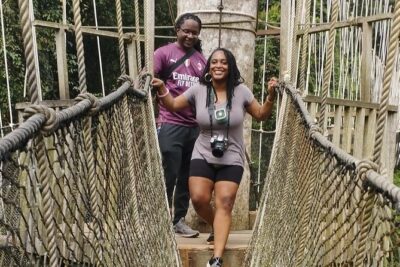
10 Days Trip to Cape Coast and Elmina Castles from Accra
Read our review →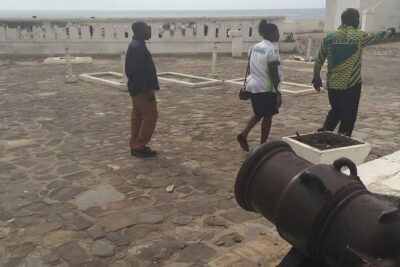
The Homecoming Experience To Cape-coast And Elmina.
Read our review →Browse the lists this tour appears in