
REVIEW · ACCRA TOURS
15-Day Ghana Wildlife Private Tour
Ghana rewards patient wildlife watchers. This private 15-day journey links coastal wetlands, savannah, Upper Guinea rainforest, and the drier woodland of northern Ghana, giving you a serious look at West African mammals and birds. I like the close work with expert local guides, and I like that the route includes both famous parks and community-protected forest.
The strongest parts are Kakum’s night walks and the long stay at Mole National Park, where elephants, kob, buffalo, and antelope are much easier to find than secretive rainforest species. The main caution is simple: this is not a safari with guaranteed daily sightings. Forest mammals hide well, and the itinerary includes several long road transfers.
In This Review
- Key points worth knowing
- From Accra to Shai Hills on the first day
- Egyptian Tomb Bats and savannah at Shai Hills
- Kakum’s canopy and five days of forest searches
- Brenu Akyinim adds beach, scrub, and small mammals
- Ankasa brings remote rainforest and basic camp life
- New Edubiase connects wildlife with local conservation
- The long transfer north to Mole National Park
- Three full days of elephants and open-country wildlife
- Returning by air from Tamale to Accra
- What $4,995 includes and what it means
- Who should book this Ghana wildlife tour?
- FAQ
- Where does the 15-day Ghana wildlife tour begin?
- Is this a private tour?
- What wildlife can I see at Shai Hills?
- How long does the tour spend at Kakum National Park?
- Is the Kakum canopy walkway included?
- What facilities are available at the Ankasa camp?
- Which animals are targeted at Ankasa?
- Why does the tour visit New Edubiase?
- What can I see at Mole National Park?
- What is included in the price?
- What is not included?
- How do I return to Accra from Mole?
- Should you book it?
Key points worth knowing
- Egyptian Tomb Bats at Shai Hills: The tour begins with a focused search for an uncommon bat species in a reserve of savannah, woodland, caves, and local history.
- Five days around Kakum: Early canopy walks and repeated night outings give you several chances to search for pangolins, potto, galagos, colobus monkeys, bats, and forest rodents.
- Remote Ankasa camping: You spend time in Ghana’s only pristine wet evergreen Upper Guinea rainforest, with camp facilities, 4×4 vehicles, and night walks.
- Community conservation near New Edubiase: Local residents help protect forest from illegal hunting and logging, with pangolins as a key target.
- Mole’s open-country wildlife: Northern Ghana offers the best chance for more visible large mammals, including elephants, buffalo, roan antelope, hartebeest, and warthog.
- Private touring at a high price: The $4,995 cost includes accommodation, meals, guides, transport, park fees, and internal travel support, but not international flights, drinks, or a visa.
From Accra to Shai Hills on the first day
Your guide meets you at Kotoka International Airport after customs, carrying an Ashanti African Tours sign. The drive to the hotel near Shai Hills takes about an hour, depending on Accra traffic. That first transfer is practical rather than scenic, but staying near the reserve saves you from starting the wildlife work with another early cross-country drive.
The first evening is used for a briefing. This matters on a trip built around nocturnal animals, long drives, and changing habitats. You can ask about clothing, lights, target species, meal times, and the next morning’s early start.
The tour supplies an air-conditioned vehicle, an experienced driver, unlimited mileage, airport transfers, and 24/7 office support. The private format also means the schedule can focus on your group’s targets rather than a large party waiting for a general departure.
More wildlife trips in Accra:
- Private Multi-Day Ghana Tour about Culture History and Wildlife – 7 Days
★ 5.0 · 8 reviews - 9 Day Ghana Wildlife and Culture Tour
★ 5.0 · 5 reviews - Ghana 4-day Nature and Wildlife Adventure
★ 5.0 · 2 reviews
Egyptian Tomb Bats and savannah at Shai Hills
Shai Hills Resource Reserve introduces you to a drier side of Ghana. Its mix of grassland, savannah, woodland, and caves creates a useful contrast with the rainforest that comes later.
The main goal is the Egyptian Tomb Bat, an uncommon species found in the cave network. Other bats may appear, along with rodents and mammals such as olive baboons, red-fronted duiker, kob, and bushbuck. This is a good early lesson in how the tour works: guides spend quality time in a habitat for a small number of specific targets instead of racing through a checklist.
Shai Hills also adds a cultural layer without turning the morning into a separate sightseeing program. You can visit a traditional shrine near the bat caves and hear how the Shai people used this area while escaping slave raiders. The visit lasts about four hours, leaving time for lunch before the drive to Kakum.
Kakum’s canopy and five days of forest searches
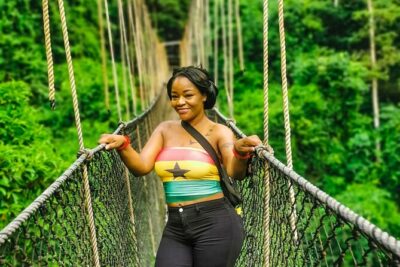
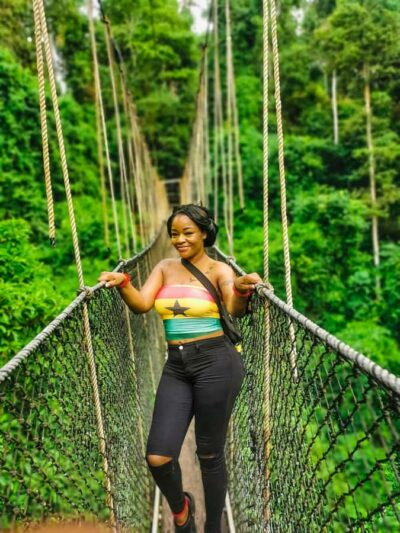
Kakum National Park protects 360 square kilometers of secondary Upper Guinea tropical rainforest. The canopy walkway rises about 40 meters above the forest floor, and the platforms are large enough for telescopes. Arriving around first light is the right plan, since the cooler early hours offer the best chance to scan the treetops.
The canopy work focuses on species such as long-tailed pangolin, African giant forest squirrel, Gambian sun squirrel, and red-legged sun squirrel. Pangolin sightings are never assured, but the extended stay gives you a better chance than a short park visit. You are not relying on one hurried walk and one lucky moment.
The afternoon break is important. Heat and humidity make forest watching tiring, and the schedule builds in time to rest at the hotel before returning after sunset. Some nights include several hours of walking and spotlighting, so you should be comfortable with late finishes and uneven forest paths.
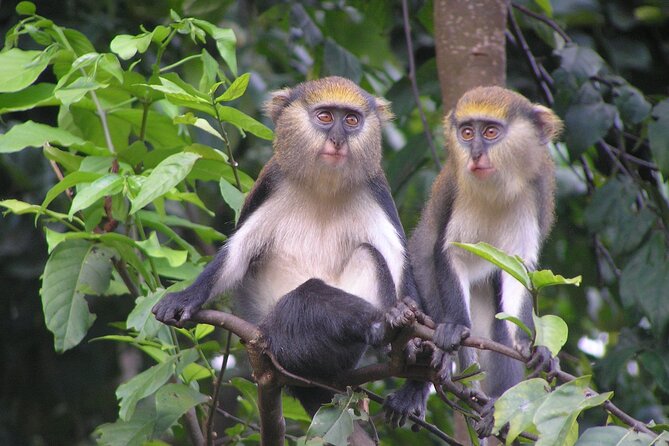
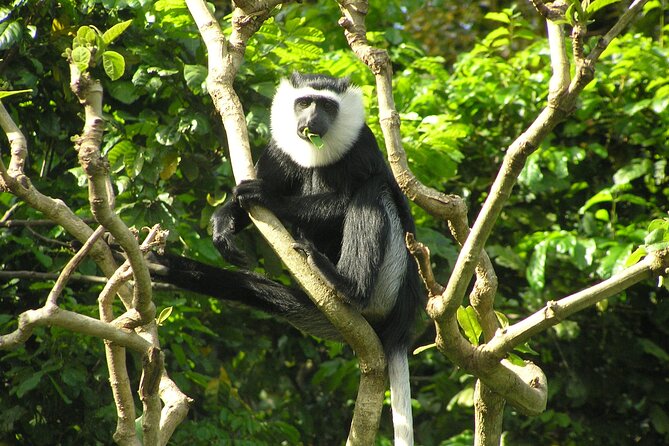
After dark, the target list becomes more secretive. You might find olive colobus, Lowe’s mona, Geoffrey’s pied colobus, tree pangolin, long-tailed pangolin, Lord Derby’s anomalure, Pel’s anomalure, bats, potto, Demidoff’s galago, bush babies, tree hyrax, giant pouched rat, royal antelope, Maxwell’s duiker, and common cusimanse.
Kakum is particularly good for people who enjoy the search as much as the sighting. A beam of light may reveal eyes, movement, or a fleeting animal crossing the path. The same forest can feel entirely different at dawn, in the heat of the afternoon, and during a night walk.
Nocturnal birds add another reason to carry your interest beyond mammals. Akun and Fraser’s eagle owls are possible, along with other night species. The tour is aimed at mammals, but the guides can keep an eye out for birds and butterflies too.
The drawback is that dense rainforest makes wildlife hard to see. You may spend hours hearing movement without a clear view. That is not a failure of the guide or park. It is the nature of forest wildlife, and the itinerary wisely allows several days to improve your odds.
Brenu Akyinim adds beach, scrub, and small mammals
Day six changes the rhythm. Along the Brenu Akyinim beach road near Elmina, the search shifts to slender mongoose, ground-striped squirrel, and other rodents. Birding is also good, and you get a walk to one of Ghana’s best beaches.
This stop breaks up the forest program and gives you a different setting for small mammals. It also creates a natural travel pause before the route continues west toward Ankasa. The visit lasts about four hours, followed by lunch and the drive onward.
Do not expect a major big-game stop here. Its value is habitat variety, coastal scenery, birdlife, and the possibility of species that are less likely in Kakum’s thick forest.
More things to do in Accra:
- The Cape Coast Day Tour
★ 5.0 · 525 reviews - Experience the Beauty, History and the Culture Of Accra in a Day
★ 5.0 · 323 reviews - The Cape Coast Tour
★ 5.0 · 177 reviews - From Accra: Cape Coast, Elmina Castle & Kakum Park Day Tour
★ 4.6 · 144 reviews
Ankasa brings remote rainforest and basic camp life
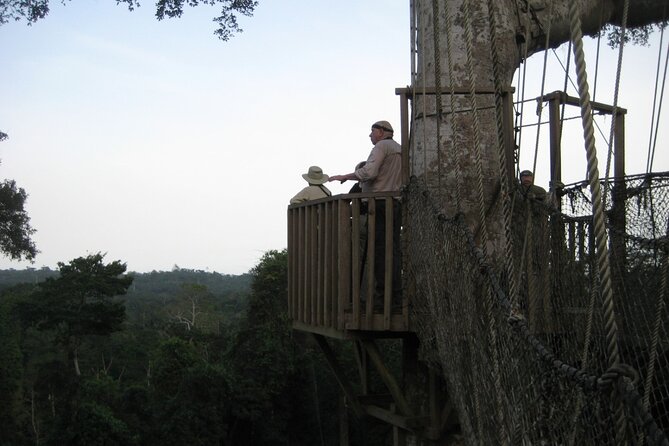
Ankasa Conservation Area and adjoining Nini Suhien National Park protect more than 509 square kilometers of continuous forest. This is described as Ghana’s only pristine wet evergreen Upper Guinea rainforest, making it one of the most important habitat changes on the route.
You arrive in the late afternoon, when camp is already prepared. The camp has showers, flushing toilets, and electricity, which makes remote forest nights much easier than fully basic camping. A camp leader handles meals and daily needs, while 4×4 Land Rovers and drivers help the group reach deeper parts of the forest.
The first evening walk is worth taking. You might search for Demidoff’s galago, common cusimanse, African palm civet, bats, and rodents. The next two days follow the best wildlife pattern: before-first-light walks, late-afternoon outings, and night spotlighting.
Ankasa is one of the tour’s most appealing sections for experienced wildlife watchers. Waterholes offer a chance to search for bongo and red river hog. Bongo are rare, so tracks may be more likely than a clear animal sighting, but the waterholes also attract other wildlife.
The dwarf crocodile is a regular possibility at the waterholes. Hammer bats are among the most striking species to seek, while Pel’s and Lord Derby’s anomalures are recorded here on several tours. Birds are not the main focus, but the forest can still produce memorable bird sightings.
You should prepare for a demanding schedule. Two full days and nights in wet forest means early alarms, muddy or uneven ground, insects, and long periods of quiet waiting. The camp comforts help, but this is still a remote wildlife program, not a resort stay.
New Edubiase connects wildlife with local conservation
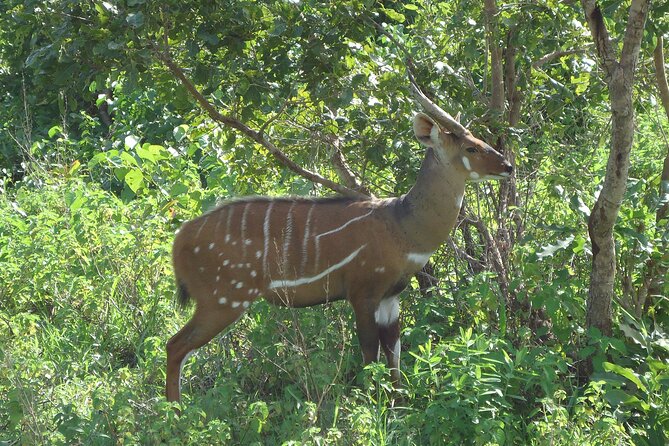
On day nine, the tour moves to the Ashanti Region and a remote community protecting a small Upper Guinea forest. The aim is to arrive in the late afternoon, settle in, and prepare for a night walk.
Pangolins are the main reason for this stop. They are endangered and heavily trafficked, so the conservation work here gives the search a wider purpose. The community project helps protect forest from illegal hunting and logging, and local residents may join the search if a pangolin is still missing from your list.
The next day is spent in the forest. Butterflies are especially abundant, with several hundred species recorded in the area. Even if mammals stay hidden, the variety of insects can keep the day active and visually rewarding.
This section is also a chance to experience local life through shared meals and time with the community. It is less polished than a standard lodge stop, but that is part of its value. You are supporting a place where wildlife protection and local income are linked.
The long transfer north to Mole National Park
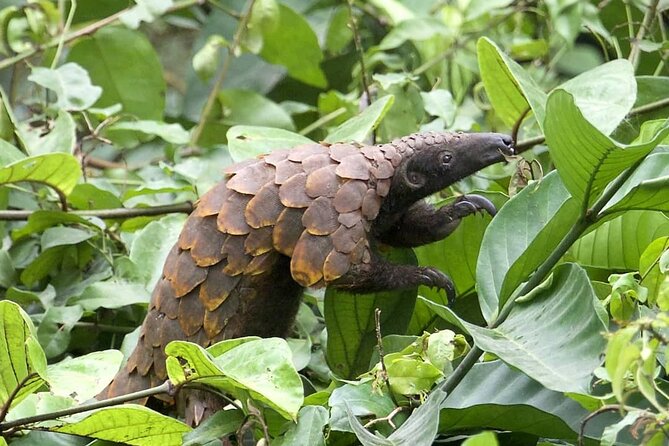
Day 11 is mainly a travel day. After breakfast, you head north through changing vegetation, from the southern forest zone toward drier broad-leaved Guinea woodland and savannah. Lunch in Kintampo breaks up the road journey before the final run to Mole.
Mole National Park covers 4,847 square kilometers and protects close to 100 mammal species and more than 330 bird species. The park hotel sits on a 250-meter-high escarpment overlooking the reserve, giving you a broad view across the open country.
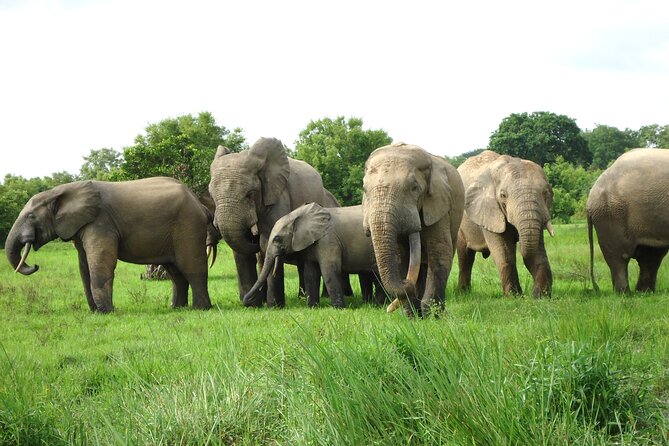
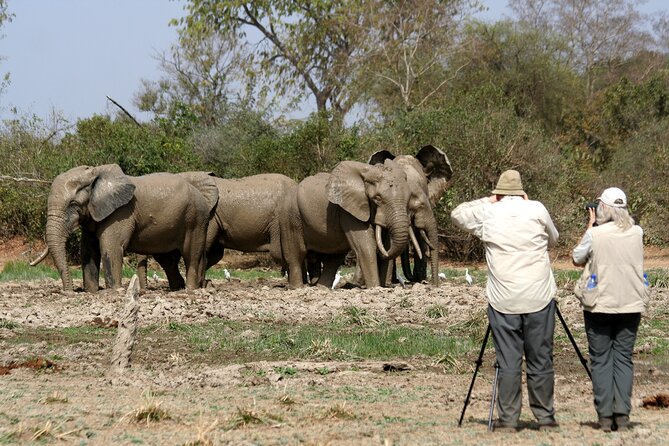
That setting changes the mood at once. At Mole, wildlife is more visible and easier to watch from a distance. You may even sit near the pool and watch savannah elephants bathing below, one of the rare moments on this route when the animals come to you rather than the other way around.
The road day is the cost of reaching Ghana’s best-known wildlife park. You should not schedule a demanding activity for that evening. The route is worthwhile, but the transfer takes energy after the earlier forest work.
Three full days of elephants and open-country wildlife
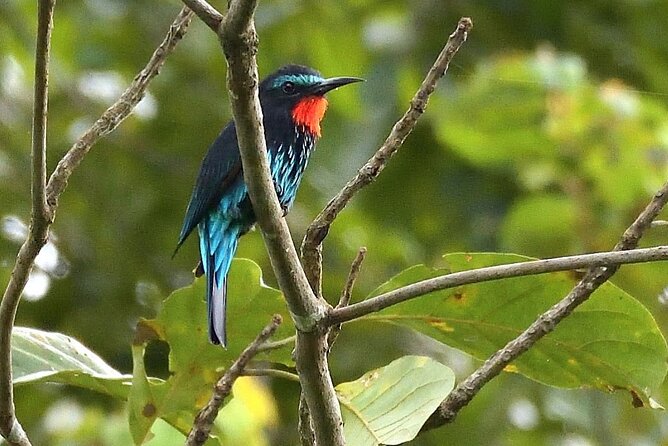
Mole receives the longest single wildlife stay, with three full days and nights of exploration. Morning outings combine walking and vehicle searches for African elephants, kob, bushbuck, waterbuck, hartebeest, roan antelope, warthog, and buffalo.
Olive baboons, patas monkeys, and yellow-winged bats are also possible. The open woodland and savannah make scanning easier than in Kakum or Ankasa, so Mole is the best part of the tour for seeing several large mammals in a single outing.
Evenings return to the nocturnal theme. Spotlighting may reveal hedgehogs, galagos, mongooses, civets, genets, duikers, hares, aardvarks, porcupines, rodents, and bats. As always, these are target species, not promises. Night viewing depends on weather, habitat, patience, and luck.
Three nights make a real difference. You can spend one outing looking for large mammals, another checking water sources, and another concentrating on smaller nocturnal species. The schedule also gives your guide time to adjust plans according to what you still need.
Returning by air from Tamale to Accra
On the final day, you have a relaxed breakfast before driving to Tamale, the capital of Ghana’s Northern Region. An internal flight brings you back to Accra and saves nearly two days of road travel.
Near the airport, the group shares an early evening meal and completes its final checklist before the airport transfer. This is a sensible ending. You get a last chance to review sightings, sort out belongings, and reach your international departure point without another long overnight drive.
The itinerary lists breakfast on 13 days, lunch on 13 days, and dinner on 14 days. Soft drinks and alcoholic drinks are extra, as are international flights and the Ghana visa.
What $4,995 includes and what it means
At $4,995 per person, this is a substantial trip. The price makes more sense when you look at what is bundled into 15 days of private touring:
- Accommodation
- Breakfast, lunch, and dinner as listed
- Air-conditioned vehicle
- Experienced driver
- Expert local guide available throughout
- Airport transfers
- Fuel and unlimited mileage
- Excursion and park fees
- Unlimited mineral water
- Public liability and professional indemnity insurance
- Internal flight support from Tamale to Accra
You are paying for specialist access, private transport, several forest camps and park stays, and a guide team that knows where difficult species have been found. A short Ghana holiday would cost less, but it would not provide the same time in Kakum, Ankasa, the community forest, and Mole.
The value depends on your priorities. If you need guaranteed sightings, luxury lodges, or a relaxed pace, this price may feel high. If you want uncommon West African mammals and accept early starts, long drives, basic remote camping, and uncertain sightings, the package is easier to justify.
Guide quality is a major part of the value. Philip Senyo has earned especially strong praise for spotting and identifying birds, butterflies, and mammals, including helping organize a pangolin search. Foster and Jackson have also been singled out for strong guiding, safe travel, and good knowledge of where birds can be found.
One practical communication point deserves attention. Philip was described as soft-spoken, with a heavy accent, and sometimes difficult to hear when explaining an animal’s location. That does not erase his field skills, but you should ask him to repeat directions or point clearly if you are using binoculars or a telescope.
Who should book this Ghana wildlife tour?
I would choose this trip if you are serious about West African wildlife and want habitats that are hard to reach independently. It suits photographers, mammal specialists, birders, and curious naturalists who are happy to spend time looking for small movement in dark forest.
It also suits people who value local conservation. The New Edubiase stop is not just a wildlife checklist exercise. It connects your visit with residents working to protect forest and endangered pangolins.
I would think twice if you dislike night walks, early breakfasts, long vehicle days, or uncertain results. Rainforest animals may remain unseen, and the itinerary has several demanding stretches. You should also check Ghana’s visa requirements early, since the application process has caused confusion between electronic and traditional paperwork.
The tour is private, and only your group participates. Most people can take part, and the operator lists pickup, mobile tickets, and group discounts. Cancellations made at least three full days before the local start time receive a full refund. Poor weather or failure to reach the minimum number of participants may lead to a new date, another experience, or a refund.
FAQ
Where does the 15-day Ghana wildlife tour begin?
The tour begins at Kotoka International Airport in Accra. An Ashanti African Tours guide meets you after customs and transfers you to accommodation near Shai Hills Reserve.
Is this a private tour?
Yes. Only your group participates in the activity.
What wildlife can I see at Shai Hills?
The main target is the Egyptian Tomb Bat. You may also see other bats, rodents, olive baboons, red-fronted duikers, kob, and bushbuck.
How long does the tour spend at Kakum National Park?
The itinerary includes visits to Kakum from day two through day five. Activities include early canopy walkway visits, forest walks, and night spotlighting.
Is the Kakum canopy walkway included?
Yes. Admission and excursion fees are included, including the visit to Kakum’s canopy walkway.
What facilities are available at the Ankasa camp?
The remote camp has showers, flushing toilets, and electricity. A camp leader provides meals and helps with daily needs.
Which animals are targeted at Ankasa?
Possible targets include hammer bats, Pel’s and Lord Derby’s anomalures, dwarf crocodiles, common cusimanse, galagos, rodents, bongo, and red river hog.
Why does the tour visit New Edubiase?
The stop focuses on pangolins and other forest mammals. It also supports a community conservation project working against illegal hunting and logging.
What can I see at Mole National Park?
Possible sightings include African elephants, kob, bushbuck, waterbuck, hartebeest, roan antelope, warthog, buffalo, olive baboons, patas monkeys, and yellow-winged bats. Night outings target smaller mammals and bats.
What is included in the price?
The $4,995 price includes accommodation, listed meals, an air-conditioned vehicle, fuel, unlimited mileage, an expert guide, an experienced driver, airport transfers, excursion fees, mineral water, insurance, and internal travel arrangements.
What is not included?
International flights, soft drinks, alcoholic drinks, and the Ghana visa are not included.
How do I return to Accra from Mole?
On day 15, you travel from Mole to Tamale and take an internal flight to Accra. The flight avoids nearly two full days of road travel.
Should you book it?
Book this tour if your idea of a good holiday includes rare mammals, night walks, long hours in forest, and the chance to support local conservation. The route is ambitious, but it gives you a far better look at Ghana’s varied habitats than a short park visit.
Skip it if you want an easygoing safari with frequent guaranteed sightings. For patient wildlife watchers, though, the combination of Kakum, remote Ankasa, pangolin country, and three full days at Mole offers a strong and unusual introduction to Ghana.
Just added in Accra
- Wli Waterfall And Tafi Monkey Sanctuary ( Volta Region)★ 5.0 · 1 review
- Traditional Beadmaking Workshop★ 5.0 · 1 review
- Private 9-Day Tour in Ghana★ 5.0 · 2 reviews
- Wli Waterfalls, Mount Afadjato & Tafi Atome Monkey Sanctuary★ 5.0 · 2 reviews
- Cape Coast and Elmina castle Day Trip★ 5.0 · 2 reviews
- Culinary for Social Change-Cooking Class★ 5.0 · 2 reviews
- Time with Nature★ 5.0 · 2 reviews
- Historical Day Tour to Cape Coast, Elmina and Kakum★ 5.0 · 3 reviews
Accra Tours, compared.
Experience the Beauty, History and the Culture Of Accra in a Day
Read our review →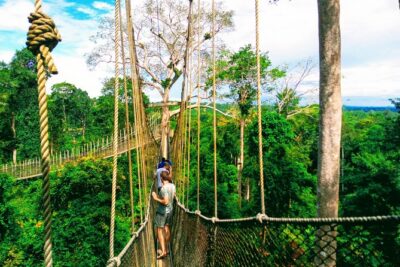
Cape Coast, Elmina Castle & Kakum Park Day Tour
Read our review →

Browse the lists this tour appears in