
REVIEW · ACCRA TOURS
9 Day Ghana Wildlife and Culture Tour
Ghana packs a lot into nine days. This private tour links Accra’s political landmarks, Mole National Park, Ashanti craft villages, and the coastal castles into one carefully arranged journey. I especially like the close elephant encounters at Mole and the chance to learn Kente, Adinkra, brass casting, and batik directly from local makers. The main drawback is the pace: several long road journeys and early starts leave little room for lazy mornings.
I also like the personal setup. You travel only with your own group, accompanied by a guide and driver, rather than being folded into a large coach tour. Airport pickup, internal transport, accommodation, meals, water, and excursion fees are included, which makes the $4,695 price easier to judge.
The tour is best for you if you want a broad first look at Ghana and prefer a local guide to handle the details. It is less suited to anyone seeking a slow beach holiday or a dedicated safari itinerary.
In This Review
- Key things to know before you book
- What the $4,695 price really covers
- Day 1: A smooth landing in Accra
- Day 2: Accra from national identity to neighborhood life
- Days 3 and 4: Elephants and open country at Mole
- Day 5: Waterfalls, sacred monkeys, and a long transfer
- Day 6: Ashanti buildings, Kente, Adinkra, and brass
- Days 7 and 8: Ghana’s coast, memory, and rainforest
- Day 9: Fort Amsterdam and the return to Accra
- Who should book this Ghana tour?
- FAQ
- Where does the tour begin?
- How long does the tour last?
- Is this a private tour?
- Is an internal flight included?
- Are meals included?
- Is accommodation included?
- Are international flights included?
- Is a visa included?
- What wildlife might I see at Mole National Park?
- Can I skip the Kakum National Park visit?
- What is the cancellation policy?
- Does the tour operate in bad weather?
- Should you book it?
Key things to know before you book

- Mole National Park gives you Ghana’s strongest wildlife focus: Expect elephant tracking on foot, evening wildlife viewing, birdwatching, and a traditional canoe safari.
- Accra’s history is presented through places, not just museums: James Town, Independence Square, the Kwame Nkrumah Memorial Park, and Teshie each show a different side of the capital.
- The Ashanti section is hands-on: You can watch Kente weaving, print your own Adinkra cloth, and see traditional brass casting in Sokoban Krofrom.
- The coastal days carry emotional weight: Cape Coast Castle and Elmina Castle explain the transatlantic slave trade in the very places where it happened.
- The trip includes real community contact: Mognori, Boabeng-Fiema, Global Mamas, and Elmina’s fishing community bring daily life into the itinerary.
- The price covers most major costs: Eight breakfasts and lunches, nine dinners, accommodation, flights within Ghana, transport, guides, water, and entry fees are included.
What the $4,695 price really covers
At $4,695 per person, this is a costly Ghana trip, but it is not simply a nine-day hotel-and-driver package. The price includes accommodation, an air-conditioned vehicle, airport transfers, an internal flight to Tamale, an experienced driver, an expert local guide, unlimited mineral water, excursion fees, and three meals a day in the stated schedule.
You also receive eight breakfasts, eight lunches, and nine dinners. Soft drinks, alcoholic drinks, international flights, and your visa are extra. Those exclusions matter, especially if you enjoy drinks with meals or need to add long-haul airfare.
The value comes from the range of logistics handled for you. Ghana’s highlights are spread across the country, and this route moves from Accra to the far north, then south through Kumasi and the Central Region before returning to Accra. Booking separate transport, hotels, guides, park visits, and community activities would take time and would not necessarily produce the same local connections.
Still, the cost deserves a clear-eyed look. You are paying for a private experience, not a budget group tour. If two or more people share the experience, the arrangement may feel more worthwhile because only your group participates, and group discounts are offered. Ask for the exact discount before booking.
More wildlife trips in Accra:
- 15-Day Ghana Wildlife Private Tour
★ 4.5 · 9 reviews - Private Multi-Day Ghana Tour about Culture History and Wildlife – 7 Days
★ 5.0 · 8 reviews - Ghana 4-day Nature and Wildlife Adventure
★ 5.0 · 2 reviews
Day 1: A smooth landing in Accra
Your guide meets you at Kotoka International Airport after customs. Look for the Ashanti African Tours sign as you leave the main terminal, then transfer directly to your Accra accommodation.
The first day is deliberately simple. After check-in, your guide may introduce you to Akwaaba, a Ghanaian welcome. The rest of the day is set aside for arrival, dinner, and rest.
That is wise. Accra can feel hot, busy, and unfamiliar after a long flight, so having a named meeting point and a driver waiting is useful. You do not need to work out airport transport or negotiate your first ride.
Day 2: Accra from national identity to neighborhood life
Your first full day begins at the National Museum of Ghana. Its displays focus mainly on ethnography and cover Ghana as well as other parts of West Africa. This gives you useful context before the rest of the tour, especially when you begin seeing Ashanti symbols, textiles, shrines, and local customs in person.
The museum visit lasts about an hour, followed by a walk through James Town, one of Accra’s oldest suburbs. The British lighthouse from 1871, Fort James from 1673, and the colorful fishing boats help connect the neighborhood to both colonial trade and present-day coastal life.
James Town is not a polished historic quarter. That is part of its value. You see an active community, old structures, fishermen, and streets where history and ordinary life sit side by side. Wear practical shoes, since the walking tour is more useful when you are ready for uneven ground and warm weather.
After lunch at Country Kitchen, the route continues to Black Star Square and Independence Square. The enclosed flame of African liberation, lit by Kwame Nkrumah in 1961, connects the site to Ghana’s independence and its wider role in African political history.
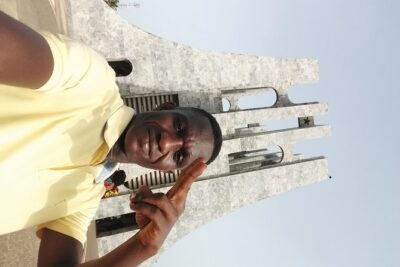
The Kwame Nkrumah Memorial Park adds a more personal view. The gardens, marble structure, photographs, artifacts, and adjoining museum explain the life of Ghana’s first prime minister and president. Nearby, the National Cultural Center is a large outdoor arts and crafts market. This is a good place to shop, but bargaining is part of the process, so take your time and keep your spending limit in mind.
The final stop is Teshie Nungua, known for its fantasy coffins. Local artisans make coffins shaped like airplanes, cars, cocoa pods, crocodiles, beer bottles, and other objects linked to a person’s work or interests. The designs can seem playful, but the custom belongs to serious funeral traditions in which burial is followed by celebration.
Day 2 covers a lot. You get museums, political history, colonial buildings, shopping, and a working neighborhood. The tradeoff is a full schedule of about 12 hours, so this is not a day for a slow start.
Days 3 and 4: Elephants and open country at Mole
Day 3 begins early with a flight from Accra to Tamale. The aim is to take the first flight so you have more time in Mole National Park. After breakfast at one of the Tamale hotels, you continue by road to the park.
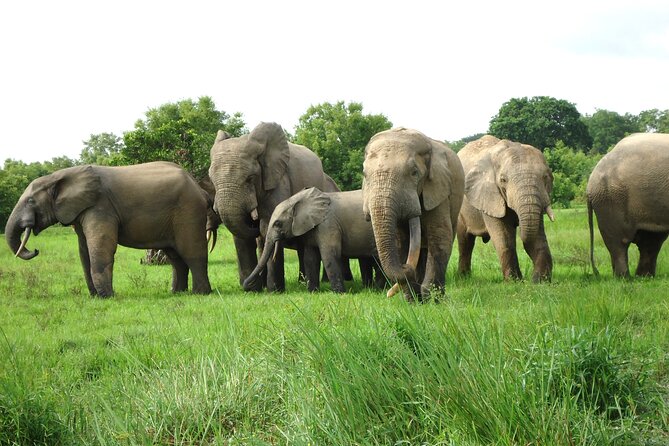
Mole protects about 4,847 square kilometers and records almost 100 mammal species and more than 330 bird species. Your accommodation sits on a 250-meter escarpment overlooking the park. From the terrace and pool, you may watch elephants near a watering hole where crocodiles also live.
That view is one of the trip’s strongest features. You do not need to wait for a long game drive to feel connected to the park. Wildlife can appear close to the accommodation, although sightings are never guaranteed.
The first evening includes a drive and walking activity using spotlights to search for mammals. The next morning, you set out with an armed guide to track African elephants on foot. This is a more active wildlife experience than sitting in a vehicle. You walk through savannah and bush, often around watering holes, looking for elephants and other animals.
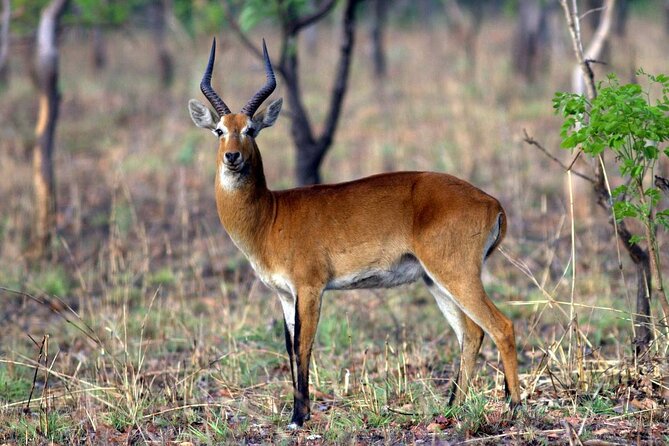
Olive baboons and patas monkeys may come close, while kob, bushbuck, and waterbuck are among the antelope you might see. The park also offers strong birdwatching potential. One Ghana trip led by bird guide Foster was especially praised for finding and identifying many bird and mammal species, so tell your guide if birds matter to you and ask for time to stop and listen.
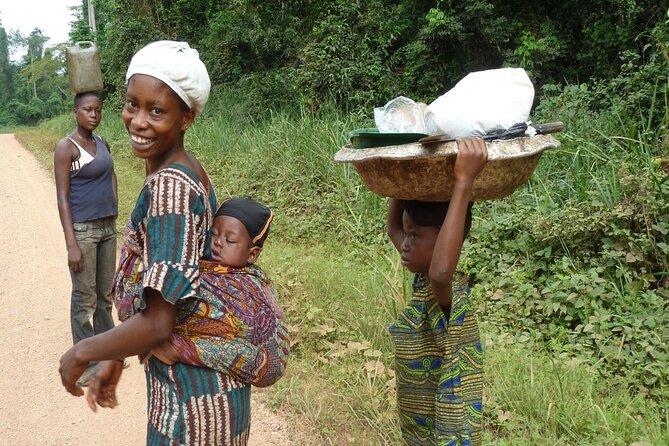
After lunch and a rest by the pool, you visit Mognori, a community about 30 minutes from the accommodation on the park boundary. A local resident leads the walk, explaining shea butter production, the many uses of the shea nut, active shrines, and village life.
This community visit gives the wildlife portion a human side. You are not only looking at protected land. You are learning how nearby families use local plants, maintain traditions, and live beside the park.
The day ends with a traditional dugout canoe safari. Your guide watches for birds and wildlife along the water, then you return under the clear West African night sky.
Mole is the tour’s best section for nature, but expectations should stay realistic. This is not a lion-focused safari, and the itinerary does not promise a particular animal. The appeal is the mix of elephants, primates, antelope, birds, walking, canoe travel, and the chance to see local conservation from close by.
More things to do in Accra:
- The Cape Coast Day Tour
★ 5.0 · 525 reviews - Experience the Beauty, History and the Culture Of Accra in a Day
★ 5.0 · 323 reviews - The Cape Coast Tour
★ 5.0 · 177 reviews - From Accra: Cape Coast, Elmina Castle & Kakum Park Day Tour
★ 4.6 · 144 reviews
Day 5: Waterfalls, sacred monkeys, and a long transfer
Day 5 is mostly a travel day from Mole toward Kumasi, but two stops break up the road journey.
Kintampo Waterfalls offers a fast-flowing cascade and a small pool where you can swim. Some people use the falling water as a natural shower, a memorable way to cool off during a warm road trip. Lunch follows at the nearby Falls restaurant.
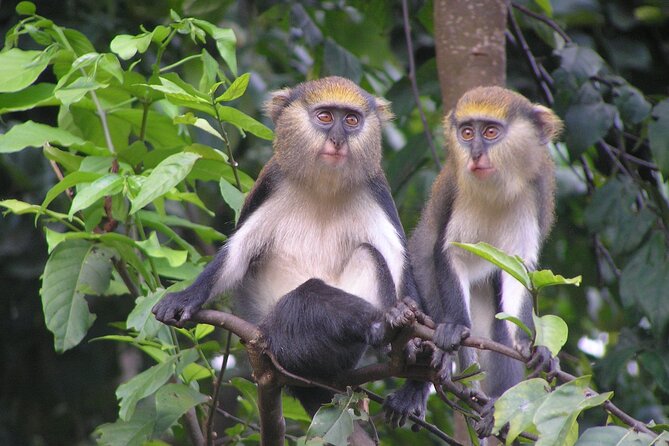
The next stop is Boabeng-Fiema Monkey Sanctuary. Two adjoining villages protect black-and-white colobus monkeys and Lowe’s Mona monkeys, which local people consider sacred. The monkeys receive traditional burials, and the forest remains protected because of this long-standing belief.
A local walk explains village farming, the role of the monkeys, and medicinal trees and plants used in the area. This is not a zoo. You see forest habitat protected by the community, which makes the visit more meaningful than a standard animal display.
The day ends with arrival in Kumasi in the early evening. This is the point where you will appreciate having a driver. The route is long, and the schedule would be tiring if you had to manage the roads yourself.
Day 6: Ashanti buildings, Kente, Adinkra, and brass
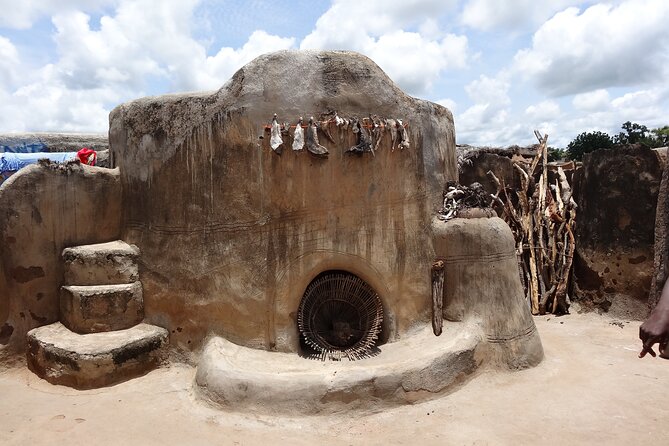
Kumasi provides the tour’s clearest look at Ashanti culture. You begin with traditional Asante buildings recognized by UNESCO as World Heritage Sites. Made from bamboo, timber, mud, and thatch, they contain 10 active shrines. Their wall motifs use Adinkra symbols with specific meanings.
The site also connects to Nana Yaa Asantewaa, a major Ashanti figure who led resistance against the British in the 1901 war. Her story adds an important female voice to a period often told mainly through male leaders.
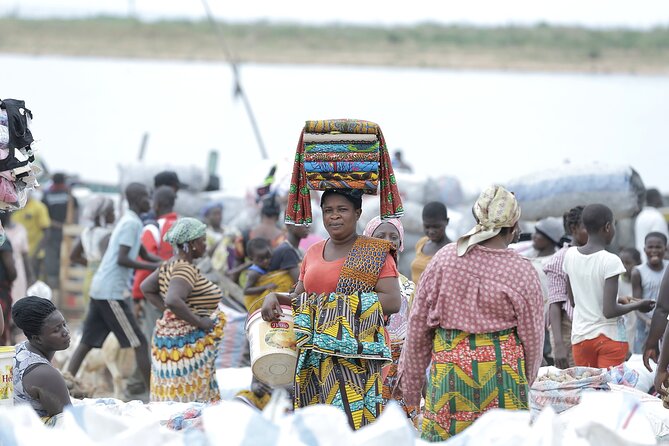
At Adanwomase, you see Kente cloth made by families who have woven it for generations. The designs carry meaning, and some patterns are associated especially with this area. You can watch the looms and learn why Kente is more than a colorful souvenir.
Ntonso introduces Adinkra cloth, which predates Kente by more than four centuries. Artisans carve symbols from calabash shells, then stamp them onto cloth using natural dyes made from tree bark. You can make your own strip of Adinkra cloth, choosing symbols that have personal meaning.
That hands-on element makes this one of the tour’s better cultural activities. You leave with an object you helped create, not just something bought from a market.
After lunch, Sokoban Krofrom shows traditional brass casting. Craftspeople produce beads, jewelry, statues, and other objects using methods that have remained largely unchanged. You can watch a demonstration and browse the village shops.
The day is full but well balanced. Instead of looking at cultural objects behind glass, you see how they are made and meet people whose families have practiced these skills over many years.
Days 7 and 8: Ghana’s coast, memory, and rainforest
Day 7 takes you south toward Elmina, beginning at Assin Manso. This town was an important point along routes used in the enslavement of Africans. The Ndonkor Nsuo, or Enslaved African River, carries painful historical meaning and prepares you for the castles later in the day.
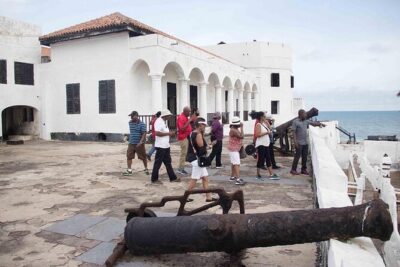
After lunch overlooking the ocean, you visit Cape Coast Castle, a UNESCO World Heritage site. The tour of the dungeons and Door of No Return is difficult but important. The museum provides wider context about the castle, Cape Coast, and the transatlantic slave trade.
Do not treat this as a quick photo stop. Give yourself time to listen and think. The site is powerful because the buildings are intact and the history is tied to specific rooms and corridors.
Day 8 offers a choice. You can rest at your beach accommodation, swim, or sit by the shore. Or you can visit Kakum National Park and its famous rainforest canopy walkway.
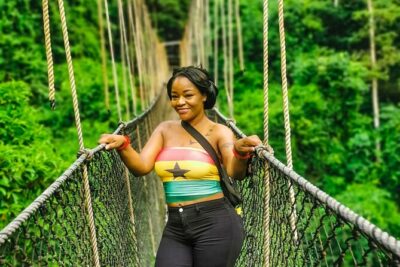
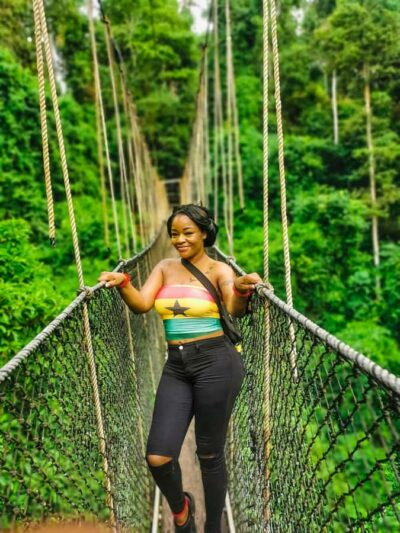
The walkway has seven bridges attached to seven large trees, about 40 meters above the forest floor. It is an exciting outing, but anyone uneasy with height should know what to expect. The park information center adds useful detail about the forest, including its recorded mammals and primates.
The International Stingless Bee Centre follows. You learn about roughly nine identified species of stingless bees in Ghana, their ecological role, medicinal uses, and honey. You can see the hives, taste the honey, and visit a bee walkway and butterfly garden.
Lunch is at a local restaurant run by an organization supporting children in the Cape Coast area through education and advocacy. The visit to Global Mamas then lets you make a batik garment, learning to heat wax, stamp patterns, and dry the fabric.
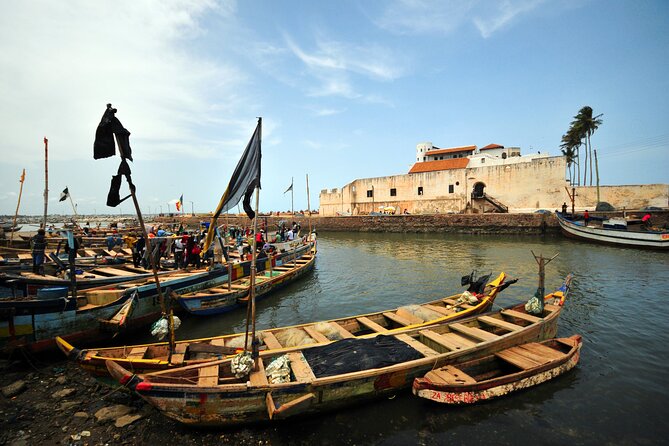
In Elmina, you walk through the fishing market, see boat builders, and watch colorful fishing boats bring in the catch. Elmina Castle, built by the Portuguese in 1482, is the oldest surviving colonial building in sub-Saharan Africa. Its role in the slave trade makes it another serious historical stop.
The day can last 12 hours if you include every activity. You can spend the evening at your accommodation or go into town for local nightlife.
Day 9: Fort Amsterdam and the return to Accra
Your final morning is intentionally slower. Swim, rest on the beach, or enjoy the accommodation before lunch overlooking the coast.
On the road back to Accra, Fort Amsterdam in Abandze provides one last historical stop. Built by the British between 1631 and 1638, it later fell to the Dutch after a battle and took its present name. The fort helps explain the competition among European powers for trade along Ghana’s coast.
Back in Accra, you may have time at Accra Mall for modern Ghana and last-minute shopping. Dinner at a locally owned restaurant gives you a final chance to eat local or international dishes before the airport transfer.
Who should book this Ghana tour?
I would choose this tour if you want Ghana’s major themes in one trip: wildlife, Ashanti culture, coastal history, community visits, crafts, and beaches. It suits first-time visitors who value a private guide, included transport, and a planned route.
I would also recommend it to couples, families, and small groups who want flexibility within a private format. The company’s Ghana team has received strong praise for its administration, drivers, and guides. Foster has been singled out for bird and mammal knowledge, while driver Frank has been praised for safe, helpful service. Staff have also been commended for handling special requests.
I would hesitate if your priority is a relaxed beach stay, a luxury safari, or a trip with very little time in the vehicle. The route is ambitious. Day 2, Day 5, and Day 8 can feel long, and several mornings begin early.
You can cancel for a full refund up to three full days before the local start time. Late cancellations are not refunded, and poor weather or failure to meet the minimum number of participants may lead to a different date, another experience, or a full refund.
FAQ
Where does the tour begin?
The tour begins with pickup at Kotoka International Airport in Accra, where the guide meets you after customs.
How long does the tour last?
The tour lasts approximately nine days.
Is this a private tour?
Yes. Only your group participates in the activity.
Is an internal flight included?
Yes. The itinerary includes the flight from Accra to Tamale on Day 3.
Are meals included?
Yes. The package includes eight breakfasts, eight lunches, and nine dinners.
Is accommodation included?
Yes. Accommodation is included in the tour price.
Are international flights included?
No. International flights are not included.
Is a visa included?
No. You must arrange and pay for your own visa.
What wildlife might I see at Mole National Park?
Mole records almost 100 mammal species and more than 330 bird species. The itinerary specifically highlights African elephants, olive baboons, patas monkeys, kob, bushbuck, waterbuck, and crocodiles.
Can I skip the Kakum National Park visit?
Yes. Day 8 gives you the choice of visiting Kakum National Park or spending the day relaxing at the beach accommodation.
What is the cancellation policy?
You can receive a full refund if you cancel at least three full days before the experience begins. Cancellations or changes made later are not accepted for a refund.
Does the tour operate in bad weather?
The experience requires good weather. If it is canceled because of poor weather, you are offered a different date or a full refund.
Should you book it?
Book this tour if you want a well-supported first visit to Ghana that reaches beyond Accra. The strongest reasons are the elephant tracking at Mole, the direct contact with Ashanti artisans, and the serious historical visits to Cape Coast and Elmina.
The price is high, but much of the expensive work is already covered. If you can handle early starts and long transfers, this is a practical way to see a wide slice of Ghana without arranging each piece yourself.
Just added in Accra
- Wli Waterfall And Tafi Monkey Sanctuary ( Volta Region)★ 5.0 · 1 review
- Traditional Beadmaking Workshop★ 5.0 · 1 review
- Private 9-Day Tour in Ghana★ 5.0 · 2 reviews
- Wli Waterfalls, Mount Afadjato & Tafi Atome Monkey Sanctuary★ 5.0 · 2 reviews
- Cape Coast and Elmina castle Day Trip★ 5.0 · 2 reviews
- Culinary for Social Change-Cooking Class★ 5.0 · 2 reviews
- Time with Nature★ 5.0 · 2 reviews
- Historical Day Tour to Cape Coast, Elmina and Kakum★ 5.0 · 3 reviews
Accra Tours, compared.
Experience the Beauty, History and the Culture Of Accra in a Day
Read our review →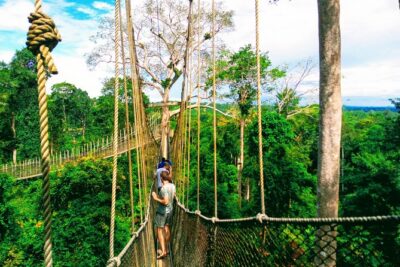
Cape Coast, Elmina Castle & Kakum Park Day Tour
Read our review →

Browse the lists this tour appears in