
REVIEW · ACCRA TOURS
Accra: Cooking Class with Auntie KK in Osu
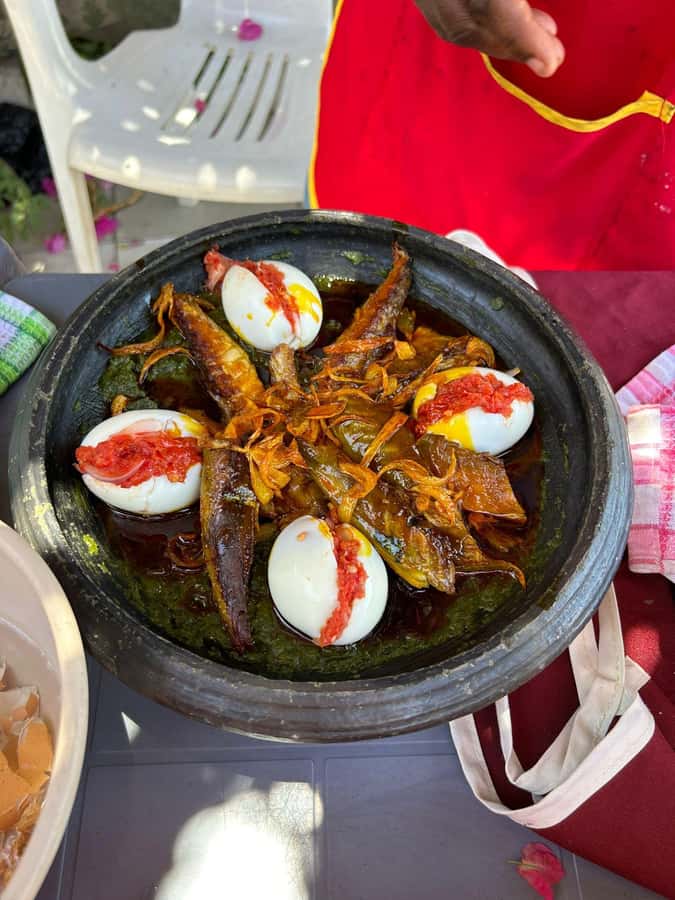
Your hands make the meal here. This three-hour cooking class with Auntie KK brings you into a family home in Osu, where local ingredients become a shared Ghanaian meal. I like the personal welcome and the chance to learn not just how a dish is made, but where its ingredients and traditions come from. I also like that food and drinks, cooking supplies, and photo opportunities are included.
The main consideration is the price: $185 per person is a serious spend for a three-hour class. You are paying for a private-feeling local encounter, a professional chef, a meal, and the setting, but this may feel costly if you mainly want a quick cooking demonstration. You must also arrange your own transport to and from Osu.
In This Review
- Key points to know before booking
- Meeting Auntie KK at the blue gate in Osu
- A three-hour route from ingredients to lunch
- 1. Learning the ingredients
- 2. Preparing your chosen meal
- 3. Sitting down to eat
- What the possible dishes tell you about Ghanaian food
- Why the family-home setting matters
- What the strong feedback tells you
- Is $185 a fair price?
- Who will enjoy this Osu cooking class?
- Practical tips for a smoother visit
- Should you book Auntie KK’s cooking class?
- FAQ
- Where does the cooking class meet?
- How long does the cooking class last?
- What is included in the price?
- Is transportation included?
- Which languages are spoken?
- Can I cancel or pay later?
Key points to know before booking
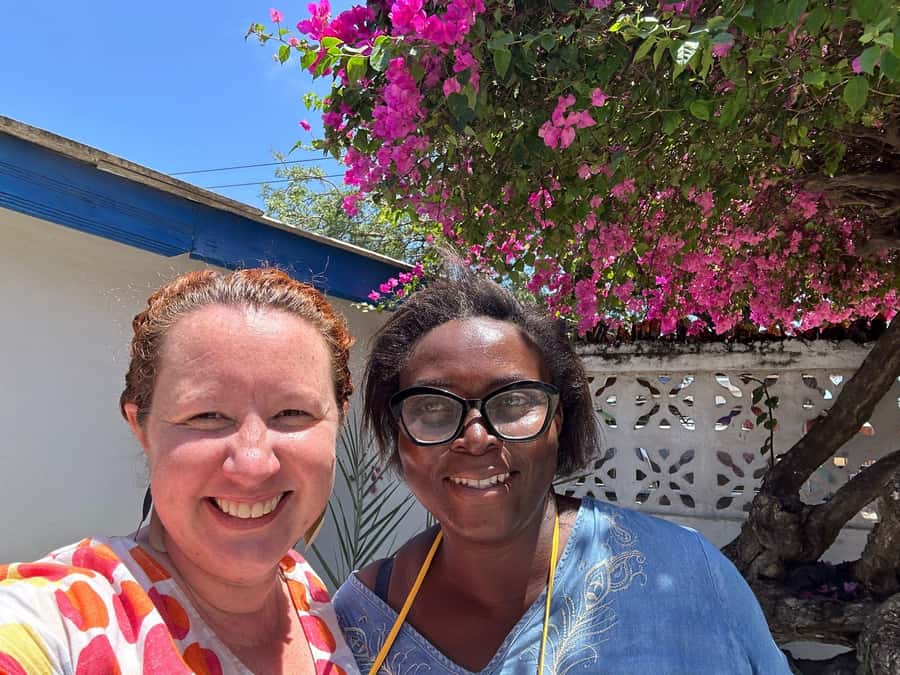
- Meet Auntie KK across from Club 69: Look for the white wall and blue gate opposite the Club 69 signboard in Osu.
- Cook in a family home: The setting gives the class a personal feel rather than the polish of a formal culinary school.
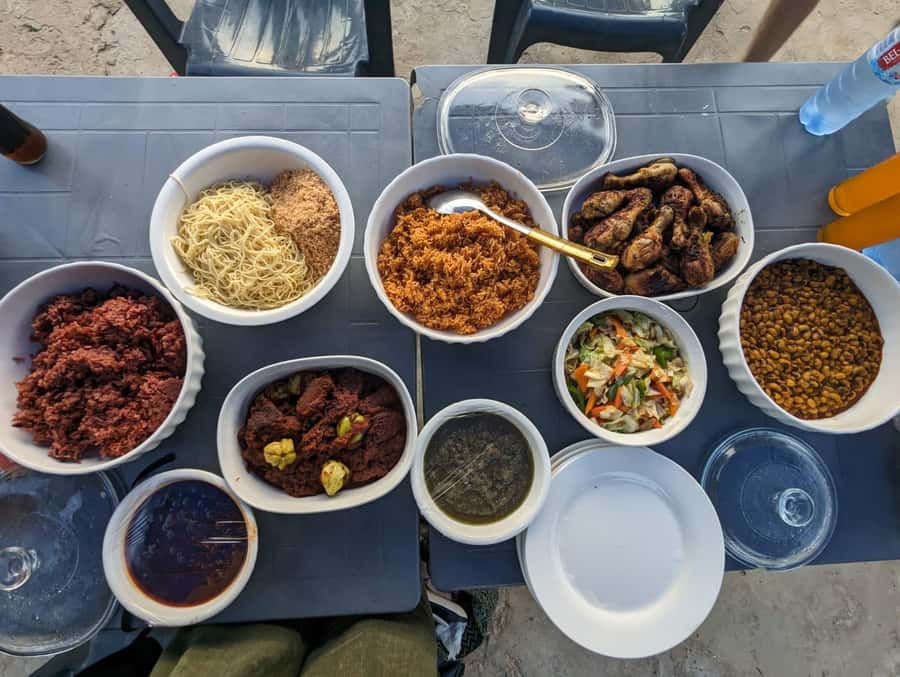
- Choose from classic Ghanaian dishes: Possible foods include jollof rice, waakye, banku and tilapia, fufu with light soup, kelewele, red red, groundnut soup, and kenkey.
- Eat what you prepare: The class ends around the table with the food, drinks, and satisfaction of having made the meal yourself.
- Meet an English and Twi-speaking chef: Auntie KK welcomes you like family and leads the practical cooking session.
- Plan your own ride: Hotel pick-up, drop-off, and transportation are not included.
Meeting Auntie KK at the blue gate in Osu
Your class begins at the meeting point in front of Club 69 in Osu. Do not simply look for a large cooking-school sign. The useful landmark is a white wall and blue gate directly across from the Club 69 signboard. Auntie KK will be waiting there.
This small detail matters. Accra streets can be busy, and a clear visual marker makes the first few minutes easier. I suggest saving the meeting instructions before leaving your hotel and allowing enough time to find Club 69. Since transportation is not included, you will need to arrange your own ride to Osu and your return trip after the meal.
Once you meet Auntie KK, the tone shifts from city outing to family visit. She welcomes you into the experience and guides you to the cooking location. That personal greeting is part of the value here. You are not simply watching a chef work behind a counter. You are meeting a local cook in a home setting and learning through direct contact.
The class is listed as wheelchair accessible. If you need a particular type of access or assistance, it is still sensible to confirm the details when booking, since the supplied information does not describe the exact entrance or kitchen layout.
More cooking classes in Accra:
- Home Cooking Class by Auntie K
★ 5.0 · 62 reviews - Local Ghanaian Cooking Class in Accra to help support wellness community center
★ 4.5 · 22 reviews - Authentic Ghanaian Cooking Class in Accra
★ 4.5 · 11 reviews
A three-hour route from ingredients to lunch
The experience lasts about three hours, which gives you enough time to move through the meal in stages. It is not a rushed recipe demonstration where you take a few notes and leave. You begin by learning about the ingredients, then take part in preparation, and finally sit down to eat.
1. Learning the ingredients
The first part focuses on the local ingredients used in Ghanaian cooking. This is important because many Ghanaian dishes depend on combinations that may be unfamiliar if you usually cook European or North American food.
You learn what goes into the selected meal and how those ingredients fit into Ghanaian food traditions. Freshly picked ingredients are used for the preparation, giving you a better sense of the connection between the food on your plate and the local kitchen.
I like this part because it gives the cooking a reason and a setting. You are not only copying instructions. You are learning what creates the flavor, texture, and character of the dish. That background can help you recreate the food later, even if you need to substitute an ingredient at home.
The exact menu can depend on the meal choices for the class. The information lists several well-known Ghanaian dishes, but it does not promise that every one will be prepared during your visit. Ask about the available choices when arranging your booking if you have a particular dish in mind.
2. Preparing your chosen meal
After the introduction, you get started with the preparation. The class is designed around participation, so your hands do the work. You may be chopping, mixing, seasoning, shaping, or helping with other parts of the recipe, depending on the dish selected.
This is where the experience earns its name. You are learning by doing, not by standing at a distance while someone else cooks. Auntie KK, described as a professional local chef, leads the process and shares the method in English or Twi.
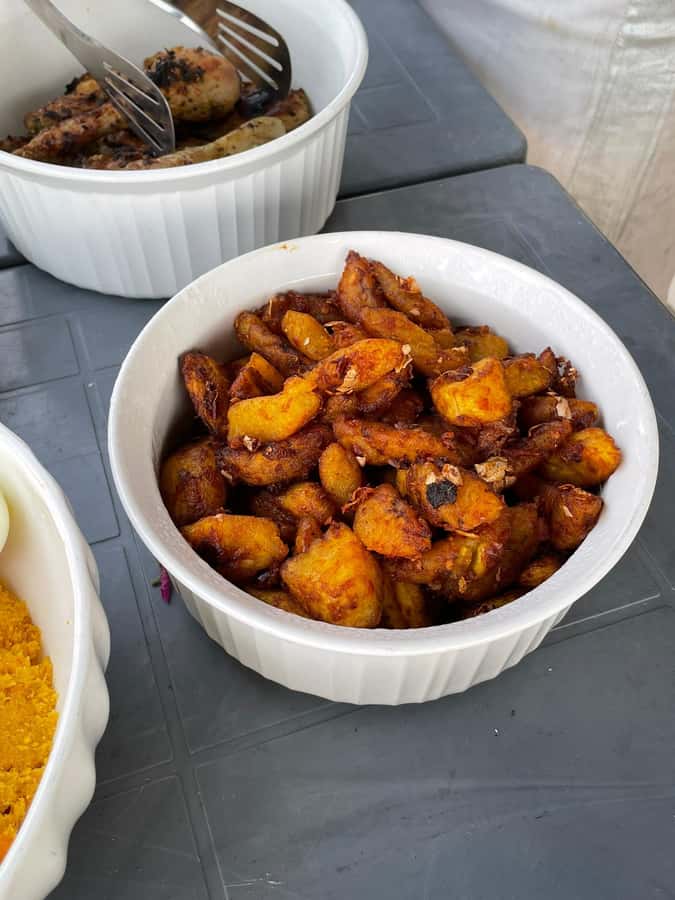
Ghanaian cooking often combines hearty staples with strong seasoning and carefully built sauces. Jollof rice, for example, uses rice cooked in a tomato and pepper sauce, often with vegetables and meat. Kelewele turns plantain into a spicy snack with ginger, garlic, and hot peppers. Red red pairs black-eyed peas and palm oil with fried plantains.
The class gives you a practical way to understand those combinations. You can see how a dish comes together, taste the result, and remember the process through your own work. That is more useful than simply photographing a finished plate.
More things to do in Accra:
- The Cape Coast Day Tour
★ 5.0 · 525 reviews - Experience the Beauty, History and the Culture Of Accra in a Day
★ 5.0 · 323 reviews - The Cape Coast Tour
★ 5.0 · 177 reviews - From Accra: Cape Coast, Elmina Castle & Kakum Park Day Tour
★ 4.6 · 144 reviews
3. Sitting down to eat
The best part comes when the cooking stops and the eating begins. Food and drinks are included, so you can sit down and enjoy what you helped prepare rather than rushing away after the final step.
There is a pleasant sense of achievement in tasting the finished meal. The class turns lunch into a shared event, with food, conversation, and time to enjoy the company around the table. You also have photo and video opportunities, so you can record parts of the cooking and the final meal.
The final taste is not just a reward. It helps you understand the recipe. You can connect the ingredients you handled with the finished flavors, then take that knowledge back to your own kitchen. The experience includes a recipe to recreate at home, according to the activity information, which adds value beyond the meal itself.
What the possible dishes tell you about Ghanaian food
The menu examples give you a useful picture of the range of Ghanaian cooking. Each dish offers a different lesson in texture, seasoning, or communal eating.
Jollof rice is one of the best-known West African dishes. Rice cooks in a tomato and pepper sauce, often with vegetables and meat. It is familiar enough to be approachable, but the seasoning and cooking method can make it a memorable class choice.
Waakye brings together rice cooked with sorghum leaves and a range of accompaniments. The reddish-brown rice is often served with fried fish, spaghetti, and spicy pepper sauce. It is a good example of how one Ghanaian meal can include several contrasting tastes and textures.
Banku and tilapia combines fermented corn and cassava dough with grilled or fried fish. The soft banku and crisp fish create a strong contrast, while pepper sauce adds heat. This is a useful choice if you want to try a classic pairing rather than a rice-based meal.
Fufu and light soup focuses on texture and technique. Fufu may be made from cassava, plantains, or yams, and it is served with a soup made from fish, meat, or vegetables. The meal is hearty and often eaten communally.
Kelewele is spicy fried plantain seasoned with ginger, garlic, and hot peppers. It can work as a snack or side dish and offers a fairly direct introduction to Ghanaian spice combinations.
Red red is a filling bean stew made with black-eyed peas and palm oil, commonly served with fried plantains or rice. The ingredients are simple, but the finished meal is satisfying and substantial.
Groundnut soup, also called nkate nkwan, uses peanuts, vegetables, and sometimes meat or fish. It is often served with rice or fufu and has a smooth, nutty character.
Kenkey is made from fermented corn and cassava dough, wrapped in corn husks and steamed. It is often paired with fried fish and pepper sauce. The fermentation and steaming process show how Ghanaian cooking makes good use of staple grains and doughs.
You should not assume all eight dishes will appear in one session. The list describes the kinds of Ghanaian food associated with the class, while the meal itself depends on the chosen options.
Why the family-home setting matters
A family home gives this class a different feel from a standard restaurant lesson. The space is tied to daily life, and Auntie KK’s welcome helps frame the cooking as a personal exchange.
The experience is also about the origins of food. You learn what goes into the meal and where its foundations come from in Ghana. That context matters because dishes such as fufu, banku, kenkey, and waakye are not just recipes. They are part of the way people eat, gather, and share food.
I find the communal element especially appealing. The class is built around preparing food together, then eating together. If you enjoy meeting people through a meal, this format offers more warmth than a short market stop or a restaurant meal alone.
At the same time, you should know what kind of experience you are booking. This is not presented as a high-end cooking studio with formal equipment or a restaurant-style service. The appeal is the home setting and the contact with Auntie KK. If you want a polished, technical lesson focused on knife skills or advanced culinary methods, this may not be the right fit.
What the strong feedback tells you
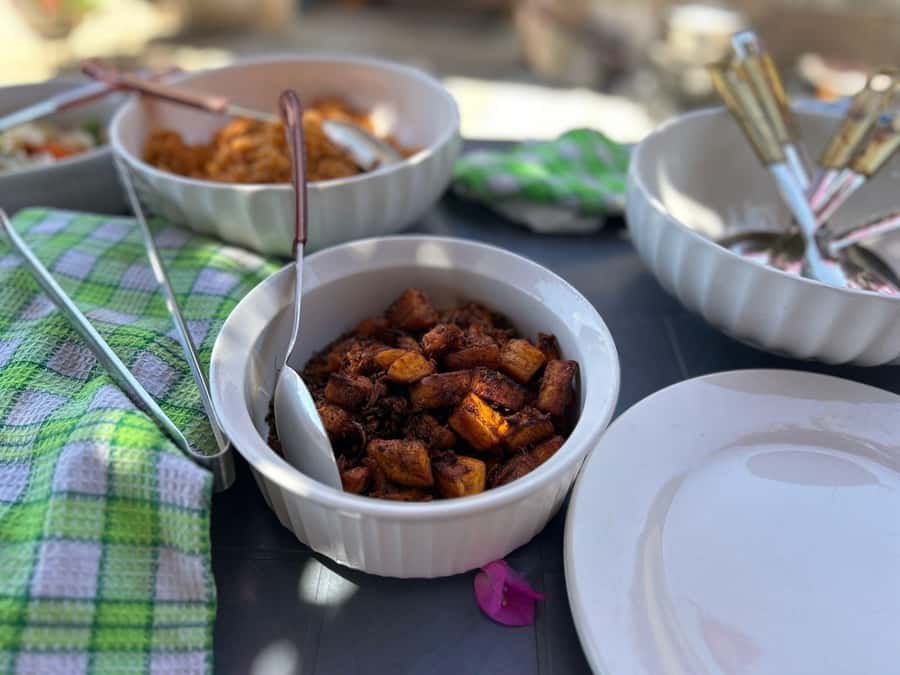
The available feedback is limited, with three five-star ratings, but the praise is quite consistent. Julian from Switzerland, who attended on August 14, 2024, described Auntie KK as fun and praised the tasty food and good atmosphere.
Ashley from the United States attended on January 24, 2024, and gave special attention to Auntie KK and her family. Ashley found them kind and welcoming, praised the food bite by bite, and said the class was an experience worth repeating.
That pattern helps you understand the main strength. People are responding first to the host and family atmosphere, then to the food. The class is likely best for you if warmth, conversation, and local contact matter as much as the recipe itself.
The feedback does not give details about group size, the exact dishes chosen, or the kitchen equipment. I would not assume a small private group or a particular menu without asking. The five-star record is encouraging, but the sample is small, so use it as a sign of strong personal service rather than proof that every preference will be met.
Is $185 a fair price?
At $185 per person, this is one of the more expensive ways to spend three hours on food in Accra. The price includes the class, all cooking ingredients, the food and drinks you consume, a professional local chef, and photo and video opportunities.
The real question is what kind of value you want. If you are looking for the cheapest way to eat Ghanaian food, this is not it. You could spend far less at a local food spot. If you want a guided activity that combines cooking, a meal, cultural context, and time with a local family, the price becomes easier to understand.
I would consider the cost worthwhile for someone who values personal hosting and wants to learn a dish well enough to make it again. It is less convincing for a strict budget traveler, a person who dislikes hands-on activities, or anyone who only wants to sample several foods without cooking.
The reserve-now-and-pay-later option can help if your schedule is still changing. You can also cancel up to 24 hours in advance for a full refund. Those terms reduce some booking risk, though they do not change the basic price.
Who will enjoy this Osu cooking class?
I would recommend the class to you if you:
- Want a direct connection with Ghanaian food and family life
- Enjoy cooking rather than only watching
- Like learning recipes you can try again at home
- Are interested in staple dishes such as jollof rice, banku, fufu, or red red
- Value a welcoming host and shared meal
- Want an activity that fits into a three-hour window in Accra
It may suit couples, solo visitors, families, and small groups, though the supplied information does not specify the group size or age policy. You can ask about the menu and participation needs before booking.
You may want to skip it if you are not comfortable arranging your own transport, if $185 feels too high for a short activity, or if you prefer a formal culinary school. The home setting is the reason to book, but it may also be the reason to choose another class.
Practical tips for a smoother visit
Save the meeting point details before you leave: Club 69 in Osu, with a white wall and blue gate across the street. This is more useful than relying on a general map pin alone.
Ask in advance which dishes are available. The cooking options include many Ghanaian favorites, but the information does not confirm one fixed menu. If you are especially interested in kelewele, groundnut soup, or banku and tilapia, make your preference clear.
Plan your return ride before the class ends. Hotel pick-up and drop-off are not included, although you can get a ride back to where you came from. English and Twi are offered, and the class is listed as wheelchair accessible.
Bring a willingness to participate. The point is to put your hands to work, so this is not the place to remain a passive observer. You will get more from the class if you ask questions, take note of the recipe, and pay attention to how the ingredients change as they cook.
Should you book Auntie KK’s cooking class?
Book it if you want more than a meal in Accra. Auntie KK’s class gives you a local host, hands-on preparation, Ghanaian recipes, and a shared table in one three-hour experience. The strongest reason to go is the warm family welcome, backed by repeated praise for Auntie KK’s kindness, good atmosphere, and delicious food.
Think carefully about the $185 price and the lack of included transportation. I would choose this class for a food-focused day in Osu when personal connection matters more than saving money. If that sounds like your kind of afternoon, reserve your place and arrive ready to cook.
FAQ
Where does the cooking class meet?
The meeting point is in front of Club 69 in Osu. Look for a white wall and a blue gate directly across from the Club 69 signboard.
How long does the cooking class last?
The class lasts three hours. Starting times vary, so you need to check availability for the date you want.
What is included in the price?
The price includes entry to the cooking class, ingredients, food and drinks, photo and video opportunities, and a professional local chef.
Is transportation included?
No. Hotel pick-up, hotel drop-off, and transportation are not included. You can arrange your own ride to the meeting point and get a ride back afterward.
Which languages are spoken?
The instructor offers the class in English and Twi.
Can I cancel or pay later?
You can cancel up to 24 hours in advance for a full refund. The reserve-now-and-pay-later option lets you book without paying immediately.
Just added in Accra
- Wli Waterfall And Tafi Monkey Sanctuary ( Volta Region)★ 5.0 · 1 review
- Traditional Beadmaking Workshop★ 5.0 · 1 review
- Private 9-Day Tour in Ghana★ 5.0 · 2 reviews
- Wli Waterfalls, Mount Afadjato & Tafi Atome Monkey Sanctuary★ 5.0 · 2 reviews
- Cape Coast and Elmina castle Day Trip★ 5.0 · 2 reviews
- Culinary for Social Change-Cooking Class★ 5.0 · 2 reviews
- Time with Nature★ 5.0 · 2 reviews
- Historical Day Tour to Cape Coast, Elmina and Kakum★ 5.0 · 3 reviews
Accra Tours, compared.


Experience the Beauty, History and the Culture Of Accra in a Day
Read our review →

Cape Coast, Elmina Castle & Kakum Park Day Tour
Read our review →

Browse the lists this tour appears in