
REVIEW · ACCRA TOURS
Authentic Ghanaian Cooking Class in Accra
Food tells Ghana’s story best. This five-hour Accra cooking class gives you a practical way to meet that story, with chef Adjei, also called AJ, guiding you through traditional recipes and cooking methods. I like the choice between visiting a local market for ingredients and meeting directly in the kitchen, and I like that you can take home all the food you prepare. The main drawback is the non-refundable booking policy, paired with a few serious complaints about communication and confirmation.
The class costs $100 per person and is private, so only your group takes part. That makes the price easier to justify for families or small groups who want personal instruction, though it is a lot for a cooking lesson if you mainly want a meal and a quick demonstration.
In This Review
- Key points to know before booking
- What this Accra cooking class is really like
- Starting at Summer Haven in Accra
- The optional market visit
- Learning Ghanaian dishes step by step
- Why the jollof rice gets so much attention
- Tuo Zaafi, waakye, stews, and sobolo
- Lunch, tasting, water, and food to take home
- Vegetarian cooking and dietary planning
- Five hours on your feet
- Is $100 per person a fair price?
- The mixed picture on service and communication
- Who will enjoy this class most?
- Should you book the Accra Ghanaian cooking class?
- FAQ
- Where does the cooking class begin and end?
- How long does the experience last?
- Can I visit a local market before cooking?
- Are vegetarian options available?
- What is included in the price?
- Can I cancel or change my booking?
Key points to know before booking
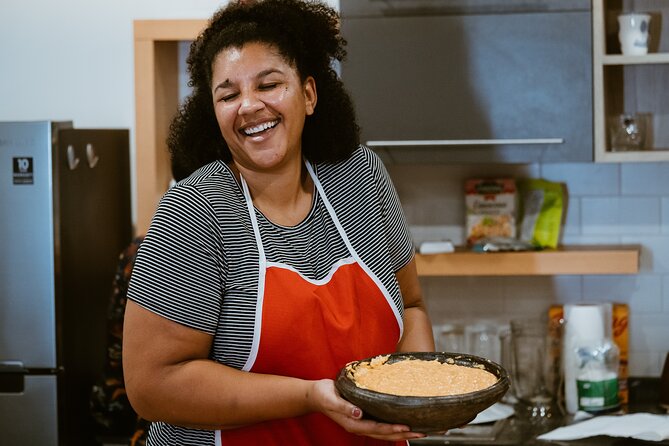
- Chef Adjei’s patient teaching: His step-by-step style receives the strongest praise, especially from people new to Ghanaian cooking.
- Two ways to begin: You can shop for fresh ingredients at a local market or go straight to the kitchen.
- Popular dishes: Past classes have included jollof rice, waakye, Tuo Zaafi, fried rice, chicken and goat meat stew, and sobolo.
- Private format: Your group participates alone, which allows more room for questions and dietary requests.
- A full meal to take home: Bottled water, tasting, lunch, ingredients, and cooking instructions are included.
- Check your confirmation carefully: One serious complaint involved payment without receiving tickets or operator contact, so save all booking details and confirm before the day.
What this Accra cooking class is really like
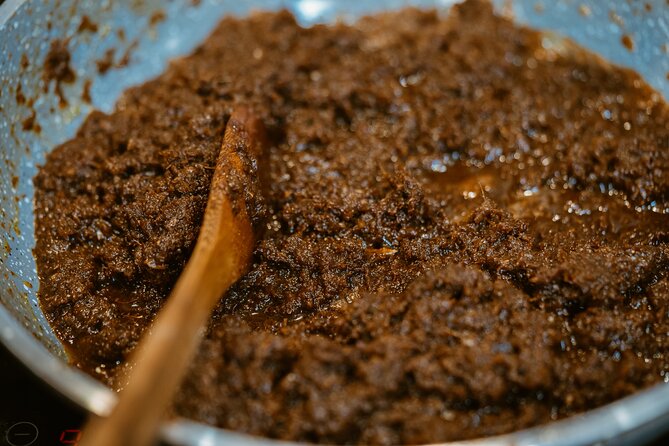
This is not simply a restaurant meal with a short kitchen show. The plan is to put you to work, with ingredients provided and Chef Adjei explaining each stage as you cook. You should expect to stand throughout the class, so comfortable shoes matter more here than fancy clothes.
The five-hour length gives the class room to feel like a real food session rather than a rushed tourist activity. You can learn how ingredients are prepared, how seasoning is built, and how Ghanaian dishes come together over heat. The exact menu can vary, but the food connected with this class includes some of Ghana’s best-known dishes.
I especially like the way the experience can serve two kinds of people. If you want a stronger connection to daily food life in Accra, choose the market option. If you have limited time, or the heat and movement of a market do not appeal to you, meeting at the kitchen keeps the focus on cooking.
The private setup is another useful feature. You are not trying to hear instructions over a large group, and you can ask Chef Adjei to slow down or explain a technique again. That matters when you are learning dishes that may use unfamiliar ingredients, textures, and cooking steps.
More cooking classes in Accra:
- Home Cooking Class by Auntie K
★ 5.0 · 62 reviews - Local Ghanaian Cooking Class in Accra to help support wellness community center
★ 4.5 · 22 reviews - Authentic Ghanaian Cooking Lessons and Take Out Services.
★ 5.0 · 9 reviews
Starting at Summer Haven in Accra
The meeting point is Summer Haven, at JQ5M+5VC, Accra, Ghana. The activity ends at the same point. The location is near public transportation, but the information provided does not specify a hotel pickup service, so you should plan to reach the meeting point yourself.
The listed operating hours run from 5:30 AM to 8:00 PM, Monday through Sunday, for the published period from April 8, 2024, through June 18, 2026. Those are broad opening hours, not a promise that every five-hour class begins at any time you choose. Your confirmed start time is the one that matters.
I would save the address, booking confirmation, and the operator’s contact details on your phone. This is especially important because one customer reported being charged $200 without receiving tickets or clear contact information. That complaint does not tell us how common the problem is, but it is enough reason to verify the arrangements before setting out.
The optional market visit
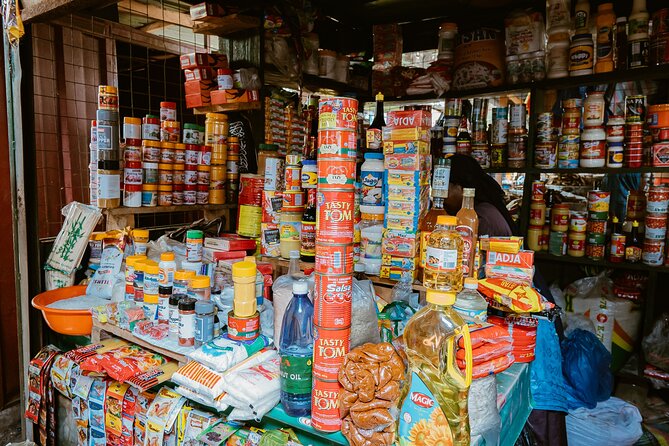
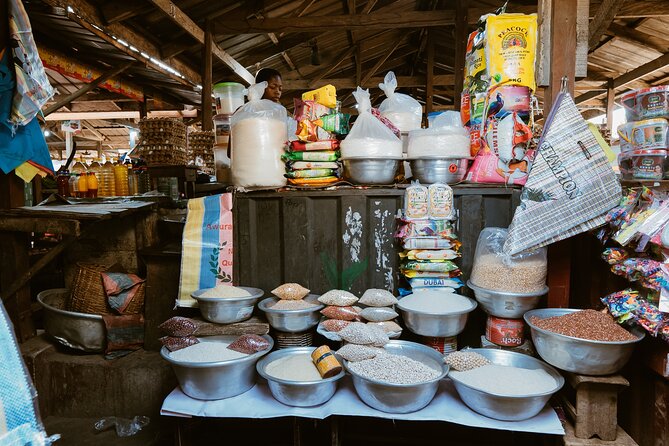
You can choose to join the group at a local market before the cooking starts. This part is valuable because it links the finished plate to the raw ingredients. Instead of seeing Ghanaian food as a list of dishes on a menu, you get a chance to see what goes into it before the pots and pans appear.
The market visit is optional, so it should not be treated as a guaranteed part of every booking. Ask in advance how the timing works, where you will meet, and whether the market visit changes the class start time.
This option suits curious cooks who enjoy food shopping as much as food preparation. It may be less appealing if you want a quiet, direct route to the kitchen. Accra can be hot, and five hours already makes this a substantial activity. The market choice is best for people who want the wider food experience, not simply a recipe lesson.
Learning Ghanaian dishes step by step
The class is built around instruction from Chef Adjei, who has more than eight years of culinary experience. The most consistent praise focuses on his patience, clear explanations, and willingness to guide people through the process one stage at a time.
That teaching style is useful for beginners. Ghanaian cooking depends on judgment as well as written measurements, and a good instructor can explain what to look for as food cooks. You are not only copying a recipe. You are learning how the dish should look, smell, and taste as it develops.
Several dishes have been linked with the class:
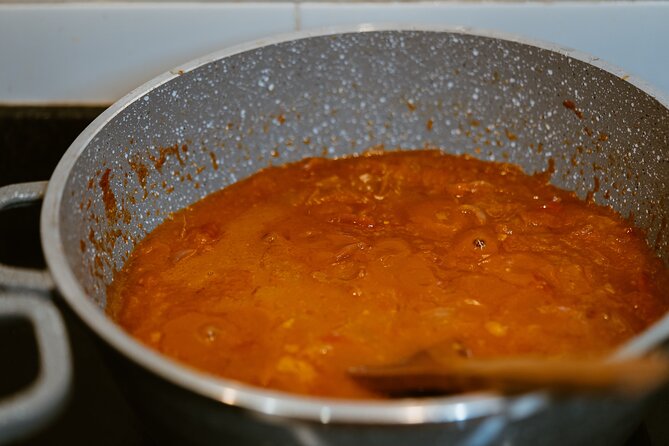
- Ghanaian jollof rice: This is one of the most frequently praised results. The rice is described as moist and full of flavor.
- Waakye: A traditional Ghanaian dish that gives you a different view of rice-based cooking.
- Tuo Zaafi: A northern Ghanaian staple that provides a chance to prepare something less familiar than jollof.
- Fried rice: A familiar entry point for people who want Ghanaian flavors in a recognizable format.
- Chicken and goat meat stew: These add a hearty element to the meal and show how stews are used in Ghanaian cooking.
- Sobolo: A Ghanaian hibiscus drink that gives the class a refreshing drink to prepare alongside the food.
The menu is not clearly fixed in the information provided, so do not assume you will prepare every dish listed above in one session. Ask what is planned for your date, especially if one recipe is the main reason you are booking.
More things to do in Accra:
- The Cape Coast Day Tour
★ 5.0 · 525 reviews - Experience the Beauty, History and the Culture Of Accra in a Day
★ 5.0 · 323 reviews - The Cape Coast Tour
★ 5.0 · 177 reviews - From Accra: Cape Coast, Elmina Castle & Kakum Park Day Tour
★ 4.6 · 144 reviews
Why the jollof rice gets so much attention

Jollof rice is often the dish people most want to learn in a Ghana cooking class. Here, it receives especially strong praise for its seasoning, moisture, and full flavor. That makes it a good sign for anyone hoping to learn a dish they can repeat at home.
Still, the value of the class is not only the final taste. Jollof is a useful lesson in timing and balance. You need to pay attention to the base, the seasoning, the rice, and the cooking process. Chef Adjei’s patient, step-by-step approach should help you understand the method rather than simply watch him make it.
If jollof is your priority, ask whether it is included in your session before paying. The available information names several possible dishes but does not promise a set menu.
Tuo Zaafi, waakye, stews, and sobolo
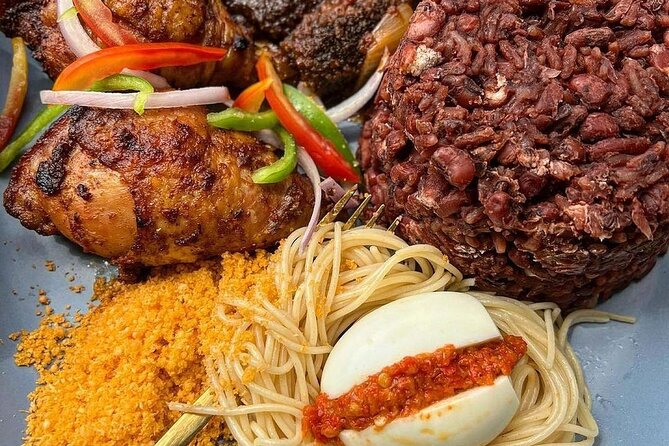
A class that includes Tuo Zaafi gives you a chance to go beyond the most familiar Ghanaian dishes. It is a traditional meal, and preparing it can help you understand the variety of Ghanaian food traditions. For someone of Ghanaian background who feels out of touch with traditional home cooking, this type of lesson may have special value.
Waakye offers another important food experience. Along with jollof, it has been praised as part of the class menu and gives you a different way to think about rice, beans, and accompaniments.
Chicken and goat meat stew can make the session feel like a full Ghanaian lunch rather than a single-recipe workshop. Sobolo adds a drink to the cooking process, while fried rice may be a comfortable choice for anyone who is still learning the flavor profile of Ghanaian food.
The drawback is that the full recipe list is not stated in advance. Your experience may depend on the menu selected for your group, so direct communication is worth the effort.
Lunch, tasting, water, and food to take home
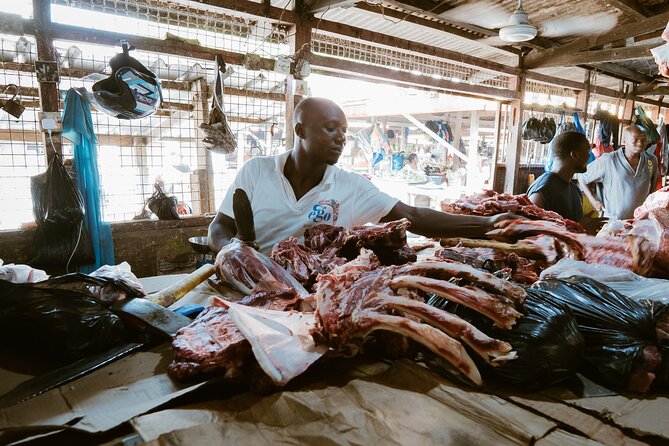
The price includes ingredients, bottled water, food tasting, cooking instructions from the chef, and lunch. Most useful of all, you are allowed to take home all the food you prepare.
That take-home policy changes the value of the experience. You are not paying for a meal that disappears after one sitting. You also leave with a practical result from the lesson, which may give you a chance to taste the dishes again and share them with someone else.
The class does not simply promise a demonstration followed by a small sample. You should have food to taste during the session and a prepared meal connected to the cooking work. Even so, the quantity and packaging details are not provided, so do not assume how much food you will take home or what containers will be available.
Tips are not included. Carry some extra money if you feel the instruction and service deserve it.
Vegetarian cooking and dietary planning
Vegetarians are welcome, and vegetarian options are available. This is an important strength because Ghanaian cooking offers more than meat-based stews, but the exact vegetarian menu is not specified.
Tell the provider about your preference before the class, not after the ingredients have been purchased. Ask which dishes will be prepared without meat and whether the same cooking surfaces or pots will be used. The class confirms that vegetarian choices are possible, but it does not spell out separate preparation arrangements.
The same advice applies to allergies and other dietary needs. The supplied information only confirms vegetarian options, so you should not assume that every restriction can be handled.
Five hours on your feet
Cooking for five hours is a serious block of time. The class includes standing throughout the cooking session, so it is not ideal if you need frequent seated breaks or have difficulty remaining on your feet.
You will want comfortable shoes and light clothing suitable for a warm kitchen. The experience is described as involving physical activity, but no strenuous exercise is indicated. The main demand is simply staying engaged and upright while preparing food.
The long duration is useful for people who want real instruction. You have time for preparation, cooking, tasting, questions, and the meal itself. It may feel too long for someone looking for a quick cultural stop between other Accra plans.
Is $100 per person a fair price?
At $100 per person, this is not a budget lunch. Its value depends on how much you want from the session.
The price makes more sense if you are booking a private class, want direct attention from Chef Adjei, hope to learn several dishes, and value taking the finished food home. Ingredients, water, lunch, tasting, and cooking instructions are included, so you are not paying an extra fee for the basic parts of the lesson.
For a small private group, the cost can be reasonable because you are buying time with the chef rather than joining a crowded demonstration. For one person who mainly wants to eat Ghanaian food, a restaurant meal would likely cost less and require far less time.
The class also has educational value that a meal cannot provide. You can ask why ingredients are used, watch the process closely, and leave with methods you can try again. That is the part of the price I would focus on when deciding.
The mixed picture on service and communication
The strongest feedback centers on Chef Adjei himself. He is described as warm, approachable, thorough, patient, and passionate about Ghanaian recipes. Those qualities matter in a hands-on class, where a cold or rushed teacher can make even good food feel like work.
The food also receives clear praise, especially jollof rice, waakye, Tuo Zaafi, stew, fried rice, and sobolo. Several comments describe the class as a highlight of a Ghana visit, while one person with Ghanaian roots found it useful for reconnecting with traditional cooking.
There is a serious negative side. One customer described the class as poor and said it felt like much less of a cooking lesson than expected. Another reported being charged $200, receiving no tickets, and getting no useful help from the operator or booking service.
Because the overall score is listed as 4.4 from 11 ratings, the positive experience appears to be more common than the negative one, but the complaints should not be brushed aside. Confirm the reservation, price, meeting point, and operator contact in writing. Keep proof of payment, and do not rely only on a vague booking screen.
The non-refundable policy adds risk. If you cancel or request a change for any reason, the amount paid will not be returned. Book only when your Accra schedule is firm.
Who will enjoy this class most?
I would recommend it most strongly to:
- People who enjoy cooking as an activity, not just eating
- Small private groups who want personal instruction
- Visitors keen to learn Ghanaian jollof or other traditional dishes
- Anyone interested in connecting market ingredients with home-style cooking
- Vegetarians who confirm the menu before booking
- People who like leaving an activity with food and recipes
I would be more cautious if you have limited time, cannot stand for long periods, need flexible cancellation, or want a fixed menu guaranteed in advance. The class works best when you are willing to spend half a day with the process.
Should you book the Accra Ghanaian cooking class?
Book it if you want a private, hands-on lesson with a patient chef and a substantial meal to take home. Chef Adjei’s teaching style and the focus on dishes such as jollof, waakye, Tuo Zaafi, stews, and sobolo are the strongest reasons to go.
Before paying, confirm the exact menu, start time, meeting details, vegetarian arrangements, and the final price. The experience can offer real value, but the non-refundable terms and reported communication problem mean you should not book casually.
For a food-focused day in Accra, I would consider it a good choice once those details are confirmed. You are paying for instruction, ingredients, a private setting, and food you can enjoy later, not just for lunch.
FAQ
Where does the cooking class begin and end?
The class starts at Summer Haven, JQ5M+5VC, Accra, Ghana. It ends back at the same meeting point.
How long does the experience last?
The cooking class lasts approximately five hours.
Can I visit a local market before cooking?
Yes. You can choose to join the group at a local market to purchase fresh ingredients, or meet directly at the kitchen for the lesson.
Are vegetarian options available?
Yes. Vegetarian options are available, but the specific dishes and preparation details should be confirmed before booking.
What is included in the price?
The $100 price includes bottled water, lunch, food tasting, cooking instructions from the chef, and the ingredients used for cooking. You can take home all the food prepared during the class.
Can I cancel or change my booking?
No. The experience is non-refundable and cannot be changed for any reason. Cancellation or an amendment request does not result in a refund.
Just added in Accra
- Wli Waterfall And Tafi Monkey Sanctuary ( Volta Region)★ 5.0 · 1 review
- Traditional Beadmaking Workshop★ 5.0 · 1 review
- Private 9-Day Tour in Ghana★ 5.0 · 2 reviews
- Wli Waterfalls, Mount Afadjato & Tafi Atome Monkey Sanctuary★ 5.0 · 2 reviews
- Cape Coast and Elmina castle Day Trip★ 5.0 · 2 reviews
- Culinary for Social Change-Cooking Class★ 5.0 · 2 reviews
- Time with Nature★ 5.0 · 2 reviews
- Historical Day Tour to Cape Coast, Elmina and Kakum★ 5.0 · 3 reviews
Accra Tours, compared.


Experience the Beauty, History and the Culture Of Accra in a Day
Read our review →

Cape Coast, Elmina Castle & Kakum Park Day Tour
Read our review →

Browse the lists this tour appears in