
REVIEW · NAMING CEREMONIES
Kumasi Heritage Tours And Naming Ceremony In A Day
Culture comes alive at the loom. This private 10-hour outing links Adanwomase kente weaving, a working cocoa farm, Ntonso Adinkra cloth, and a traditional Ghanaian naming ceremony, giving you more than a quick look from a roadside stop. I especially like the hands-on weaving and cloth making, plus the chance to receive a Ghanaian name based on your day of birth.
The private vehicle and guide keep the day simple, with pickup and return transport included. I also like the human side of the experience: the weaving center is a working community, and the young boys seen concentrating on their craft showed real care and dedication. The main consideration is the price, $256.42 per person, and lunch is not included. You should also confirm your exact pickup location, since the information lists Accra while the tour title and stops point toward Kumasi.
In This Review
- Key points at a glance
- What this full-day Ashanti outing is really about
- Starting at 7:00 a.m. keeps the day workable
- Adanwomase puts traditional kente to work
- The cocoa farm adds a working rural view
- The naming ceremony makes the visit personal
- Ntonso explains Adinkra through making
- Why a private guide matters here
- Price, lunch, and what you get for $256.42
- Who will get the most from this day
- Booking details and cancellation timing
- Should you book Kumasi Heritage Tours?
- FAQ
- Where does the tour start?
- How long does the experience last?
- Is this a private tour?
- What happens at Adanwomase?
- What happens at Ntonso?
- Is lunch included?
- What is the cancellation policy?
Key points at a glance
- Your name comes from your birthday: The naming ceremony gives you a local Ghanaian name linked to the day you were born.
- Adanwomase puts kente in your hands: You learn how traditional cloth is made rather than only seeing finished pieces.
- A working cocoa farm adds a farm visit: This is a behind-the-scenes stop that connects Ghanaian culture with agriculture.
- Ntonso lets you make Adinkra cloth: You create your own cloth while learning about traditional symbols.
- A private tour changes the pace: Only your group takes part, so the day can feel more personal than a large coach trip.
- Plan for a long morning: Pickup begins at 7:00 a.m., and the full experience lasts about 10 hours.
What this full-day Ashanti outing is really about
This is not a tour built around one major monument. Its appeal comes from the connections between several living traditions. You move from cotton and thread to cocoa farming, then from woven cloth to stamped Adinkra designs and a ceremony that gives you a personal place within the day.
That makes the experience useful if you want context, not just photographs. At Adanwomase, you can see how kente cloth is produced in a community setting. At Ntonso, you can work with Adinkra symbols and make something yourself. The naming ceremony adds a personal touch that a standard cultural visit usually lacks.
The day is private, which matters here. You are not being moved through with a large crowd and a fixed public schedule. Your guide can focus on your group and explain what you are seeing as you go. The exact level of discussion will depend on the guide, but the format gives you a better chance to ask questions and spend time where your interest is strongest.
The tour is listed at $256.42 per person. That is a serious price, so I would judge it as a private cultural day rather than a simple village transfer. The value comes from combining transport, a private guide, two craft communities, a farm visit, a ceremony, and activity fees in one booking. If you are already nearby and can arrange your own transport, the price may feel high. If you want a planned day without navigating between rural stops, it becomes easier to justify.
More naming ceremony experiences in Accra:
- The Ancestral Naming Ceremony and Home Coming Experience
★ 5.0 · 30 reviews - Traditional Naming Ceremony and Boat Cruise Experience
★ 5.0 · 15 reviews - Naming Ceremony and Heritage Homecoming Experience for Diasporas
★ 4.5 · 15 reviews
Starting at 7:00 a.m. keeps the day workable
The early start is practical. With roughly 10 hours available, a 7:00 a.m. departure leaves enough time for two main cultural stops without turning each visit into a rushed photo break.
Round-trip transport is included in an air-conditioned vehicle. That removes the need to work out local connections between Adanwomase and Ntonso, two places you may not want to reach on your own. It also gives you a private base during a long day.
One detail needs checking before you book: the supplied location says Accra, while the experience title refers to Kumasi and the listed villages are part of the Ashanti cultural visit around Kumasi. The meeting information only gives a 7:00 a.m. start and says pickup is offered. Ask the provider to confirm the pickup city, exact address, and whether your accommodation qualifies for pickup.
You should also expect an early start and a full day. This is not a casual half-day outing. If you want time to rest or shop later, keep your evening free.
Adanwomase puts traditional kente to work
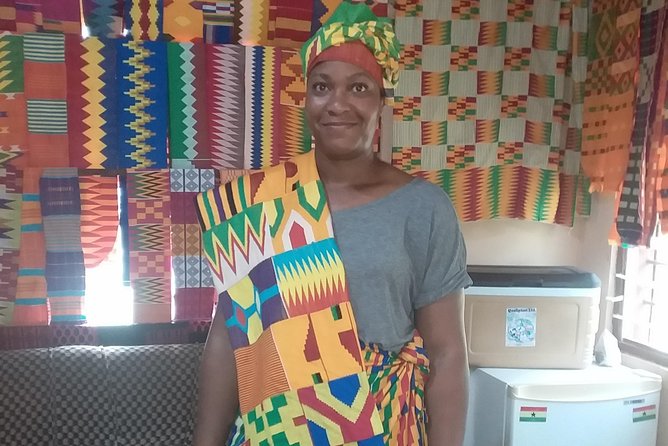
The first major stop is Adanwomase, a village known for kente weaving. Kente is not simply a colorful souvenir cloth. Its patterns, colors, and careful construction carry cultural meaning, and the weaving itself demands patience and repeated handwork.
The useful part of this visit is the chance to see the process at a community kente center. You can watch the cloth being made and learn how the threads are handled on the loom. The setting is a working textile center, not just a display arranged for tourists, so the people and the craft are central to the visit.
You may also get hands-on time with the weaving process. The tour specifically highlights learning to weave your own traditional cloth. That gives you a better sense of the skill involved. A finished strip of kente can look effortless from a distance, but the careful work at the loom tells a different story.
I would pay close attention to the weavers rather than treating this as a quick shopping stop. The strongest human detail connected with this experience is the dedication of the young boys working at the looms. Their concentration helps you see weaving as a practiced trade passed through the community, not a staged activity made in a few minutes.
The stop is allocated about two hours, including the farm and ceremony. That is enough for an introduction and practical activity, but not enough for a lengthy textile course. If you want to buy cloth, ask about prices and whether pieces are locally made before committing. The available information confirms the weaving visit, but it does not state that purchases are included or that shopping is required.
The cocoa farm adds a working rural view
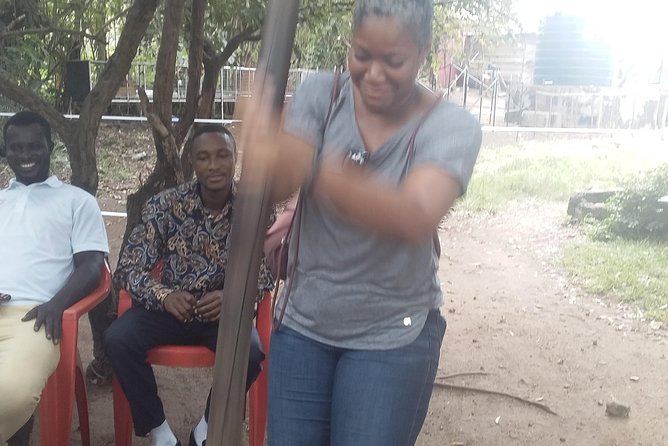
Adanwomase also includes a visit to a local cocoa farm. This broadens the day beyond textiles and gives you a look at another part of Ghanaian work and production.
The word working matters. You are not only visiting a museum display about cocoa. You are going to a farm, where the value lies in seeing agriculture as part of everyday community life. The tour description does not specify the season, crops in view, or exact farm activities, so you should treat this as an introduction rather than a full agricultural lesson.
Still, the farm visit helps balance the day. Kente shows the skill of turning thread into cloth. Cocoa shows the land-based work behind one of Ghana’s best-known products. Together, the stops give you a broader picture of local livelihoods.
Since lunch is not included, do not confuse the farm visit with a meal stop. The information does not promise food, tastings, or refreshments. Plan accordingly and ask the provider how lunch fits into the day before departure.
More history tours in Accra:
- Experience the Beauty, History and the Culture Of Accra in a Day
★ 5.0 · 323 reviews - Ghana Heritage Tours – Beyond The Return
★ 5.0 · 36 reviews - 10 Days Ghana Cultural and Heritage Trip
★ 5.0 · 31 reviews - Cape Coast Historical Day Tour
★ 5.0 · 24 reviews
The naming ceremony makes the visit personal
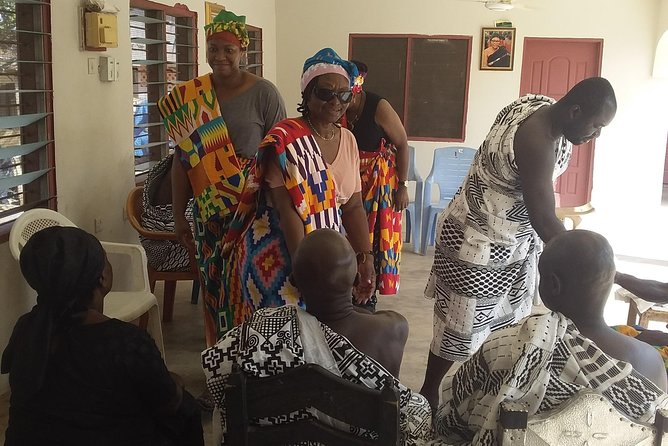
The traditional Ghanaian naming ceremony is the most unusual part of the experience. During the ceremony, you receive a local name based on the day of your birth.
That detail changes the tone of the tour. You are not only observing a custom from the outside. You take part in a small rite connected to identity and community. The ceremony gives the craft visits a personal thread, and your name becomes a lasting reminder of the day.
The information does not list the ceremony’s exact steps, the names used for each birth day, or who conducts it. Your guide or local hosts should explain the meaning when you arrive. I would ask questions respectfully and listen carefully to the explanation rather than treating the moment as a novelty.
The ceremony is included within the Adanwomase visit, which lasts about two hours along with the cocoa farm and weaving center. Because several activities share that time, the ceremony may be relatively brief. That is not a flaw, but it is worth understanding before you book. This is an introduction to the tradition, not a full-day family ceremony.
Ntonso explains Adinkra through making
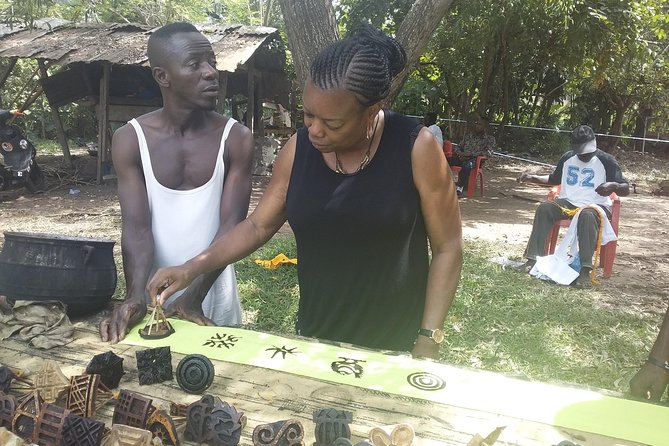
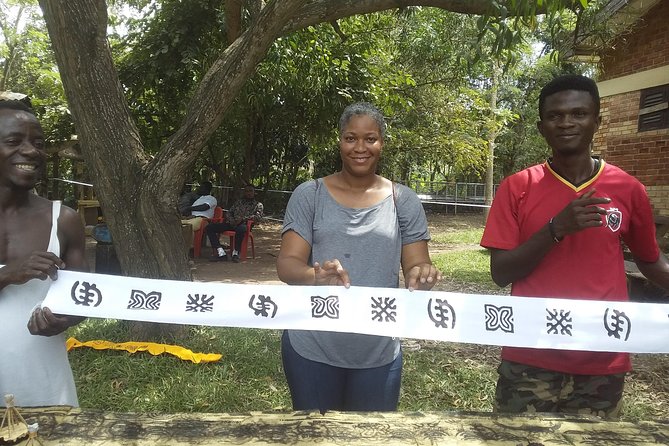
The second main stop is Ntonso, an Adinkra cloth-making village. Here you learn about Adinkra, described as an ancient traditional symbol system, and take part in making your own cloth.
Adinkra designs use symbols to express ideas and values. That gives the craft a different feel from simply decorating fabric. The important question is not only how the pattern looks, but what it means and why it is used.
You get a practical lesson rather than a passive demonstration. Making your own Adinkra cloth helps you understand the steps and the care behind the finished product. The activity fee is included, so you do not need to budget separately for the advertised cloth-making session.
The stop lasts about two hours. That should give you enough time to hear the background, watch the method, and try the activity yourself. The information does not say how large your finished cloth will be, which materials are used, or whether it can be taken home, so ask before you begin if those details matter to you.
Ntonso is especially suited to people who like to make something with their hands. Children and adults can both find a clear reward in leaving with an object connected to the place. The quality of your finished work will depend on the activity itself, but the value is in understanding the process, not producing a professional textile.
Why a private guide matters here
A private tour means only your group takes part. That can make a real difference during a cultural visit, where timing and questions affect what you take away.
You can ask for clarification when a symbol, ceremony, or weaving method is unfamiliar. You can also spend more time watching the loom or the cloth-making process instead of trying to keep up with a large group. The tour specifically promises personalized attention from a private guide.
No guide name is provided, so I cannot tell you to request a particular person. The provider is Bigbentours1gh. I would confirm the guide’s language, pickup details, and the order of the stops before the day begins.
The private format also helps if your group has mixed interests. One person may care most about kente, another about cocoa, and another about the naming ceremony. A private guide has more room to respond to those priorities than a standard group excursion.
Still, private does not mean unlimited. The day remains about 10 hours, with two-hour visits listed for each village. You should expect a structured day with a set route, not a completely open-ended exploration.
Price, lunch, and what you get for $256.42
At $256.42 per person, this tour costs more than a basic transfer or short village visit. I would consider it good value only if you want the complete package: private transport, a guide, several cultural activities, and no need to arrange the route yourself.
The price includes an air-conditioned vehicle, all fees and taxes, and the included Adinkra activity. The information also says admission to the Adanwomase stop is free, though the guide, transport, and organization still form part of the overall cost.
Lunch is not included. That is the clearest extra expense. Since the day begins at 7:00 a.m. and runs for about 10 hours, you should ask when and where you can eat. Do not assume the cocoa farm or either village includes food.
I would recommend this for a small group that values convenience and personal attention. If two or more people share the private experience, the total cost may feel more reasonable than it does for one person alone. For a solo visitor on a strict budget, the price deserves closer thought.
Who will get the most from this day
I think this tour suits you best if you want to meet cultural traditions through work and participation. You should enjoy it if you like textiles, local crafts, agriculture, or learning the meaning behind symbols.
It also fits first-time visitors who do not want to manage transport between rural communities. Pickup, an air-conditioned vehicle, and return transport remove much of the planning burden.
Families may appreciate the hands-on parts, especially making Adinkra cloth. The private format can make the day easier to manage for a group with different ages, though the early start and 10-hour length may be tiring for very young children.
This is less suitable if you want grand architecture, nightlife, or a relaxed city tour. It is also not the best choice if you dislike demonstrations, craft activities, or long days on the road. The appeal is human contact and practical learning, not a list of major monuments.
Most people can participate, according to the tour information. Specific accessibility details are not provided, so ask about walking, vehicle access, and the physical setup of the weaving and farm visits if those points affect your decision.
Booking details and cancellation timing
Confirmation is provided when you book. The activity is listed as suitable for most people and available as a private experience.
Free cancellation applies if you cancel at least 24 hours before the local start time. Canceling or changing the booking within 24 hours means no refund, so check the local time and pickup details before that deadline.
The tour is commonly booked well ahead, with an average booking point of about 50 days before the visit. That suggests you should not leave it until the last moment if your dates are fixed, especially because the experience is private.
Should you book Kumasi Heritage Tours?
Book it if you want a full cultural day built around people making things. The kente lesson, cocoa farm, naming ceremony, and Adinkra activity work well together, and the private vehicle keeps the logistics under control.
I would book this especially for a couple, family, or small group willing to pay for a personal guide and direct access to local crafts. The strongest part is the chance to take part, not simply look. The naming ceremony gives the day an unusual personal memory, while the young weavers’ focus adds a grounded human detail.
Pause before booking if $256.42 feels high, if you need lunch included, or if your schedule cannot handle a 7:00 a.m. start and 10-hour day. Most important, confirm whether pickup is in Accra or Kumasi, since the supplied location details do not fully agree.
FAQ
Where does the tour start?
The listed start time is 7:00 a.m., and pickup is offered. The location information says Accra, while the tour title refers to Kumasi, so confirm the exact pickup city and address with Bigbentours1gh.
How long does the experience last?
The tour lasts approximately 10 hours.
Is this a private tour?
Yes. Only your group participates, and a private guide provides personalized attention.
What happens at Adanwomase?
You visit a kente weaving village, see a community weaving center, visit a local cocoa farm, learn how kente cloth is made, and take part in a traditional naming ceremony.
What happens at Ntonso?
You learn about Adinkra cloth and its traditional symbols, then make your own Adinkra cloth. The activity fee is included.
Is lunch included?
No. Lunch is not included in the tour price.
What is the cancellation policy?
You can cancel at least 24 hours before the experience start time for a full refund. Cancellations and changes made within 24 hours are not refunded or accepted.
Just added in Accra
- Wli Waterfall And Tafi Monkey Sanctuary ( Volta Region)★ 5.0 · 1 review
- Traditional Beadmaking Workshop★ 5.0 · 1 review
- Private 9-Day Tour in Ghana★ 5.0 · 2 reviews
- Wli Waterfalls, Mount Afadjato & Tafi Atome Monkey Sanctuary★ 5.0 · 2 reviews
- Cape Coast and Elmina castle Day Trip★ 5.0 · 2 reviews
- Culinary for Social Change-Cooking Class★ 5.0 · 2 reviews
- Time with Nature★ 5.0 · 2 reviews
- Historical Day Tour to Cape Coast, Elmina and Kakum★ 5.0 · 3 reviews
Naming Ceremonies, compared.
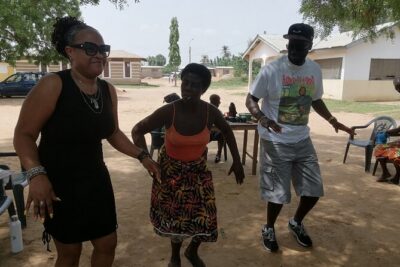
The Ancestral Naming Ceremony and Home Coming Experience
Read our review →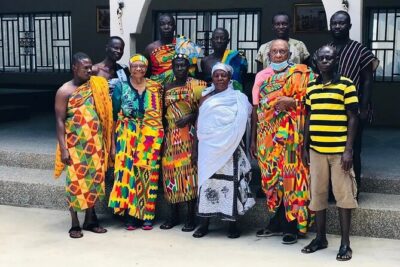
Naming Ceremony and Heritage Homecoming Experience for Diasporas
Read our review →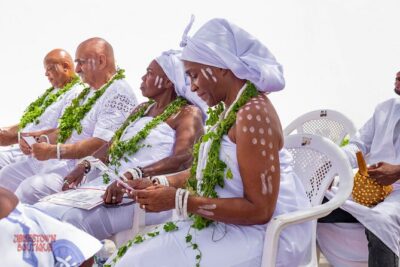
Traditional Naming Ceremony and Boat Cruise Experience
Read our review →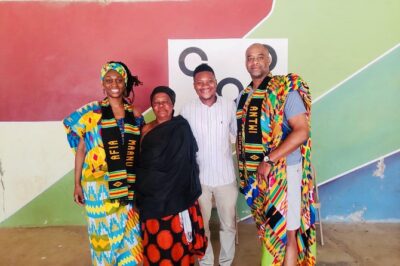
Traditional naming ceremony For African Diasporas in Kumasi
Read our review →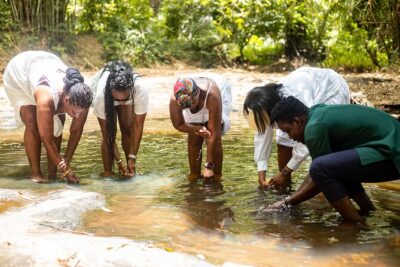
Naming Ceremony, Assin Manso Slave River and Cape Coast Castle
Read our review →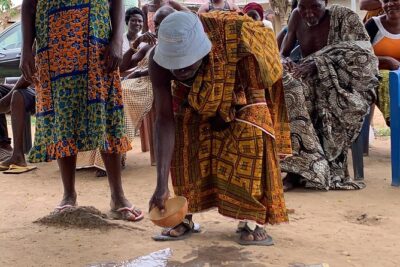
Cultural Village Tour: Traditional Naming Ceremony
Read our review →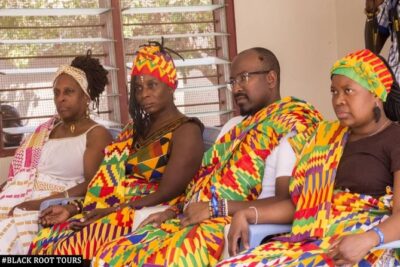
Traditional Naming Ceremony For African Americans In Kumasi
Read our review →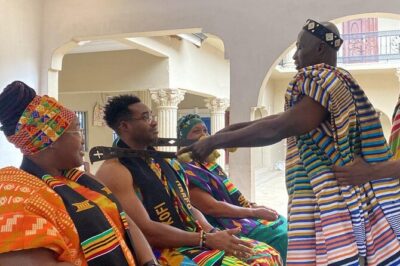
Full Day Tour with Traditional Naming Ceremony in Kumasi
Read our review →Browse the lists this tour appears in