
REVIEW · NAMING CEREMONIES
Traditional Naming Ceremony For African Americans In Kumasi
A new name can change how you see Ghana. This four-hour private experience gives African Americans a personal connection to Asante culture through a traditional naming ceremony, with a name selected according to your birth day. I like the private setting and the chance to receive both a woven Kente script and a certificate, though admission fees at the cultural stops and personal shopping costs are not included.
I also like that lunch, fuel, and an air-conditioned vehicle are covered in the $180 price. The main consideration is emotional: this is not simply a sightseeing outing. If you want time to reflect on family roots and identity, it may be deeply moving. If you prefer a quick, facts-only tour, the ceremony may feel more personal and serious than expected.
In This Review
- Key points to know before booking
- Why this Kumasi ceremony feels different from a standard tour
- The 9 a.m. start and private vehicle
- Ntonso Adinkra village and the language of symbols
- Adanwomase Kente weaving and a cocoa farm visit
- The naming ceremony and the keepsakes you take home
- How emotional should you expect the experience to be?
- What the $180 price really covers
- Who will get the most from this experience?
- Practical advice for a smoother morning
- Should you book the Kumasi naming ceremony?
- FAQ
- How long does the traditional naming ceremony experience last?
- What time does the activity start?
- Is pickup available?
- What is included in the $180 price?
- Are admission fees at Ntonso and Adanwomase included?
- Is this a private tour?
- Can I cancel for a full refund?
Key points to know before booking
- The ceremony is built around your birth day: Your new name is selected from the Asante cultural naming tradition, giving the experience a personal focus.
- You receive physical keepsakes: A woven Kente script and certificate help mark the occasion beyond the day itself.
- Maclean Afful leads the experience: His patient, kind approach has been praised, especially during emotional parts of the ceremony.
- Two major craft stops are included: You visit Ntonso for Adinkra cloth stamping and Adanwomase for Kente weaving.
- Lunch and private transport are included: The air-conditioned vehicle, fuel, and meal make the half-day easier to manage.
- The tour suits small groups: Only your own party participates, which matters for a meaningful family or personal ceremony.
Why this Kumasi ceremony feels different from a standard tour
Many Kumasi outings focus on markets, royal sites, or craft production. This one puts your identity at the center. The ceremony is intended for African Americans visiting Ghana, including people staying in Kumasi, Cape Coast, or Accra.
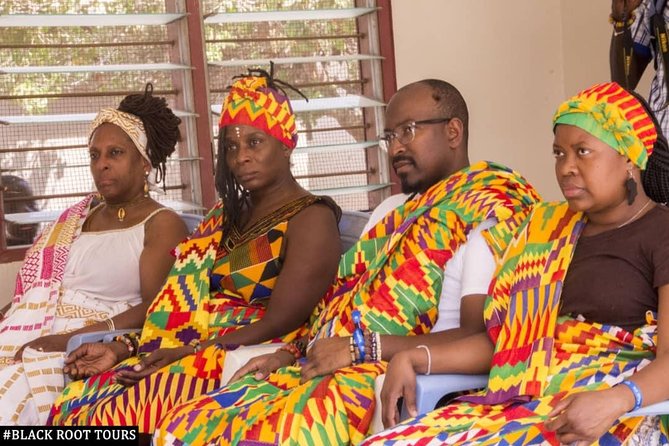
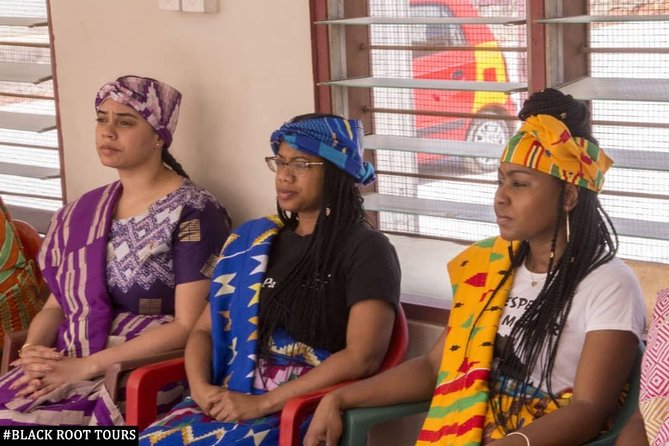
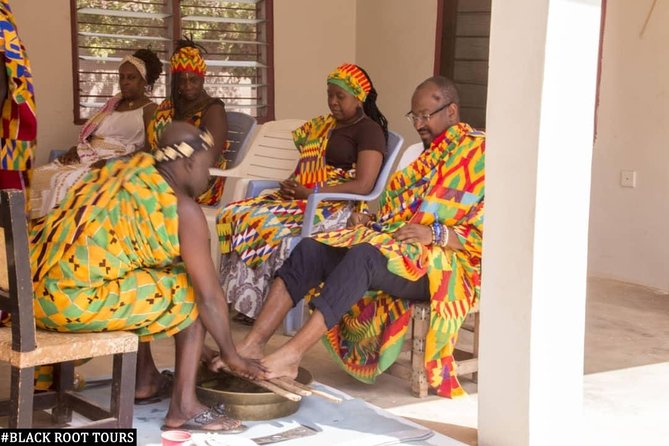
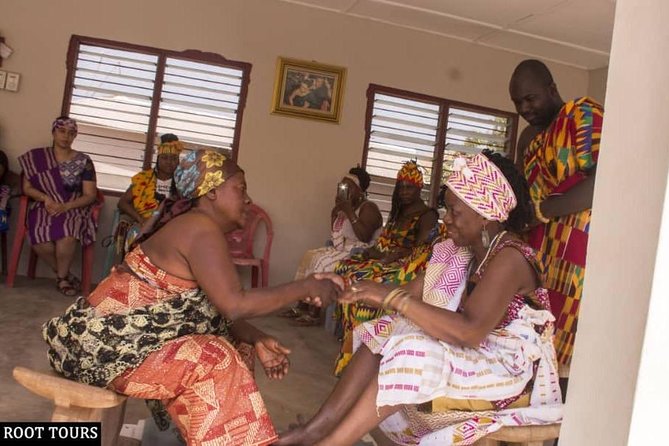
The key moment is receiving an Asante name connected to the day of your birth. That gives the activity a personal link to local custom rather than making you a passive observer. You are not simply watching a performance and moving on to the next stop. You are taking part in a formal cultural experience with a name, a presentation, and a certificate.
The emotional weight can be considerable. One participant described being named Abena Agyemang after the chief’s wife, who had passed away. That detail shows how personal the ceremony can become, though you should not assume the same naming story will apply to every booking.
Maclean Afful is also an important part of the experience. Comments about his patience, kindness, and ability to guide people through an emotional day suggest that his role goes beyond driving between locations. If you have questions about the ceremony or feel unsure about what to expect, having a calm guide matters.
More naming ceremony experiences in Kumasi:
- Traditional naming ceremony For African Diasporas in Kumasi
★ 5.0 · 10 reviews - Full Day Tour with Traditional Naming Ceremony in Kumasi
★ 5.0 · 4 reviews - The Ancestral Naming Ceremony and Home Coming Experience
★ 5.0 · 30 reviews
The 9 a.m. start and private vehicle
The experience begins at 9 a.m. and ends back at the meeting point after about four hours. Pickup is offered, and transport takes place in a private, air-conditioned vehicle with fuel included.
That setup is useful in Kumasi, where a private car saves you from arranging separate transport between several places. It also gives your group control over the day’s pace within the planned schedule. Families and couples may appreciate the privacy, especially if the ceremony brings up personal feelings.
The vehicle is not just a luxury detail. Ghana’s heat can make a half-day outing tiring, and air conditioning gives you a cooler break between stops. Since lunch is also included, you do not need to stop and organize a meal during this relatively short tour.
The four-hour estimate should be treated as approximate. The ceremony itself is the central activity, and timing can depend on the order of events and the visits to Ntonso and Adanwomase. You will want to keep the rest of your day reasonably open rather than scheduling another fixed activity immediately afterward.
Ntonso Adinkra village and the language of symbols
The first cultural stop is Ntonso, known for Adinkra cloth stamping. Adinkra textiles use stamped symbols and designs, and this visit gives the ceremony a wider cultural setting.
You should expect a craft-focused stop rather than a large museum visit. The attraction is seeing the traditional cloth-making process and understanding that Ghanaian textiles carry meaning through patterns as well as color. For someone exploring ancestry, this is a useful complement to the naming ceremony. Your new name connects you to a personal identity, while Adinkra introduces another way ideas are expressed through Ghanaian culture.
Admission to the Ntonso site is not included in the tour price. That is a small but important budget note. The tour includes the vehicle, fuel, and lunch, but you should be prepared to pay the separate entry charge if one is collected on arrival.
Personal shopping is also not included. Ntonso may tempt you to buy cloth or craft items, but any purchases come from your own budget. I would treat shopping as optional and keep your attention on the craft visit itself, particularly if the ceremony is your main reason for booking.
Adanwomase Kente weaving and a cocoa farm visit
The second stop is Adanwomase Kente Weaving Village, paired with a cocoa farm tour. This combination gives you two different views of local life: textile production and agriculture.
Kente is one of Ghana’s best-known forms of cloth, and a visit to a weaving village helps explain the work behind the material presented during the ceremony. The woven Kente script you receive is not just a souvenir picked from a shelf. It connects the naming event to a living craft tradition.
The cocoa farm adds another layer to the outing. The supplied details do not specify the length of the farm visit or the exact activities included, so you should not expect a full agricultural workshop unless the guide confirms it. Think of it as a short cultural and rural stop within the half-day schedule.
Admission at Adanwomase is not included either. Ask about the current fees before setting out if you want a precise budget. The $180 price covers the core transport and meal arrangements, but not every entrance or purchase made along the way.
More things to do in Kumasi:
- Bonwire Namimg Ceremony and Kente Tourist Center
★ 5.0 · 40 reviews - Tour Kumasi City Like a Local
★ 4.5 · 34 reviews - Kumasi City Tour
★ 5.0 · 8 reviews - Kumasi City Tour
★ 4.5 · 7 reviews
The naming ceremony and the keepsakes you take home
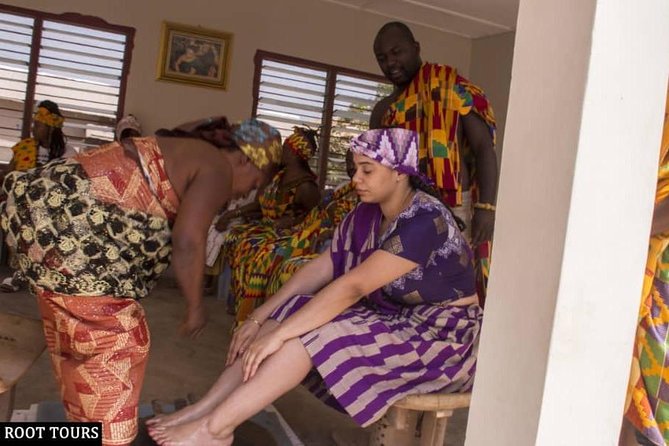
The ceremony is the reason to book this experience. You are given a new name selected according to the day you were born from the Asante tradition. The name is then presented in a formal cultural setting, along with a Kente script and certificate.
The certificate gives you a practical record of the occasion. The Kente piece makes the memory more tangible. Together, they help distinguish this from a tour where the main souvenir is a photograph taken at a landmark.
You may want to prepare before arrival. Know your birth day and be ready to share the personal meaning of taking part. The available details do not describe every ritual step, the exact role of the chief, or the language used during the presentation, so it is sensible to ask Maclean for an explanation before the ceremony begins.
This is also a good place to set expectations. A traditional ceremony should be approached with respect, not treated as a novelty or costume opportunity. Wear comfortable, respectful clothing and listen closely to the guide’s instructions. The ceremony is for your group, but it is still part of a living cultural practice.
How emotional should you expect the experience to be?
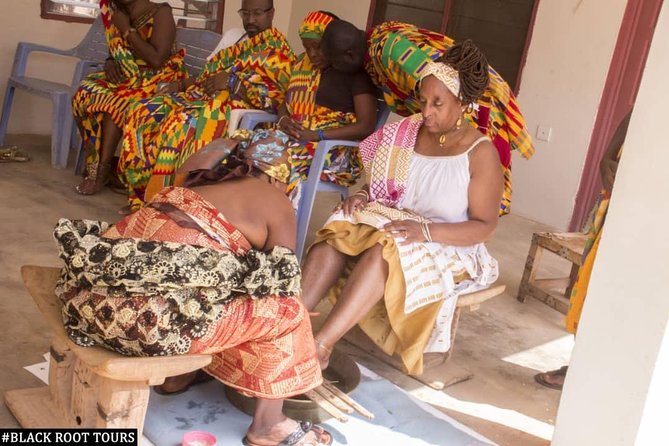
The strongest praise for this activity centers on emotional impact. People have described the naming as life-changing, memorable, and a highlight of their time in Ghana. One account described the ceremony as deeply emotional after the participant received a name connected to the chief’s late wife.
That does not mean every person will react in the same way. Your response may depend on your family background, your reasons for visiting Ghana, and how connected you feel to the ceremony. Still, you should allow room for a meaningful moment rather than rushing through it for the sake of photographs.
Maclean’s reported patience is useful here. A guide who can explain the process and give you time to respond can make the experience feel more comfortable. The private format also means you do not have to share the moment with a large busload of strangers.
If you are booking for a family group, discuss beforehand how each person wants to participate. Some people may be eager to speak and ask questions. Others may prefer to observe quietly. Since only your group takes part, the setting should allow for different reactions within the party.
What the $180 price really covers
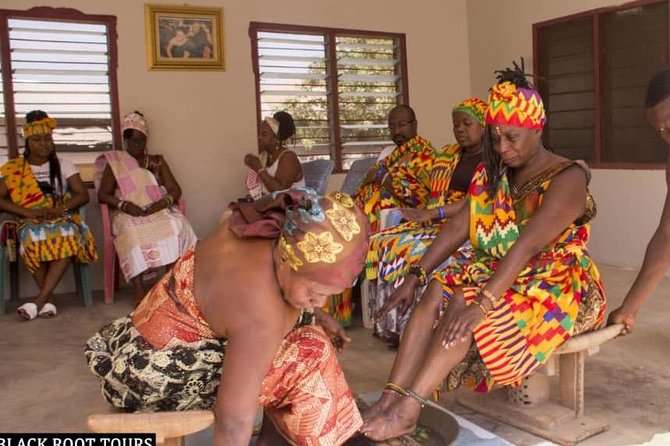
At $180 per person, this is not priced like a basic transfer or a short craft demonstration. You are paying for a private, half-day cultural experience that combines the naming ceremony, transportation, fuel, lunch, and two additional visits.
The value is strongest for people who want a personal ceremony and would otherwise need to arrange a private vehicle, guide, and meal separately. Air conditioning is included, which is helpful for moving between several stops in Kumasi’s warm climate.
The price is less attractive if your main interest is only seeing Kente or Adinkra production. In that case, you may be paying for a ceremony that you do not really want. The tour’s value depends on your purpose, not only on the number of stops.
Remember the extras. Admission fees at Ntonso and Adanwomase are separate, and personal shopping is excluded. The available information does not give the entrance prices, so bring some additional money if you plan to enter both sites or buy cloth.
Who will get the most from this experience?
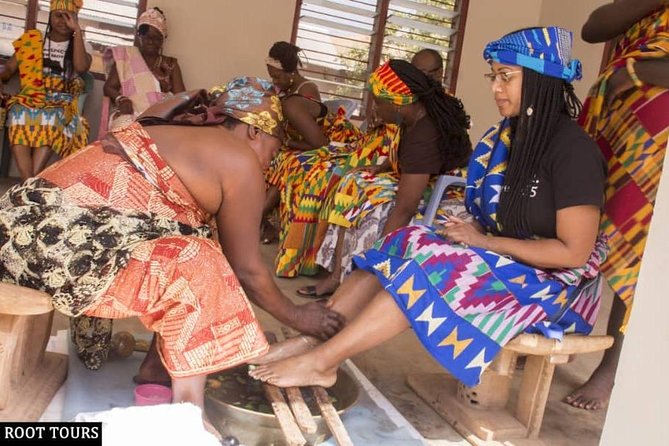
I would recommend this experience most strongly to African Americans visiting Ghana who want a direct, personal connection to Asante culture. It may suit solo visitors, couples, families, and private groups looking for a ceremony that feels more significant than a normal sightseeing stop.
It is especially fitting if you are exploring ancestry, marking a major birthday, celebrating a family occasion, or simply seeking a thoughtful way to connect with Ghana. The certificate and Kente script also make it suitable for people who want a lasting reminder of the occasion.
You may want to choose another activity if you are short on time, dislike formal ceremonies, or want a full day devoted to museums and historical sites. Four hours gives you a focused experience, not an all-purpose tour of Kumasi.
The tour is also not designed around shopping. Personal purchases are excluded, and the core purpose is the ceremony and cultural visits. You can shop if you wish, but you should not book this expecting a dedicated retail excursion.
Practical advice for a smoother morning
Confirm the pickup point and meeting details when you book. The activity begins at 9 a.m., ends at the meeting point, and confirmation is provided at booking.
Keep the morning flexible. The tour lasts about four hours, but the timing is approximate. That matters if you have a flight, a long-distance transfer, or another appointment later in the day.
Bring the information needed for the naming ceremony, including your birth date. If you want the name explained in greater detail, ask Maclean about the tradition and the meaning connected to your birth day.
Budget for admission and shopping separately. Lunch, the vehicle, and fuel are included, but the two cultural stops list admission as extra and personal shopping is specifically excluded.
The activity requires good weather. If poor weather forces cancellation, you can receive a full refund or choose another date. You can also cancel for a full refund if you do so at least 24 hours before the start time. Cancellations or changes made within 24 hours are not accepted for a refund.
Should you book the Kumasi naming ceremony?
Book it if you want the ceremony to be the heart of your Ghana visit, not just another item on a sightseeing schedule. The private group format, patient guide Maclean Afful, included lunch, air-conditioned transport, and the Kente and certificate presentation make the $180 fee reasonable for the right person.
Go in with respect and enough time to let the moment unfold. The strongest reason to choose this activity is its personal meaning. The main reasons to hesitate are the extra admission costs, the approximate timing, and the fact that a traditional ceremony may feel more emotional than a standard tour.
If reconnecting with ancestry is your goal, this is one of the more purposeful ways to spend a morning in Kumasi. If you only want to see craft villages, choose a simpler cultural outing and save the ceremony for a trip when you are ready to take part fully.
FAQ
How long does the traditional naming ceremony experience last?
The experience lasts approximately four hours.
What time does the activity start?
The activity starts at 9 a.m.
Is pickup available?
Yes, pickup is offered. The activity ends back at the meeting point.
What is included in the $180 price?
Lunch, an air-conditioned vehicle, and the fuel surcharge are included.
Are admission fees at Ntonso and Adanwomase included?
No. Admission tickets for the Ntonso Adinkra Craftsmen visit and the Adanwomase Kente Weaving Village are not included.
Is this a private tour?
Yes. Only your own group participates in the private tour or activity.
Can I cancel for a full refund?
Yes, if you cancel at least 24 hours before the experience start time. Cancellations made less than 24 hours in advance are not refunded. If poor weather causes the activity to be canceled, you will be offered another date or a full refund.
Just added in Kumasi
- Full Day Tour with Traditional Naming Ceremony in Kumasi★ 5.0 · 4 reviews
- Kumasi kejetia central market tour & Traditional Local cooking food classs★ 4.5 · 2 reviews
- Kejetia Market Tour and Traditional Food Cooking Class.★ 5.0 · 2 reviews
- Kumasi City Tour★ 4.5 · 3 reviews
- Kumasi Culture and Heritage Tours★ 4.5 · 3 reviews
- Private Half-Day City Tour of Kumasi with Lunch★ 5.0 · 2 reviews
- Discover kumasi Tours★ 5.0 · 3 reviews
- Ashanti History Tours★ 5.0 · 2 reviews
Naming Ceremonies, compared.

The Ancestral Naming Ceremony and Home Coming Experience
Read our review →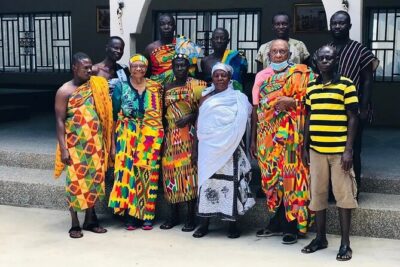
Naming Ceremony and Heritage Homecoming Experience for Diasporas
Read our review →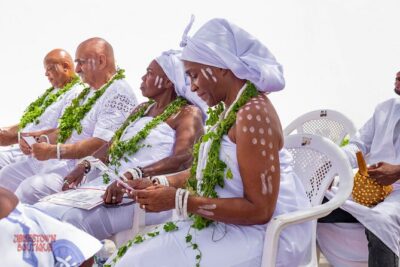
Traditional Naming Ceremony and Boat Cruise Experience
Read our review →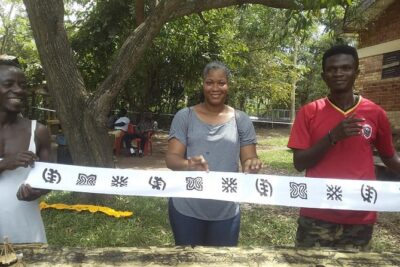
Kumasi Heritage Tours And Naming Ceremony In A Day
Read our review →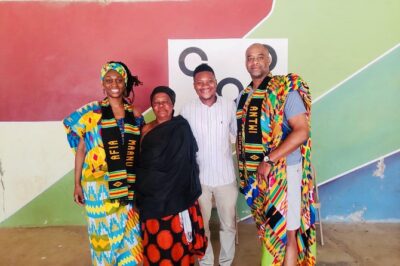
Traditional naming ceremony For African Diasporas in Kumasi
Read our review →
Naming Ceremony, Assin Manso Slave River and Cape Coast Castle
Read our review →
Cultural Village Tour: Traditional Naming Ceremony
Read our review →
Full Day Tour with Traditional Naming Ceremony in Kumasi
Read our review →Browse the lists this tour appears in