
REVIEW · NAMING CEREMONIES
Traditional naming ceremony For African Diasporas in Kumasi
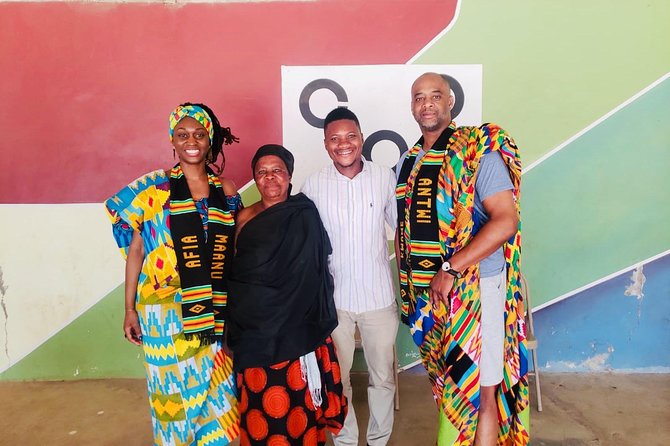
A name can carry you home. This private Kumasi experience gives members of the African diaspora a Ghanaian name based on their date of birth, followed by a traditional ceremony with the Adanwomase community. I especially like the personal ceremony and the chance to connect it with everyday culture through cocoa and kente weaving. The main thing to consider is the seven-hour length, which makes this a full day rather than a quick cultural stop.
You begin at 9:30 a.m. from Lancaster Kumasi City and return there at the end. I also like that the price includes an air-conditioned vehicle, bottled water, lunch, entrance fees, and guiding. The ceremony is private for your group, but you should be comfortable with a planned cultural program and provide your date of birth for the naming process.
In This Review
- Key points to know before booking
- Why this Kumasi ceremony feels personal
- Starting at 9:30 a.m. in Kumasi
- Entering Adanwomase and learning the naming tradition
- Receiving your Ghanaian name and certificate
- Ghanaian cloth and the meaning of presentation
- Cocoa farm: a taste of Kumasi’s agricultural life
- Kente weaving in Adanwomase
- Lunch, entrance fees, and the $175 price
- Who will appreciate this experience most
- Practical booking advice for the Kumasi day
- Should you book the Adanwomase naming ceremony?
- FAQ
- Where does the tour start?
- What time does the experience begin?
- How long does the experience last?
- Where does the tour end?
- Is transportation included?
- What do I need to provide for the naming ceremony?
- Do I receive proof of the ceremony?
- Is lunch included?
- Is this a private experience?
- What happens if I need to cancel?
Key points to know before booking
- Your date of birth shapes the ceremony: You receive a traditional Ghanaian name based on the day you were born.
- The ceremony is private: Only your group takes part, allowing the occasion to feel personal rather than staged for a large crowd.
- Adanwomase adds more than a naming ritual: You also visit a cocoa farm and a kente weaving workshop.
- Traditional cloth is part of the experience: Ghanaian fabric is tailored for you and used as part of your presentation.
- The $175 price covers the day’s basics: Transport, fuel surcharge, water, lunch, entrance fees, and guide service are included.
- Bilson Tours Gh receives strong praise: The guide Bilson is described as patient, welcoming, and helpful with difficult travel arrangements.
Why this Kumasi ceremony feels personal
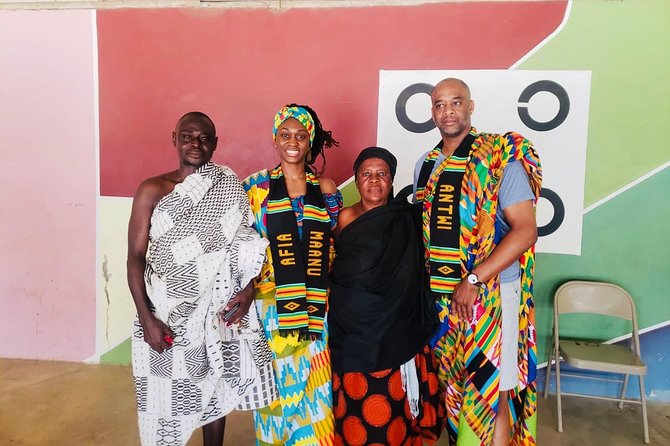
In Ghana, naming ceremonies usually take place within the first few days of a child’s birth. This experience adapts that custom for people of African-American and Caribbean heritage who may not have been born in Africa but want a formal connection to Ghanaian culture.
That distinction matters. You are not simply being handed a souvenir name at a cultural center. You give your date of birth, take part in a traditional naming process, and receive a certificate of recognition afterward. The certificate will not replace family records or legal documents, of course, but it gives you something tangible to keep from the day.
The setting is Adanwomase, a community associated with the Adawomase tribe in the tour description. The ceremony is designed to welcome members of the African diaspora as children of the earth, with Ghanaian cloth used as part of the presentation. That language gives the event an emotional purpose. It is about belonging, ancestry, and recognition as much as it is about sightseeing.
I would book this for the meaning of the ceremony first. The cocoa farm and weaving workshop add useful context, but they are supporting acts to the naming itself.
More naming ceremony experiences in Kumasi:
- Traditional Naming Ceremony For African Americans In Kumasi
★ 5.0 · 5 reviews - Full Day Tour with Traditional Naming Ceremony in Kumasi
★ 5.0 · 4 reviews - The Ancestral Naming Ceremony and Home Coming Experience
★ 5.0 · 30 reviews
Starting at 9:30 a.m. in Kumasi
The day begins at Lancaster Kumasi City on Rain Tree Street, Lesley Opoku-Ware Drive. Pickup is offered, and the listed meeting point gives you a clear base if you are staying in Kumasi.
The supplied details do not give an exact pickup radius or a full door-to-door schedule, so confirm your arrangements when booking. A 9:30 a.m. start and seven-hour duration suggest that you should keep the rest of your day free. This is not a tour to squeeze between a morning market visit and an evening dinner reservation.
Transport is by air-conditioned vehicle, and fuel surcharge is included. In Kumasi’s warm climate, air conditioning makes a real difference during road time. Bottled water is also provided, a small but welcome detail on a day that combines travel, walking, and outdoor stops.
One especially useful point comes from the experience of a participant who needed unusual transport help. Bilson was willing to make a much longer journey, reportedly up to 10 hours, to help with getting to the tour. That is not a standard part of the published program, so do not assume it is included. It does suggest that Bilson Tours Gh may be willing to discuss complicated arrangements in advance.
Entering Adanwomase and learning the naming tradition
The main cultural stop is Adanwomase, where you go through the traditional naming process. The program includes an explanation of the history and origins of naming ceremonies before your own presentation.
That introduction is important. Without it, the ceremony could feel like a beautiful but unclear performance. With context, you can understand why names matter, how birth dates connect with naming, and why the event carries such weight within Ghanaian life.
You provide your date of birth, and the community uses it to assign a Ghanaian name. The details do not specify a particular naming system or explain whether you receive several name options, so you may want to ask Bilson how the name is selected before the ceremony begins.
The private format is one of the strongest features. Your group is the only group participating, so the event can focus on your family or companions. That is especially useful if you are marking an anniversary, family journey, birthday, or personal return to African heritage.
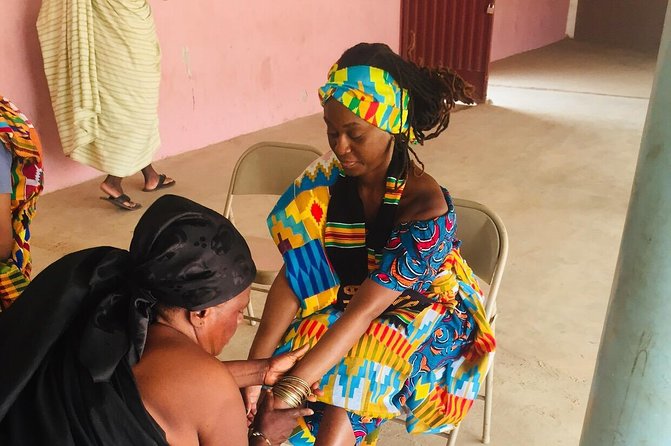
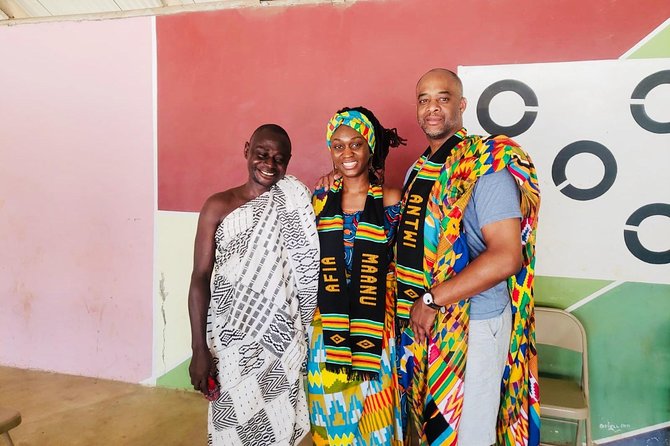
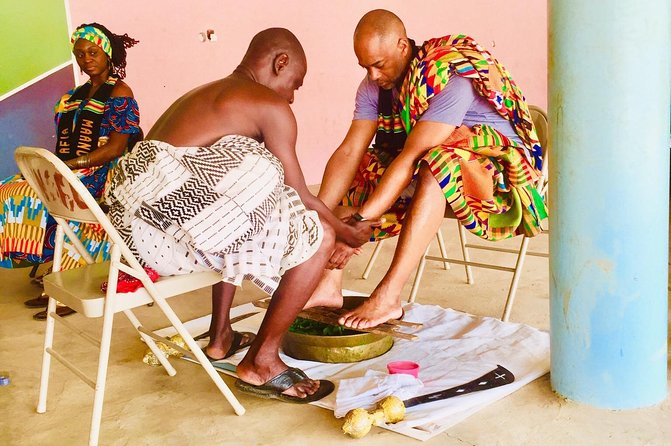
The ceremony also includes the adornment of Ghanaian cloth tailored for you. The wording suggests that this cloth is prepared as part of your role in the event, not simply placed on a rack for a quick photograph. Still, tailoring details such as sizing, fabric choice, and advance measurements are not provided. Ask about these before arrival if the fit matters to you.
Receiving your Ghanaian name and certificate

The naming is the emotional center of the day. You are presented with a Ghanaian name connected to your date of birth, then receive a certificate of recognition.
I like the certificate because it gives the experience a clear ending. You leave with more than photographs and a vague memory of a village visit. You have a written reminder of the name and the ceremony, which can be meaningful for families sharing the experience across generations.
The certificate should be viewed as a ceremonial document, not an official Ghanaian identity document. The supplied information calls it a certificate of recognition, and that is the right way to understand it.
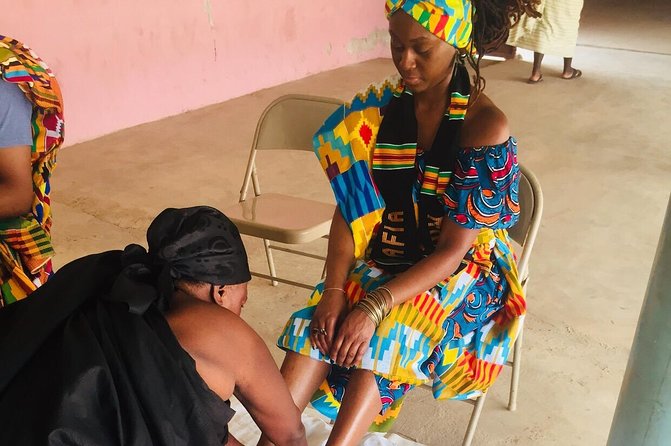
The ceremony also appears to involve members of the local community and, according to the details provided, a Royal Family that welcomed diaspora participants. That adds a formal quality to the occasion. You are not merely watching a demonstration. You are being received into a cultural setting that takes the act of naming seriously.
If you want a quiet, private moment, tell the operator in advance. The published description promises a personalized experience, but it does not explain the exact order of speeches, photographs, music, or introductions.
More things to do in Kumasi:
- Bonwire Namimg Ceremony and Kente Tourist Center
★ 5.0 · 40 reviews - Tour Kumasi City Like a Local
★ 4.5 · 34 reviews - Kumasi City Tour
★ 5.0 · 8 reviews - Kumasi City Tour
★ 4.5 · 7 reviews
Ghanaian cloth and the meaning of presentation
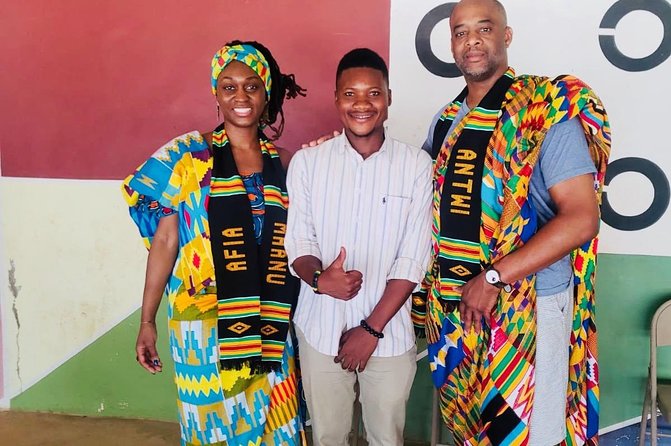
Clothing is not a minor extra here. Ghanaian cloth is part of how you are presented as part of the ceremony.
This gives the experience visual force, but it also has practical implications. Wear comfortable clothes underneath anything you may be asked to put on, and avoid scheduling a formal dinner immediately afterward unless you are happy to remain dressed in ceremonial fabric. The tour does not state how long the adornment takes or whether you keep any of the cloth, so ask before booking if that point is important.
The cloth also helps connect the naming ceremony with Ghanaian identity in a visible way. A name is spoken, while clothing makes the welcome something you can see and feel. For a first visit to Ghana, that combination can make the occasion more memorable.
At the same time, you should approach the clothing with respect. This is not a costume stop. It is part of the ceremony’s cultural presentation, so listen to the guide and community members about how it is worn and used.
Cocoa farm: a taste of Kumasi’s agricultural life
The itinerary includes a visit to a cocoa farm and a chance to taste fresh cocoa. That stop gives the day a practical side. You are not only hearing about Ghanaian culture in formal terms. You are also seeing one of the crops closely tied to the country’s economy and rural life.
The supplied information does not specify the farm’s size, the season, or the exact activities available there. You might see how cocoa grows and learn how the fruit is handled, but you should not expect a full agricultural workshop unless Bilson confirms it.
The tasting is a simple detail with real appeal. Fresh cocoa is different from the finished chocolate most people know, and trying it at the source gives you a better sense of the crop before it becomes a packaged product.
Because weather affects the experience, outdoor parts such as the farm visit may change. The operator requires good weather and offers another date or a full refund if poor weather forces cancellation.
Kente weaving in Adanwomase
The kente weaving workshop adds another strong cultural layer. Kente is recognized around the world, but seeing the weaving process gives you a better understanding of the work behind the cloth.
The information does not promise that you will weave a full piece yourself, so keep your expectations sensible. You will visit a workshop and learn about the craft, but the exact level of hands-on participation is not stated.
This is also the main shopping opportunity. Buying your own item is not included, so bring a payment method if you want to purchase cloth or another piece. The price covers the visit and entrance fees, not personal purchases.
I would treat the workshop as both a lesson and a chance to support local makers. If you are interested in buying, ask about the pattern, the amount of handwork involved, and how to care for the fabric. Prices and products are not listed, so set your own budget before you go.
Lunch, entrance fees, and the $175 price
At $175 per person, this is not a budget sightseeing outing. The value depends on what you want from the day.
The price includes:
- Air-conditioned vehicle
- Fuel surcharge
- Bottled water
- Lunch
- Entrance fees
- Tour guide service
- The private naming ceremony
- Certificate of recognition
That package is stronger than the headline price first suggests. A private vehicle, a full-day guide, lunch, several cultural stops, and a personalized ceremony would cost more if arranged separately. You also avoid the hassle of organizing transport between Kumasi and the community yourself.
The price is easiest to justify if the name and ceremony are your main reason for coming. If you mainly want to see a cocoa farm or buy kente, you may find cheaper day trips. If you want a private rite connected to the African diaspora, the calculation changes.
Lunch is included, but no menu or dietary information is supplied. Tell Bilson about dietary needs when you book rather than waiting until the morning of the tour.
Who will appreciate this experience most
This experience is a good match for African-American and Caribbean visitors seeking a personal connection to Ghana. It also suits families, couples, and small groups who want a private ceremony rather than a large group activity.
It may be especially meaningful for:
- A first visit connected to ancestry or identity
- Families traveling with children or older relatives
- People celebrating a milestone
- Visitors who want both ceremony and local craft
- Small private groups comfortable with a seven-hour day
You do not need to be an expert in Ghanaian culture. Most people can participate, according to the supplied information. You do need to arrive open-minded and ready to follow the guidance of the community hosting the ceremony.
This may not suit you if you want a fast, flexible itinerary with lots of independent time. The schedule includes several planned elements, and the ceremony itself deserves attention rather than a rushed approach.
Practical booking advice for the Kumasi day
Confirmation is received at the time of booking. The start time is 9:30 a.m., and the activity ends back at the meeting point.
Free cancellation is available if you cancel at least 24 hours before the local start time. Inside that 24-hour window, you receive no refund and changes are not accepted. Poor weather is handled differently: if the operator cancels, you are offered another date or a full refund.
Most people can participate, but the published information does not give detailed accessibility notes. If you need a specific vehicle setup or assistance at the farm, workshop, or ceremony, ask Bilson Tours Gh before paying.
Bring your date of birth, comfortable clothing, water if you prefer to carry extra, and room in your bag for personal purchases. Since the tour ends where it starts, you do not need to arrange a second pickup point.
Should you book the Adanwomase naming ceremony?
Book it if you want a meaningful, private connection to Ghana and the African diaspora, not simply another Kumasi excursion. The name, cloth, certificate, community welcome, cocoa, and kente workshop create a full cultural day with a clear purpose.
At $175, it is best value for someone who will treasure the ceremony itself. I would also choose it for a family group, since a private setting gives the occasion more warmth and control than a large public tour.
Think twice if you are price-sensitive, dislike fixed schedules, or mainly want ordinary sightseeing. But if receiving a Ghanaian name feels important to you, this experience offers something a standard city tour cannot: a formal welcome, a personal ceremony, and a keepsake tied to your date of birth.
FAQ
Where does the tour start?
The tour starts at Lancaster Kumasi City, Rain Tree Street, Lesley Opoku-Ware Drive, Kumasi, Ghana.
What time does the experience begin?
The listed start time is 9:30 a.m.
How long does the experience last?
The experience lasts approximately seven hours.
Where does the tour end?
The activity ends back at the meeting point where it began.
Is transportation included?
Yes. An air-conditioned vehicle and fuel surcharge are included.
What do I need to provide for the naming ceremony?
You provide your date of birth so a Ghanaian name can be selected for you.
Do I receive proof of the ceremony?
Yes. You receive a certificate of recognition after the experience.
Is lunch included?
Yes. Lunch, bottled water, entrance fees, and tour guiding service are included.
Is this a private experience?
Yes. Only your group participates in the private tour or activity.
What happens if I need to cancel?
You receive a full refund if you cancel at least 24 hours before the local start time. Cancellations or changes made within 24 hours are not accepted for a refund. If poor weather causes the operator to cancel, you are offered another date or a full refund.
Just added in Kumasi
- Full Day Tour with Traditional Naming Ceremony in Kumasi★ 5.0 · 4 reviews
- Kumasi kejetia central market tour & Traditional Local cooking food classs★ 4.5 · 2 reviews
- Traditional Naming Ceremony For African Americans In Kumasi★ 5.0 · 5 reviews
- Kejetia Market Tour and Traditional Food Cooking Class.★ 5.0 · 2 reviews
- Kumasi City Tour★ 4.5 · 3 reviews
- Kumasi Culture and Heritage Tours★ 4.5 · 3 reviews
- Private Half-Day City Tour of Kumasi with Lunch★ 5.0 · 2 reviews
- Discover kumasi Tours★ 5.0 · 3 reviews
Naming Ceremonies, compared.

The Ancestral Naming Ceremony and Home Coming Experience
Read our review →
Naming Ceremony and Heritage Homecoming Experience for Diasporas
Read our review →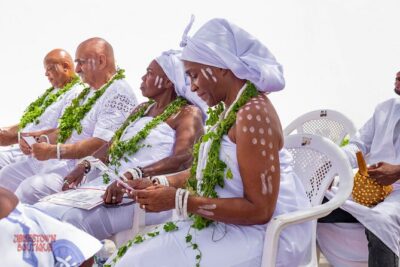
Traditional Naming Ceremony and Boat Cruise Experience
Read our review →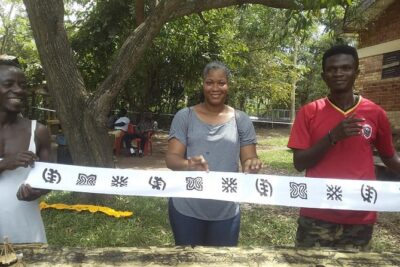
Kumasi Heritage Tours And Naming Ceremony In A Day
Read our review →
Naming Ceremony, Assin Manso Slave River and Cape Coast Castle
Read our review →
Cultural Village Tour: Traditional Naming Ceremony
Read our review →
Traditional Naming Ceremony For African Americans In Kumasi
Read our review →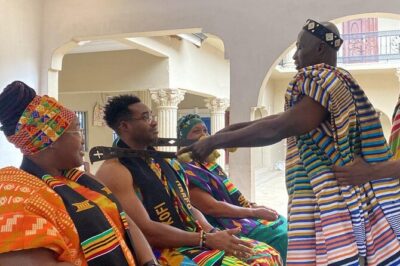
Full Day Tour with Traditional Naming Ceremony in Kumasi
Read our review →Browse the lists this tour appears in