
REVIEW · ACCRA TOURS
Accra: Market Tour and Cooking Class
Food tells the story of Accra. This six-hour experience brings that story to life through Nima Market, street snacks, and a hands-on Ghanaian cooking class led by Haja. I like the small group limit of five, which keeps the market visit personal, and I like the clear link between shopping for ingredients and cooking the final meal. The main consideration is the $200 price, which is high for Ghana, especially since drinks, a recipe card, and transport after the class cost extra.
Haja’s background gives the experience an interesting angle. She is a second-generation Nigerien-Ghanaian, born and raised in Ghana, and draws on both West African food traditions. Her work in communications and plans for a nonprofit supporting girls in Accra add a personal and community-minded layer to the class.
In This Review
- Key points before you book
- Starting at St. Kizito Catholic Church in Nima
- Reading Nima Market through food
- Sampling coco, koose, and chilled sobolo
- Choosing a Ghanaian dish with Haja
- Afrobeats, conversation, and a shared table
- What the $200 price really covers
- Who will enjoy this six-hour outing
- Booking details that affect your day
- Should you book AFRO EATS by Haja?
- FAQ
- Where does the Accra market and cooking experience start?
- How long does the experience last?
- Is transport included?
- What food will I taste at the market?
- Which dishes can I cook?
- Is the cooking class private?
- What language is the experience conducted in?
- Can I cancel my booking?
Key points before you book
- Nima Market is the heart of the experience: You shop for cooking ingredients while learning simple greetings and seeing daily life in one of Accra’s best-known markets.
- Street food is part of the tour: Expect coco and koose, kuli kuli, sobolo, and other snacks along the way.
- You choose the main dish: Options include Ghana jollof, rice with kontomire stew, and groundnut soup with rice balls.
- Haja sends recipe choices ahead: You can select your preferred dish before meeting, which helps you arrive ready to cook.
- The class has a social feel: Afrobeats, conversation, laughter, and a shared meal are built into the afternoon.
- The group is tiny: A maximum of five people makes it easier to ask questions and get hands-on help.
Starting at St. Kizito Catholic Church in Nima
The meeting point is St. Kizito Catholic Church in Nima. Haja sends a Google location and a live location, which is helpful in a busy part of Accra where a named landmark can be easier to find than a street address.
You need to arrange your own transport to the starting point. A ride from your lodge can be organized on request, but check this before booking if you are not familiar with Accra or are staying well outside central areas. After the market visit, a shuttle to the kitchen is included. Transport after the cooking class is not.
The day runs for about six hours. The market portion takes roughly two and a half hours, followed by three hours of cooking and eating. That is a generous amount of time for the food rather than a rushed stop at a market followed by a quick demonstration.
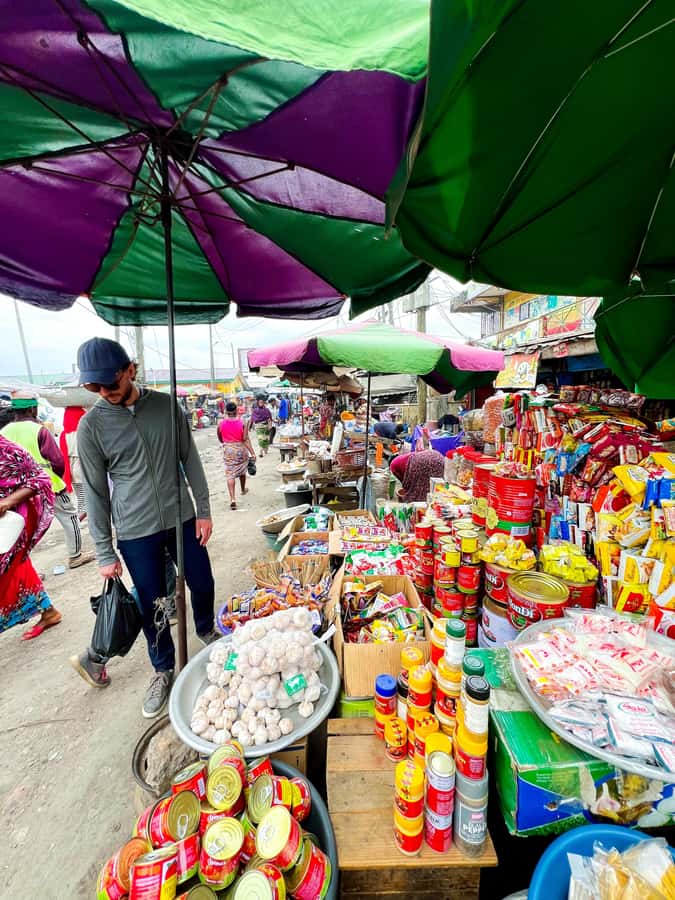
The group limit of five matters here. Nima Market can be crowded and active, so a small party makes it easier to stay close to Haja and hear her explanations. It also gives you more room to take part in the food buying and cooking instead of watching from the edge.
More markets in Accra:
- Makola Market Walking Tour
★ 5.0 · 16 reviews - Makola Market Walking Tour
★ 5.0 · 14 reviews - Private Accra Market Tour
★ 5.0 · 10 reviews
Reading Nima Market through food
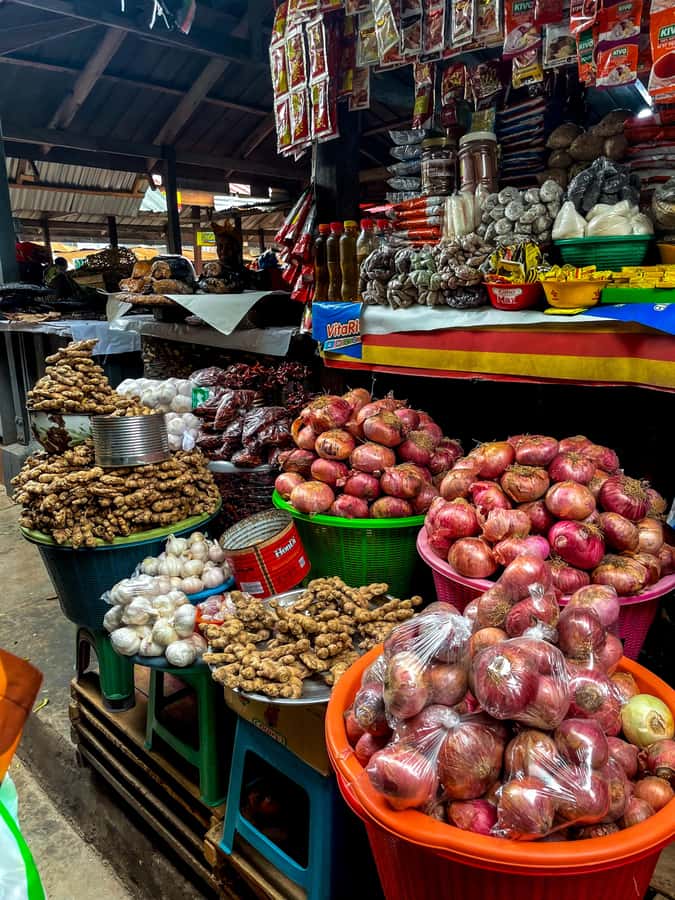
Nima is not just a place to pick up groceries. It is where you see ingredients in the setting that gives them meaning. Haja guides you through the stalls, explains what to look for, and helps shop for the food used later in the kitchen.
You may hear Hausa and Twi during the visit, reflecting Nima’s mix of communities. Haja introduces a few simple phrases, including zoo ki se, a Hausa invitation to come and buy, Kwa Lafia, a Hausa greeting, and ɛte sɛn?, which means how are you in Twi.
This small language lesson is useful because it changes how you approach the market. You are not simply passing through with a camera. You have a few words to use when greeting vendors and showing interest in the place.
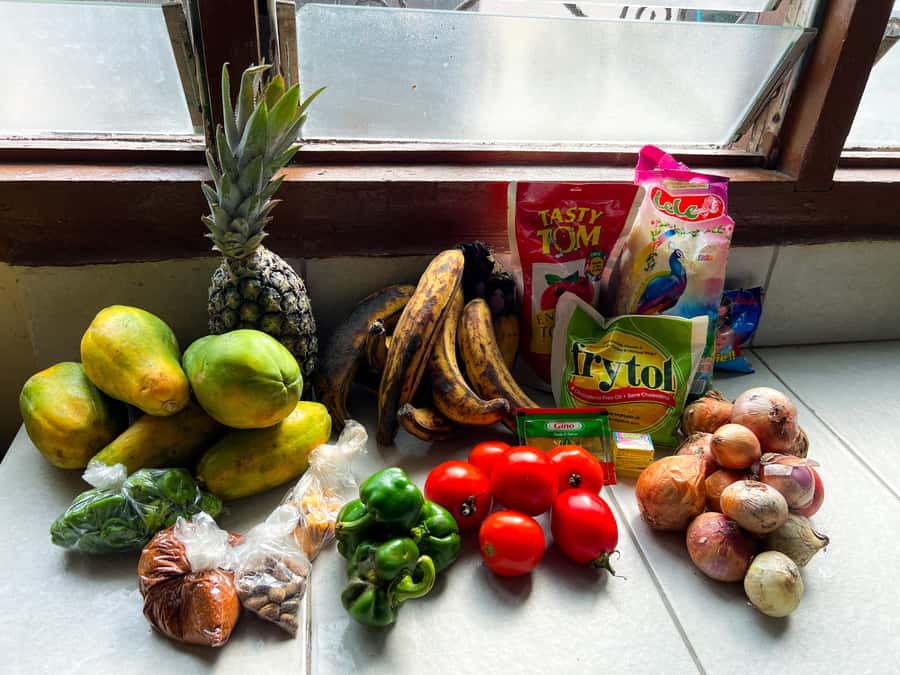
The market visit lasts long enough for the sights and smells to become part of the lesson. You shop for produce, spices, and other local ingredients with Haja’s help. The practical value is clear: you see the raw materials before learning how they become a finished Ghanaian meal.
The tradeoff is that markets require attention. Surfaces may be uneven, the setting can be crowded, and the pace may not suit someone who wants a quiet, polished food demonstration. The activity is listed as wheelchair accessible, but anyone with specific mobility needs should confirm the market conditions and meeting arrangements with Haja before arrival.
Sampling coco, koose, and chilled sobolo
The food stops are not an afterthought. During the market walk, you taste some of Ghana’s popular street foods, including coco and koose, kuli kuli, and sobolo.
Coco is a spiced millet porridge, while koose is a fried bean cake. Together they offer a good introduction to Ghanaian breakfast flavors and textures. Kuli kuli adds a crunchy peanut-based snack, and sobolo, a hibiscus drink, provides a cold, tart contrast.
Other snacks may appear along the way. The exact selection is not fixed, so you should think of this as a tasting route rather than a set menu. Local beverages such as sobolo, Burkina, and ginger drink are not included in the listed price, so budget extra if you want to sample more drinks.
This part works well for curious eaters who want more than a restaurant meal. You taste food in the place where people buy and eat it, then carry those flavors into the cooking class. It also means the day is food-heavy, so anyone with dietary restrictions should contact Haja before booking. The supplied information does not list vegetarian, vegan, allergy, or gluten-free arrangements.
Choosing a Ghanaian dish with Haja
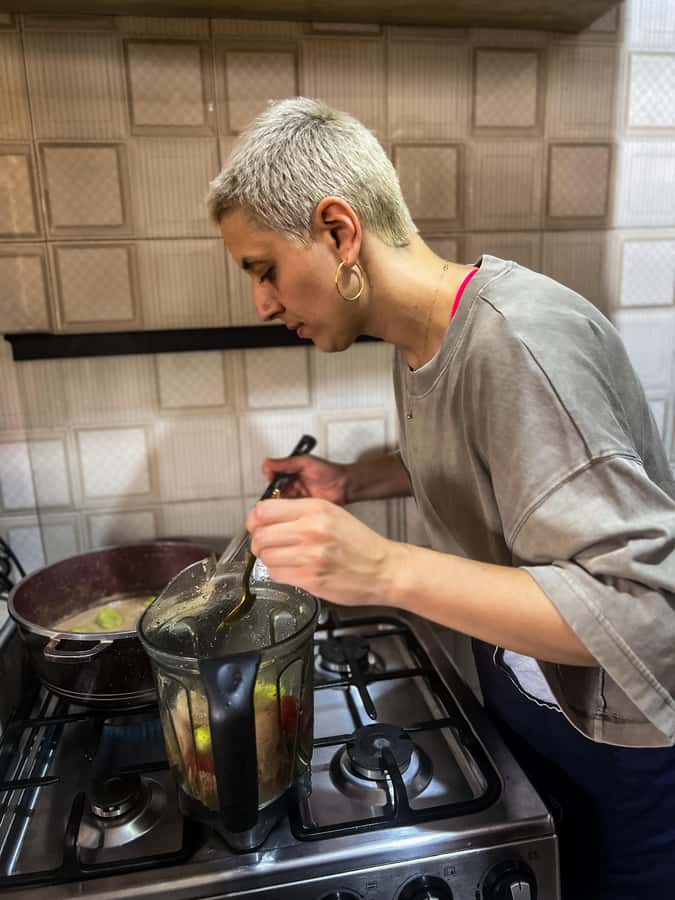
Before the class, Haja sends a PDF booklet with possible recipes. You can choose what you want to prepare, with listed options including Ghana jollof, rice with kontomire stew, and groundnut soup with rice balls.
That advance choice is a useful touch. You are not left waiting for the chef to decide what you will cook, and you can pick a dish that matches your interests. It also gives you time to learn a little about the meal before the day begins.
Ghana jollof is the obvious choice if you want to focus on one of West Africa’s best-known rice dishes. Kontomire stew introduces another side of Ghanaian cooking, pairing rice with a leafy stew. Groundnut soup with rice balls offers a different texture and a nut-based flavor profile.
The precise recipe list may change, so treat these as examples rather than a guaranteed menu. Haja will guide you toward the best choice from the available dishes.
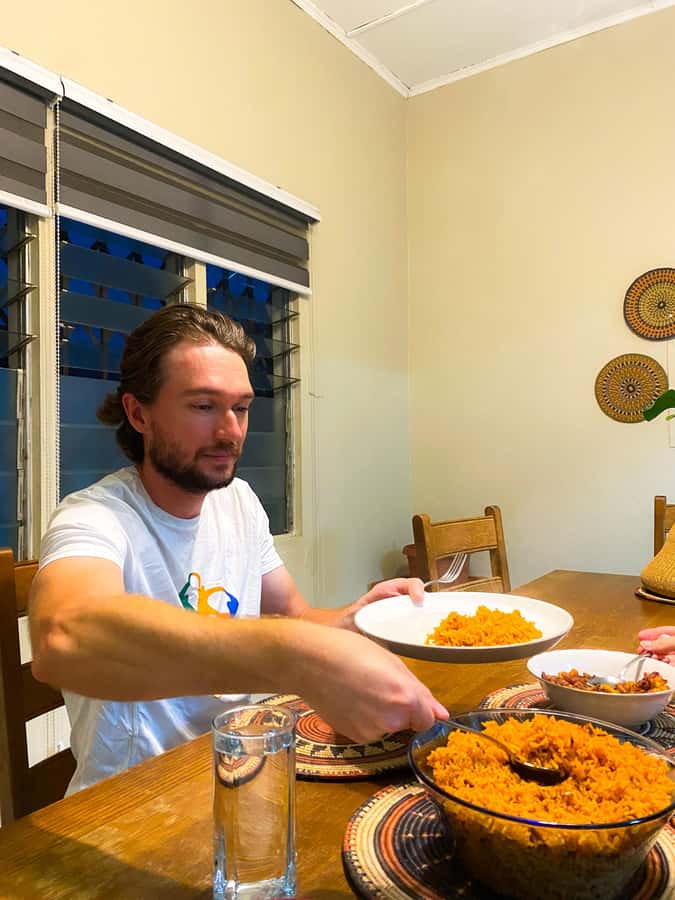
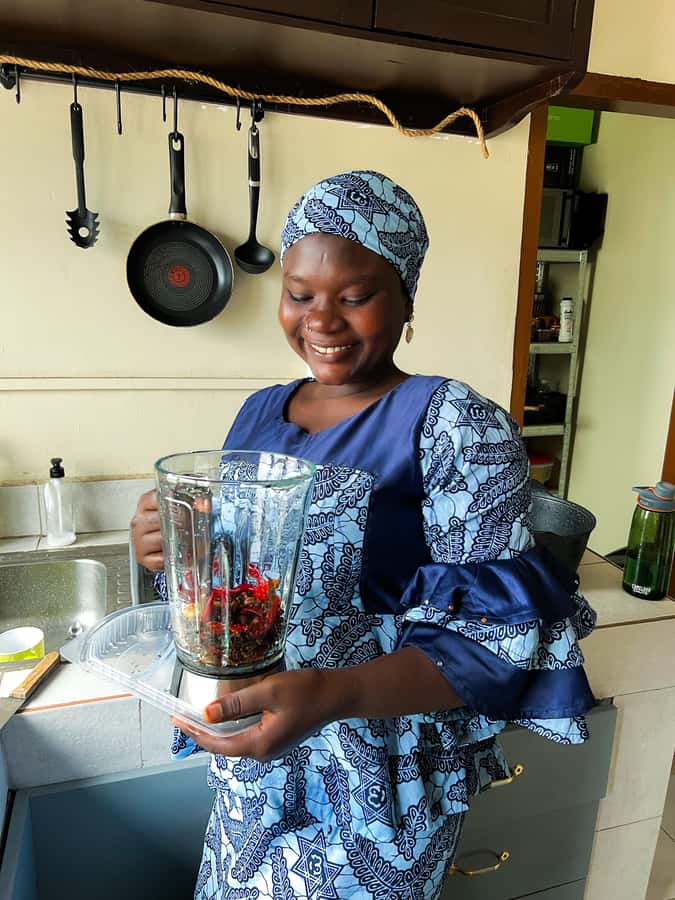
The class takes place in a calm kitchen and dining area. You are not only watching a chef work. You take part in preparing the meal, with Haja’s help, then sit down to eat what you made. That hands-on format gives the activity more lasting value than a meal where you simply receive a finished plate.
Still, cooking classes vary in how much work each person gets. The group is small, but it is sensible to ask Haja what tasks you will handle and whether everyone prepares the same dish. That is especially useful if you are booking as a couple, family, or small group with different food interests.
More cooking classes in Accra:
- Home Cooking Class by Auntie K
★ 5.0 · 62 reviews - Local Ghanaian Cooking Class in Accra to help support wellness community center
★ 4.5 · 22 reviews - Authentic Ghanaian Cooking Class in Accra
★ 4.5 · 11 reviews - Authentic Ghanaian Cooking Lessons and Take Out Services.
★ 5.0 · 9 reviews
Afrobeats, conversation, and a shared table
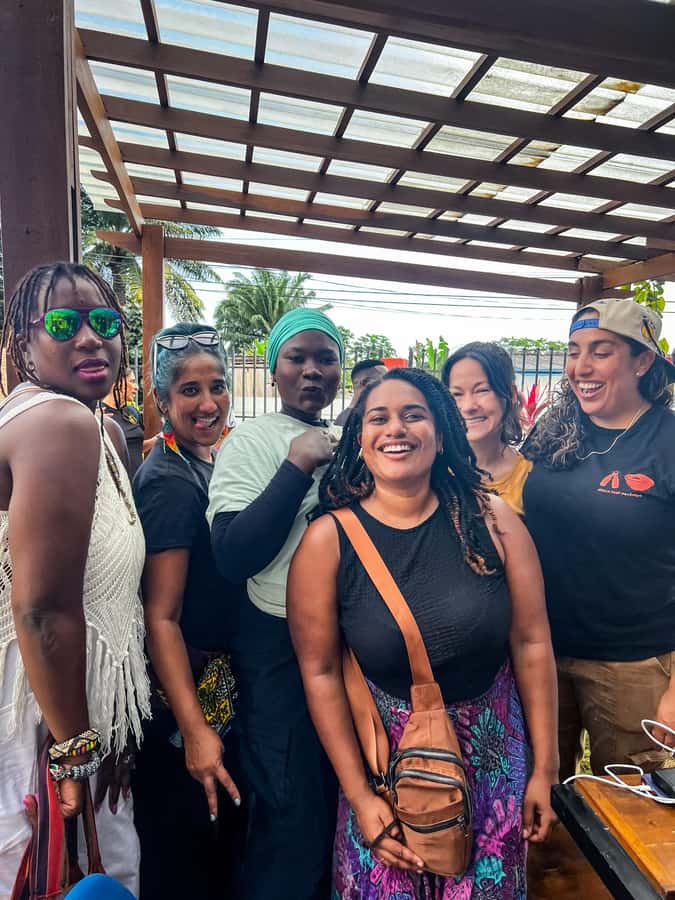
Music is part of the setting. Afrobeats plays while you cook, and the atmosphere is designed to be social rather than formal. Haja’s friendly manner is one of the strongest reasons to consider this activity. She made a point of helping one participant feel safe and looked after throughout the day, while also keeping the conversation relaxed.
That balance is important in a market tour. Nima can feel unfamiliar at first, and having a host who guides you through the setting makes the experience easier to enjoy. Haja’s mixed Nigerien and Ghanaian background also helps explain why the class includes more than a standard list of national dishes.
You should expect conversation and connection, not silence and strict chef-school precision. If you want a technical culinary course with exact measurements and formal instruction, this may feel loose. If you want food, music, and an introduction to the people behind the ingredients, the relaxed style is a strong fit.
The experience does not allow smoking, alcohol, drugs, pets, or headphones. The headphone rule makes sense because you need to hear Haja’s directions and remain aware of the group during the market visit.
What the $200 price really covers
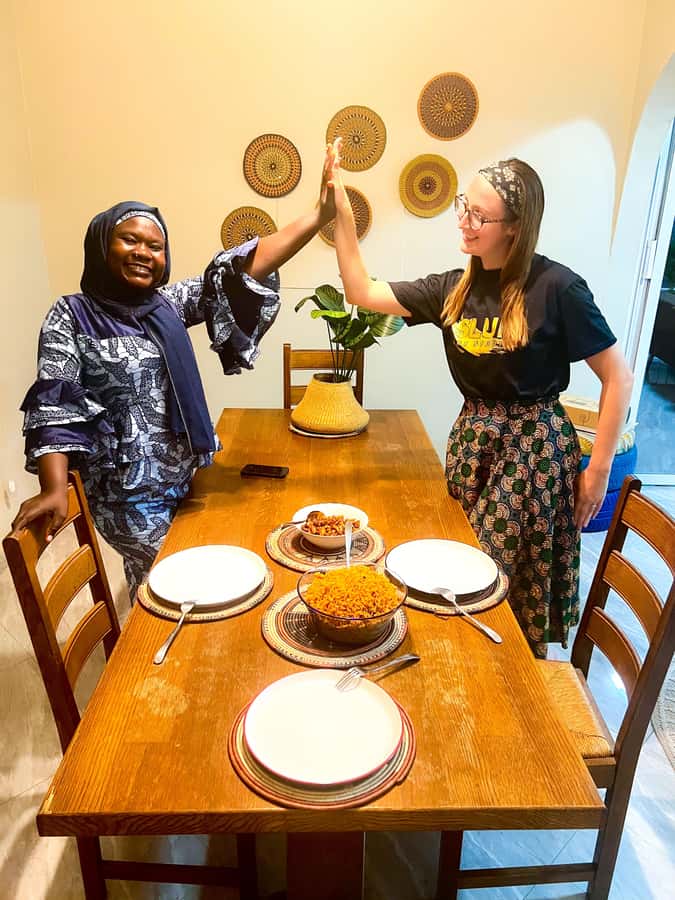
At $200 per person, this is a premium half-day activity in Accra. The price includes the guided market tour, food tastings, grocery shopping, transport from the market to the kitchen, the kitchen space, the cooking class, and the meal you prepare.
That package has real value for a first visit to Accra. You get a host, a market introduction, ingredients, instruction, food, and a small group in one booking. You also avoid having to arrange a separate market visit and cooking lesson, which can be difficult if you do not know the city.
The price is less attractive if you mainly want a cheap local meal or a short cooking demonstration. Drinks are extra, transport to the meeting point is extra, transport afterward is extra, and a recipe card is not included. Haja does send recipe information before the class, but do not assume you will leave with a printed take-home card.
For two people, the cost becomes a significant part of an Accra budget. For a food-focused visitor who values personal guidance and cultural context, it may be worth it. For families, check the age and suitability rules carefully before paying.
Who will enjoy this six-hour outing
I would recommend this experience most strongly to:
- Solo visitors who want a friendly introduction to Accra
- Couples looking for a shared activity beyond restaurant dining
- Small groups who enjoy cooking together
- First-time visitors who want help navigating a local market
- Food lovers interested in Ghanaian and Nigerien-Ghanaian influences
- People who enjoy informal music, conversation, and social settings
The activity may not suit babies under one year, people over 70, or anyone with high blood pressure, according to the stated restrictions. It is also not suitable for people with hearing impairments. That last point is worth noting because the activity depends on spoken guidance in a market and kitchen setting.
You should also be comfortable spending several hours around food, walking through a market, tasting unfamiliar snacks, and taking part in meal preparation. Ask Haja in advance about allergies, medical needs, and the exact meeting arrangements.
Booking details that affect your day
The tour is conducted in English and is limited to five participants. Starting times vary, so check the available time when booking.
You can cancel up to 24 hours ahead for a full refund, and the reserve-now, pay-later option gives you some flexibility while planning your Ghana trip. These policies are useful, but you still need to confirm your transport to St. Kizito Catholic Church.
Wear something comfortable for a market and cooking session. The supplied information does not specify a dress code, so practical clothing is the sensible choice. Leave headphones at your accommodation, and plan to pay separately for any drinks and your journey home.
The experience currently has a 5.0 rating from one verified booking. Stephanie from Switzerland praised Haja’s warmth, the advance recipe choices, the market shopping, the Afrobeats, and the shared meal. Her account points to the activity’s strongest feature: Haja takes care of the details while keeping the day personal and relaxed.
Should you book AFRO EATS by Haja?
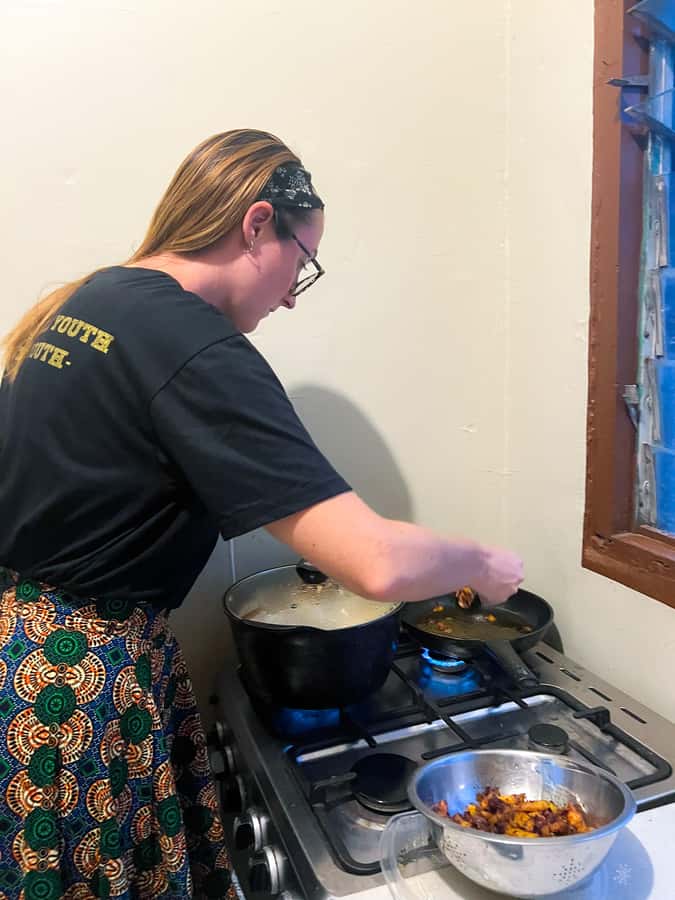
Book it if you want a small, personal food experience that connects market shopping with cooking and eating. The combination of Nima Market, street snacks, language tips, and a meal prepared with Haja gives you a fuller picture of Ghanaian food than a restaurant visit alone.
Think twice if $200 feels steep, if you want a formal culinary lesson, or if you need guaranteed dietary arrangements. Also check the extra cost of drinks and return transport.
For the right person, this is less about collecting recipes and more about meeting Accra through food, people, and shared time. Haja’s care, her cross-cultural background, and the small group size make the experience appealing. If those qualities matter more to you than keeping the price low, this is a strong pick for a food-centered day in Accra.
FAQ
Where does the Accra market and cooking experience start?
The meeting point is St. Kizito Catholic Church in Nima. Haja shares a Google location and a live location with participants.
How long does the experience last?
The activity lasts six hours. About two and a half hours are spent at Nima Market, followed by about three hours for the cooking class and meal.
Is transport included?
Transport from the market to the kitchen is included. You are responsible for reaching the meeting point and arranging transport after the experience. Transport from your lodge to the meeting point can be arranged on request.
What food will I taste at the market?
The listed tastings include coco and koose, kuli kuli, sobolo, and other possible snack surprises. Local drinks such as sobolo, Burkina, and ginger drink are not included in the price.
Which dishes can I cook?
Listed choices include Ghana jollof, rice with kontomire stew, and groundnut soup with rice balls. Haja sends a PDF booklet with recipe options so you can choose a dish ahead of time.
Is the cooking class private?
It is a small-group activity with a maximum of five participants. It is not listed as a fully private tour.
What language is the experience conducted in?
The live guide speaks English. You also learn a few Hausa and Twi phrases during the market visit.
Can I cancel my booking?
You can cancel up to 24 hours in advance for a full refund. The reserve-now, pay-later option is also available.
Just added in Accra
- Wli Waterfall And Tafi Monkey Sanctuary ( Volta Region)★ 5.0 · 1 review
- Traditional Beadmaking Workshop★ 5.0 · 1 review
- Private 9-Day Tour in Ghana★ 5.0 · 2 reviews
- Wli Waterfalls, Mount Afadjato & Tafi Atome Monkey Sanctuary★ 5.0 · 2 reviews
- Cape Coast and Elmina castle Day Trip★ 5.0 · 2 reviews
- Culinary for Social Change-Cooking Class★ 5.0 · 2 reviews
- Time with Nature★ 5.0 · 2 reviews
- Historical Day Tour to Cape Coast, Elmina and Kakum★ 5.0 · 3 reviews
Accra Tours, compared.


Experience the Beauty, History and the Culture Of Accra in a Day
Read our review →

Cape Coast, Elmina Castle & Kakum Park Day Tour
Read our review →
Browse the lists this tour appears in