
REVIEW · KUMASI TOURS
Kumasi City Tour
Kumasi tells its story through kings, priests, and markets. This four-hour private tour brings you to the Okomfo Anokye Sword Site, Manhyia Palace Museum, Prempeh II Museum, and Kejetia Market, giving you a useful first look at the Asante capital.
I like the private format, since your group can experience the city without being folded into a large coach party. I also like the strong mix of royal museums and everyday commerce, from ancient objects to thousands of market stalls. The main drawback is the pace: four one-hour stops leave little room for lingering, shopping, or long conversations at any one place.
The tour costs $65 per person and includes transportation, admission fees, and taxes. One helpful touch is the early contact after booking, which made the arrangement feel reassuring. A note from the experience also praises local transportation, while the current details list private transportation, so I would confirm exactly how your pickup and city travel will work with Maclean and the Here Is Kumasi Tours team.
In This Review
- Key points to know before booking
- Why this half-day tour works in Kumasi
- Okomfo Anokye Sword Site: a founding story in one object
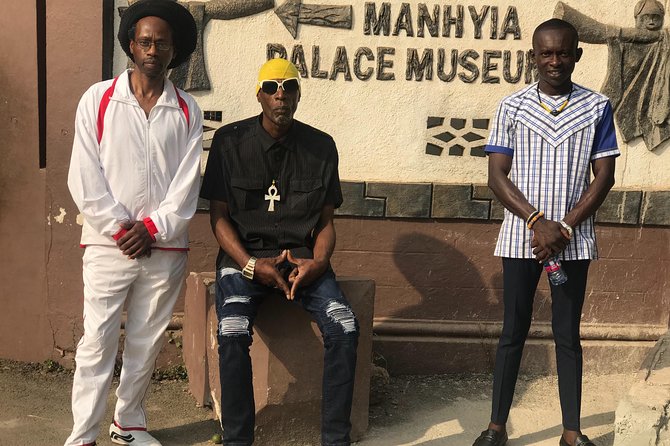
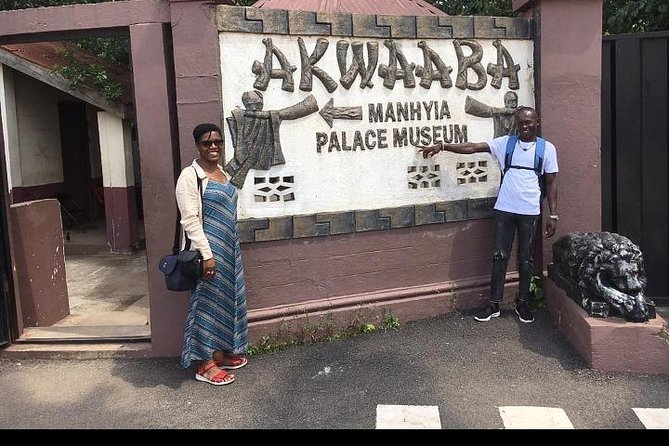
- Manhyia Palace Museum: royal power in a former palace
- Prempeh II Museum: court life, kitchens, and a sealed mystery
- Kejetia Market: the city’s largest final act
- Private transportation and the four-hour schedule
- What the feedback tells you about the experience
- Who should book the Kumasi City Tour?
- Should you book it?
- FAQ
- How long does the Kumasi City Tour last?
- What places are included in the tour?
- Is transportation included?
- Is this a private tour?
- Does the price include shopping at Kejetia Market?
- Can I cancel for a full refund?
Key points to know before booking
- The Okomfo Anokye Sword remains the tour’s most unusual stop, tied to the founding story of the Asante kingdom and a priest’s promise of unity.
- Manhyia Palace Museum puts royal power into a real building, once used by three Asante kings before becoming a museum in 1996.
- Prempeh II Museum feels more personal, with displays of royal bathing and kitchen arrangements, plus a mysterious sealed bag linked to Okomfo Anokye.
- Kejetia Market gives you the city’s biggest change of pace, with about 11,000 stalls and roughly 44,000 daily shoppers and sellers.
- The private setup is useful for a short visit, especially if you want to ask questions or adjust the pace within the four-hour window.
- Shopping is separate from the tour price, so bring a clear budget if you plan to buy items at Kejetia.
Why this half-day tour works in Kumasi
Kumasi is closely tied to the Asante kingdom, and the tour gives you several ways to understand that connection. You begin with a sacred symbol, move into royal buildings and objects, then finish among the people and trade that keep the city moving today.
That order makes sense. The sword site introduces the founding story. The two museums add detail about kings, court life, and ceremony. Kejetia then takes you out of the museum setting and into daily business, bargaining, and movement.
At $65 per person, the value depends partly on your group size. The tour is private, so you receive transportation, entrance fees, and a dedicated experience for your own party rather than sharing the day with strangers. For a solo visitor or couple, the price may feel higher than a group outing. For a family or small group, the private arrangement can be more attractive.
The tour lasts about four hours, with roughly one hour planned at each stop. That is enough for a clear introduction, but not enough for a slow museum visit followed by extensive market browsing. I would treat this as a well-packed city orientation, not a full study of Asante culture.
More city tours in Kumasi:
- Tour Kumasi City Like a Local
★ 4.5 · 34 reviews - Kumasi City Tour
★ 5.0 · 8 reviews - Kumasi City Tour
★ 4.5 · 7 reviews
Okomfo Anokye Sword Site: a founding story in one object
The first stop is the Okomfo Anokye Sword Site, where the legendary priest Okomfo Anokye is said to have planted a sword in the ground to unite the Asantes and begin the Asante kingdom.
The key detail is that the sword has not been uprooted since it was planted. The story even includes an attempt by former heavyweight boxing champion Muhammad Ali, who reportedly could not pull it from the ground. That gives the site an entertaining human detail, but the deeper point is the sword’s symbolic role. It represents political unity, spiritual authority, and the creation of a kingdom.
You have about an hour here, including admission. The value of the stop comes less from the size of the site than from the story attached to it. A good guide can explain why Okomfo Anokye matters and how the sword became linked with Asante identity.
I would pay close attention to the explanation rather than expect a large museum complex. This is a place where context matters. Without it, you may simply see a sword fixed in the earth. With a clear explanation, the object becomes the opening chapter of the day.
Manhyia Palace Museum: royal power in a former palace
Manhyia Palace Museum gives you the tour’s clearest look at Asante royalty. The building was constructed by the British as compensation when the Asante king returned from exile in the Seychelles. The Asantes rejected the offer as a gift and instead paid the British before using the building as their palace.
That detail reveals an important point about power and dignity. The palace was not simply accepted as a British favor. The Asantes made their own payment and controlled its use.
Three Asante kings used the building as a palace. In 1996, Otumfuo Opoku Ware II converted it into a museum, allowing you to see objects gathered over past centuries in a former royal setting.
You have another hour here. The displays focus on Asante royalty and the objects connected with the palace. The building itself is part of the story, since you are not viewing royal artifacts in a modern gallery detached from their original setting.
I would expect a measured visit rather than a fast photo stop. Ask questions about the kings who used the palace and the shift from royal residence to museum. Since the tour is private, you may have more freedom to spend your attention on the objects that interest you most.
One limitation is that the experience information does not list every artifact on display. The museum’s collection is described broadly, so the exact objects available during your visit may vary. The strength is the setting and royal connection, not a guaranteed checklist of individual pieces.
Prempeh II Museum: court life, kitchens, and a sealed mystery
Prempeh II Museum adds a different layer to the royal story. Its design resembles a traditional Asante palace, making the building itself part of the visit.
The museum houses Asante objects dating as far back as the 16th century, along with displays connected to the daily life of kings. You may see an ancient royal bathing setup and a kitchen setup, details that can make court life feel more concrete than a row of formal portraits.
The most unusual object is a mysterious bag made by Okomfo Anokye for the Asantes. It is not to be opened. That small piece of mystery gives the museum a memorable talking point and connects this stop back to the sword site.
With one hour assigned here, you have time to look at the architecture and the objects without rushing through in a few minutes. Still, the schedule is compact. If you enjoy museums, you may wish the tour gave more time to both Manhyia Palace Museum and Prempeh II Museum.
Together, the two museums should not feel repetitive. Manhyia Palace focuses more on a former royal residence and its connection to three kings. Prempeh II Museum offers palace-style architecture and more domestic details, including bathing and kitchen arrangements. I like that contrast because it moves you beyond grand titles and toward the routines of royal life.
More things to do in Kumasi:
- Bonwire Namimg Ceremony and Kente Tourist Center
★ 5.0 · 40 reviews - Traditional naming ceremony For African Diasporas in Kumasi
★ 5.0 · 10 reviews - Lake Bosomtwe Boat Cruisely and Kumasi City Tours
★ 4.5 · 6 reviews - Traditional Naming Ceremony For African Americans In Kumasi
★ 5.0 · 5 reviews
Kejetia Market: the city’s largest final act
The last stop is Kejetia Market, described as the largest open-air market in West Africa. It has about 11,000 stalls and draws around 44,000 people each day. Most of the traders are women.
After the quiet, formal atmosphere of the museums, Kejetia changes the tone completely. You move from royal objects and historical stories into buying, selling, movement, and ordinary city life. The market helps you see Kumasi as a working center rather than only as a place of palaces and ceremonies.
You have about an hour here. That is enough to get a strong first impression, but the market is enormous. Do not expect to cover every section or browse at leisure in the time available.
Personal shopping is not included in the $65 price. If you want to buy something, keep your purchases separate from the tour cost and allow time for bargaining or choosing carefully. Since the experience description does not specify particular products or a set shopping route, ask your guide where your visit will focus.
The scale figures are useful because they explain why this stop can feel intense. Eleven thousand stalls cannot be understood through a quick walk alone, but even an hour can show you how different Kejetia is from a museum. I would keep valuables secure, stay aware of your group, and follow the guide’s lead through the market.
Private transportation and the four-hour schedule
Pickup is offered, and the activity begins and ends in Kumasi. The tour includes private transportation, all admission fees, and taxes, which makes the price easier to judge before booking.
The exact meeting point is listed as Kumasi, Ghana, rather than a named hotel or landmark. If you need hotel pickup, confirm the arrangement in advance. The experience is also near public transportation, but that does not necessarily mean you need to use it.
There is one point worth clarifying. A booking account praised the use of local transportation, while the current tour details describe private transportation. These may reflect different arrangements or different tour days. Ask whether your group will use a private vehicle, local transport, or a mix of both.
The private format is one of the strongest reasons to choose this tour. Only your group participates, so you do not need to match the pace of a large party. You can ask for more explanation at the sword site, spend extra attention on a royal object, or move on when you have had enough.
The schedule still matters. Four one-hour stops add up neatly, but roads, loading, parking, and transitions can reduce the time available at each site. If your interest is mainly museums, tell the guide early. If the market is your priority, protect enough time for Kejetia rather than allowing the first stops to run long.
What the feedback tells you about the experience
The overall rating is 4.3 from three ratings, so the sample is small. The most praised points are the cultural learning, the museum visits, and the chance to use local transportation.
One account describes the early message from the guide after booking as reassuring. That matters in a city tour, where pickup details can make the difference between a relaxed morning and a confused start. The message was associated with the tour team, and the response from Maclean suggests an active effort to keep communication open.
Another account calls the experience enlightening and gives special weight to an Asante funeral ceremony. That ceremony is not listed as a standard stop in the four-part schedule, so you should not book this tour expecting one as part of every departure. Still, the comment shows that the cultural material can extend beyond buildings and objects when local events or explanations add more context.
The strongest lesson is to use your guide well. Ask about the sword’s meaning, the three kings connected with Manhyia Palace, the sealed bag at Prempeh II Museum, and the role of women traders at Kejetia. Those questions can turn a quick sightseeing loop into a more thoughtful introduction to Kumasi.
Who should book the Kumasi City Tour?
I would recommend this tour if you have a short stay in Kumasi and want the main cultural sites covered in one half-day. It suits first-time visitors who want structure, transport, admission fees, and a private guide without arranging each stop separately.
It is also a good match for families or small groups who value privacy. You can keep your own pace within reason, ask direct questions, and avoid the social compromise of a shared tour.
You may want a different plan if you prefer long museum visits, independent wandering, or an entire day at Kejetia Market. The four-hour format is efficient, but it is not leisurely. You will see four important places rather than study any one of them at great length.
Weather may also affect the booking. The tour requires good weather, and if poor weather causes cancellation, you will be offered another date or a full refund. Free cancellation is available if you cancel at least 24 hours before the start time. A cancellation made later is not refundable, and changes within that period are not accepted.
Should you book it?
Book this Kumasi City Tour if you want a focused introduction to Asante culture, royal history, and modern city life in one private outing. The sword site and two museums give the tour substance, while Kejetia keeps it connected to present-day Kumasi.
The best value comes when you are traveling with a small group and want convenience. Before paying, confirm the pickup point and the exact transportation arrangement, especially because local and private transport are both mentioned in the available information.
If you can accept the brisk schedule, $65 per person is a fair price for transportation, admission fees, taxes, and a private four-hour route. If you want deep museum time or serious shopping, use this as an introduction and plan a separate visit.
FAQ
How long does the Kumasi City Tour last?
The tour lasts approximately four hours, with about one hour planned at each of four stops.
What places are included in the tour?
The tour visits the Okomfo Anokye Sword Site, Manhyia Palace Museum, Prempeh II Museum, and Kejetia Market.
Is transportation included?
Yes. Private transportation is included, along with all fees and taxes. Pickup is offered, but you should confirm the exact pickup location in Kumasi.
Is this a private tour?
Yes. Only your group participates in the activity.
Does the price include shopping at Kejetia Market?
No. Personal shopping is not included in the $65 per person price.
Can I cancel for a full refund?
Yes, if you cancel at least 24 hours before the experience start time. Cancellations made less than 24 hours in advance are not refundable. If poor weather cancels the tour, you will be offered another date or a full refund.
Just added in Kumasi
- Full Day Tour with Traditional Naming Ceremony in Kumasi★ 5.0 · 4 reviews
- Traditional Naming Ceremony For African Americans In Kumasi★ 5.0 · 5 reviews
- Kumasi kejetia central market tour & Traditional Local cooking food classs★ 4.5 · 2 reviews
- Kejetia Market Tour and Traditional Food Cooking Class.★ 5.0 · 2 reviews
- Kumasi Culture and Heritage Tours★ 4.5 · 3 reviews
- Private Half-Day City Tour of Kumasi with Lunch★ 5.0 · 2 reviews
- Discover kumasi Tours★ 5.0 · 3 reviews
- Ashanti History Tours★ 5.0 · 2 reviews
Kumasi Tours, compared.

Bonwire Namimg Ceremony and Kente Tourist Center
Read our review →

Traditional naming ceremony For African Diasporas in Kumasi
Read our review →

Lake Bosomtwe Boat Cruisely and Kumasi City Tours
Read our review →
Traditional Naming Ceremony For African Americans In Kumasi
Read our review →
Full Day Tour with Traditional Naming Ceremony in Kumasi
Read our review →Browse the lists this tour appears in