
REVIEW · KUMASI TOURS
Kumasi City Tour
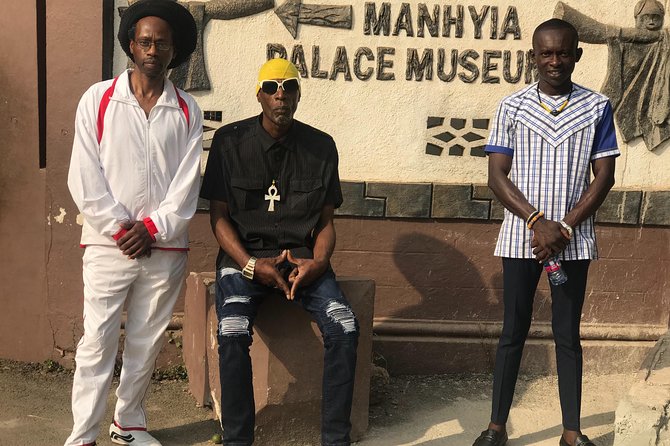
Kumasi tells its story through royal rooms. I like the focus on the Manhyia Palace Museum and Prempeh II Museum, where Ashanti objects, royal clothing, talismans, and symbols give the past a human scale. I also like the included admission and small maximum group of 15, which should make it easier to hear the guide.
The main consideration is time. Four hours for four stops leaves little room to linger, and the schedule may feel brisk if you want long museum visits. The tour also needs a minimum number of participants before it is confirmed, so check that point when planning tightly connected travel.
In This Review
- Key points at a glance
- Why this four-hour Kumasi tour works
- Starting at Manhyia Palace at 8:00 am
- Kumasi Fort and the Ghana Armed Forces Museum
- Manhyia Palace Museum and Ashanti royal life
- Prempeh II Museum and the details of court life
- The Okomfo Anokye Sword Site
- What the schedule tells you
- Group size, guide style, and local atmosphere
- Is $60 good value?
- Who should book the Kumasi City Tour?
- FAQ
- How long is the Kumasi City Tour?
- What time does the tour begin?
- Where does the tour start?
- Where does the tour end?
- Are admission tickets included?
- How many people can join the tour?
- Should you book it?
Key points at a glance
- Four historic stops in about four hours: The route links military history, Ashanti royalty, royal artifacts, and the sacred Okomfo Anokye Sword Site.
- Admission is included: You do not need to budget separately for the Kumasi Fort, Manhyia Palace, Prempeh II, or sword-site museums.
- A guide adds essential context: The museums are compact, so clear explanations help connect objects to the Ashanti Kingdom and Ghana’s colonial and modern past.
- A maximum of 15 people: This is a manageable group size for questions and museum commentary.
- An 8:00 am start: The early departure gives you a useful first look at Kumasi before the day gets further underway.
- Free cancellation until 24 hours ahead: You can cancel for a full refund if you act before the stated cutoff.
Why this four-hour Kumasi tour works
Kumasi is the historic center of the Ashanti Kingdom, and this tour gives you several ways to understand the city. You move from military conflict to royal power, then to the objects used in court life and the spiritual story connected with Okomfo Anokye.
That range is the tour’s strongest feature. You are not spending four hours in one museum or looking at similar displays again and again. Each stop has a different purpose, and together they provide a useful introduction to Kumasi.
I also like the scale of the tour. A maximum of 15 participants is small enough for a guide to speak with the group rather than simply lead you from room to room. The guide is praised for clear English and a warm, pleasant manner, two details that matter when the subject includes unfamiliar names, ceremonies, and political events.
The tour costs $60 per person. That is a reasonable price if you value guided interpretation and included entry at four sites. It is less attractive if you mainly want a quick orientation or prefer to explore museums on your own.
The program is described as a cultural city tour, with local music, traditional street-food aromas, and the daily character of Kumasi forming part of the setting. The listed stops focus on museums and historic sites, so you should think of this as a guided heritage tour rather than a dedicated food walk or music performance.
More city tours in Kumasi:
- Tour Kumasi City Like a Local
★ 4.5 · 34 reviews - Kumasi City Tour
★ 4.5 · 7 reviews - Lake Bosomtwe Boat Cruisely and Kumasi City Tours
★ 4.5 · 6 reviews
Starting at Manhyia Palace at 8:00 am
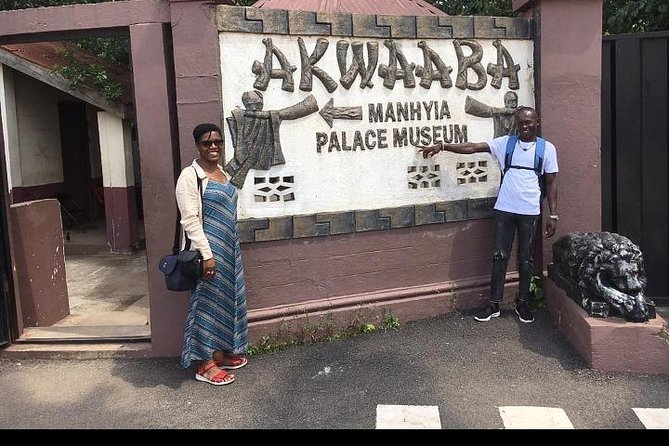
The stated starting point is Manhyia Palace, at P93P+M2Q in Kumasi. The tour begins at 8:00 am, and pickup is offered. Since the start point and the first listed stop do not appear in the same order, confirm the exact pickup arrangement and opening sequence before the morning of your tour.
An early start is useful in Kumasi. It gives you a head start before other plans, and it leaves part of the day open after the four-hour program. The tradeoff is simple: you need to be ready early, and the schedule may not suit someone who prefers a slow breakfast.
The tour ends at the Prempeh II Jubilee Museum, at P929+HXX. This is useful if you want to continue exploring near the final museum, but it is worth planning your onward transport from that location rather than assuming you will return to your hotel.
Pickup, mobile tickets, and proximity to public transportation make the tour fairly easy to fit into a city visit. Still, you should keep your phone available for meeting instructions, particularly because the route includes several central Kumasi locations.
Kumasi Fort and the Ghana Armed Forces Museum
The Kumasi Fort stop lasts about one hour and includes admission to the Ghana Armed Forces Museum. This is the tour’s clearest window into military and colonial history.
Inside, you can expect displays of weapons, flags, decorations, armored vehicles, portraits, photographs, and other military equipment. The collection covers material connected with the British Asante War of 1900 and the Second World War, as well as Ghana’s development from the colonial period to the present.
This stop matters because it places the Ashanti story within wider political and military events. The objects are not only reminders of battles. They also show how institutions, uniforms, symbols, and technology changed over time.
A guide is especially useful here. A display of weaponry or a photograph may be interesting on its own, but the larger meaning can be easy to miss without context. Ask questions if you want to understand how the military material connects with Ghana’s national story.
The possible drawback is that one hour may pass quickly. The museum contains many types of objects, from armored vehicles to small personal artifacts. If you read every label carefully, you may need to choose what to examine most closely.
Manhyia Palace Museum and Ashanti royal life
The Manhyia Palace Museum is scheduled for about one hour, with admission included. It opened in 1995 during the Silver Jubilee celebration connected with the ascension of the Golden Stool.
This is an important stop for understanding the Ashanti Kingdom as a living royal tradition rather than a distant chapter in a textbook. The museum contains historic objects, war talismans, and other items linked to the kingdom.
The palace setting adds weight to the visit. Royal artifacts make more sense when you know they belonged to a court with its own political structure, ceremonies, symbols, and ideas of authority. A guide can help explain why certain objects mattered and how they were used.
The museum is modest in size. That is good news if you dislike long museum marathons, but it also means the visit will not provide an exhaustive account of Ashanti history. Treat it as a focused introduction, not a complete record.
This is one of the places where the quality of the guide can shape the experience. Clear English and a friendly manner are valuable when the subject depends on stories, names, and customs that may be new to you. The tour promises local insight, and this is where that promise matters most.
More things to do in Kumasi:
- Bonwire Namimg Ceremony and Kente Tourist Center
★ 5.0 · 40 reviews - Traditional naming ceremony For African Diasporas in Kumasi
★ 5.0 · 10 reviews - Traditional Naming Ceremony For African Americans In Kumasi
★ 5.0 · 5 reviews - Full Day Tour with Traditional Naming Ceremony in Kumasi
★ 5.0 · 4 reviews
Prempeh II Museum and the details of court life
The Prempeh II Museum is another compact museum, but it presents a more personal view of Ashanti royalty. Its displays include objects associated with King Prempeh II, such as war clothing, ceremonial garments, jewelry, protective talismans, furniture, and royal emblems.
You can also see personal accessories connected with bathing and dining. These details are useful because they move beyond formal portraits and official symbols. They suggest how royal life was organized in ordinary routines as well as public ceremonies.
The collection includes brass weights used to measure gold. These pieces connect the museum to trade, craftsmanship, and the economic importance of gold in the region. Their small size may make them easy to overlook, so listen closely when the guide explains their purpose.
The building is designed to resemble an Ashanti chief’s residence. It has a front courtyard and walls decorated with traditional carved symbols. The setting is part of the display, not just a container for objects, and it helps you picture how royal or chiefly spaces were arranged.
Admission includes a personalized tour. That is a strong value point, especially here. The museum’s compact size means a guided explanation can add more than extra walking time would. On the other hand, the one-hour allocation may feel generous if you prefer a very quick look.
The tour ends here. If this museum is also your final stop, you can plan your next activity from the Prempeh II Jubilee Museum rather than returning to the original meeting point.
The Okomfo Anokye Sword Site
The Okomfo Anokye Sword Site offers a different kind of historical encounter. Its small museum contains the sword said to have been driven into the ground by Okomfo Anokye and left immovable.
The site is important because the sword story is tied to the founding traditions and spiritual identity of the Ashanti Kingdom. This is not simply an object behind glass. It is a place where political history, religious belief, and oral tradition meet.
The museum is small, and the visit is listed as about one hour. That may feel long if you expect only to see the sword itself. The extra time makes more sense when used to understand the story around the site and its place in Ashanti culture.
As with the other compact museums, the guide’s explanation will shape your visit. You should expect a focused stop rather than a large collection with many galleries. It is best approached with respect for the meaning the site holds, even if you do not share every belief connected with it.
What the schedule tells you
The four-hour duration is efficient, but it is not leisurely. The listed plan gives each stop roughly one hour, and that includes moving through the city. You will get a broad introduction, but you may not have time to study every photograph, artifact, or label.
I see this as a good choice for a first visit to Kumasi. You can learn the basic framework, identify the places you want to revisit, and spend the rest of your stay following up on the parts that interest you most.
It is less suitable if your main goal is detailed museum research. A private arrangement with longer visits might suit you better, but that is not what this tour promises.
The early start helps balance the compact schedule. By beginning at 8:00 am, you can complete the program in the morning and still have time for other plans. The tour’s average booking lead time is 11 days, so reserve ahead if your dates are fixed.
Because a minimum number of participants is required for confirmation, do not treat the booking as the only step. Check that the tour has been confirmed before building an important same-day connection around it.
Group size, guide style, and local atmosphere
The maximum group size is 15 people. That is not a private tour, but it is small enough to remain practical inside compact museums. You should have a reasonable chance to hear the guide and ask questions without the group spreading too far apart.
The guide’s clear English is a real advantage. Kumasi’s history includes royal titles, military events, spiritual traditions, and cultural symbols. A guide who explains these plainly can turn a quick museum visit into something you remember.
The tour also presents Kumasi through sound, food aromas, and street life. You may hear local music and encounter traditional Ghanaian street food as you move through the city. These elements give the museum visits a connection to present-day Kumasi, although the supplied schedule does not promise a separate food tasting or performance.
That distinction matters. If you want an eating tour, ask for details before booking. If you want cultural context with the chance to experience the city around the historic sites, this format should suit you better.
Is $60 good value?
At $60 per person, the price includes admission to four attractions and a guide for about four hours. You are paying for structure, local explanation, and the convenience of linking several sites in one morning.
The value is strongest for first-time visitors, people with limited time, and anyone who prefers not to work out the route between museums independently. Included entry also makes the cost easier to judge because you are not adding several small admission fees during the day.
The value is weaker if you already know Kumasi well or only want to see one palace museum. In that case, a full four-hour tour may feel more than you need.
A small group, mobile ticket, pickup option, and included admissions make the package straightforward. Free cancellation up to 24 hours before the local start time also reduces the risk of committing too early. Changes or cancellations inside that 24-hour window are not accepted for a refund, so mark the cutoff clearly.
Who should book the Kumasi City Tour?
I would recommend this tour to you if you want a compact introduction to Ashanti culture and Ghanaian history. It suits history fans, museum lovers, first-time visitors, and people who want a guide to explain what they are seeing.
It is also a sensible choice if you have only one morning in Kumasi. The route gives you military history, royal collections, court-life objects, and a major spiritual site rather than repeating one type of attraction.
You may want another option if you need a slow pace, extended photography time, or a dedicated food experience. The four-hour schedule is full, and the museums are compact enough that the guide’s commentary becomes central to the value.
FAQ
How long is the Kumasi City Tour?
The tour lasts approximately four hours.
What time does the tour begin?
The stated start time is 8:00 am.
Where does the tour start?
The listed starting point is Manhyia Palace, P93P+M2Q, Palace, Kumasi, Ghana. Pickup is also offered.
Where does the tour end?
The tour ends at the Prempeh II Jubilee Museum, P929+HXX, Kumasi, Ghana.
Are admission tickets included?
Yes. Admission is included at Kumasi Fort, Manhyia Palace Museum, Prempeh II Museum, and the Okomfo Anokye Sword Site.
How many people can join the tour?
The maximum group size is 15 participants. A minimum number of participants is required for confirmation.
Should you book it?
Book this tour if you want a well-organized morning that connects Kumasi’s military past, Ashanti royalty, court traditions, and spiritual heritage. The included admissions, small group limit, clear-English guide, and $60 price make it a solid introduction to the city.
Before booking, confirm the pickup details, the final tour confirmation, and the order of the stops. If you accept a brisk schedule and want context rather than independent museum browsing, this is a practical and worthwhile way to begin exploring Kumasi.
Just added in Kumasi
- Full Day Tour with Traditional Naming Ceremony in Kumasi★ 5.0 · 4 reviews
- Traditional Naming Ceremony For African Americans In Kumasi★ 5.0 · 5 reviews
- Kumasi kejetia central market tour & Traditional Local cooking food classs★ 4.5 · 2 reviews
- Kejetia Market Tour and Traditional Food Cooking Class.★ 5.0 · 2 reviews
- Kumasi City Tour★ 4.5 · 3 reviews
- Kumasi Culture and Heritage Tours★ 4.5 · 3 reviews
- Discover kumasi Tours★ 5.0 · 3 reviews
- Private Half-Day City Tour of Kumasi with Lunch★ 5.0 · 2 reviews
Kumasi Tours, compared.

Bonwire Namimg Ceremony and Kente Tourist Center
Read our review →

Traditional naming ceremony For African Diasporas in Kumasi
Read our review →

Lake Bosomtwe Boat Cruisely and Kumasi City Tours
Read our review →
Traditional Naming Ceremony For African Americans In Kumasi
Read our review →
Full Day Tour with Traditional Naming Ceremony in Kumasi
Read our review →Browse the lists this tour appears in